I got a wild hair and dismantled the Univox night before last, took less than an hour.
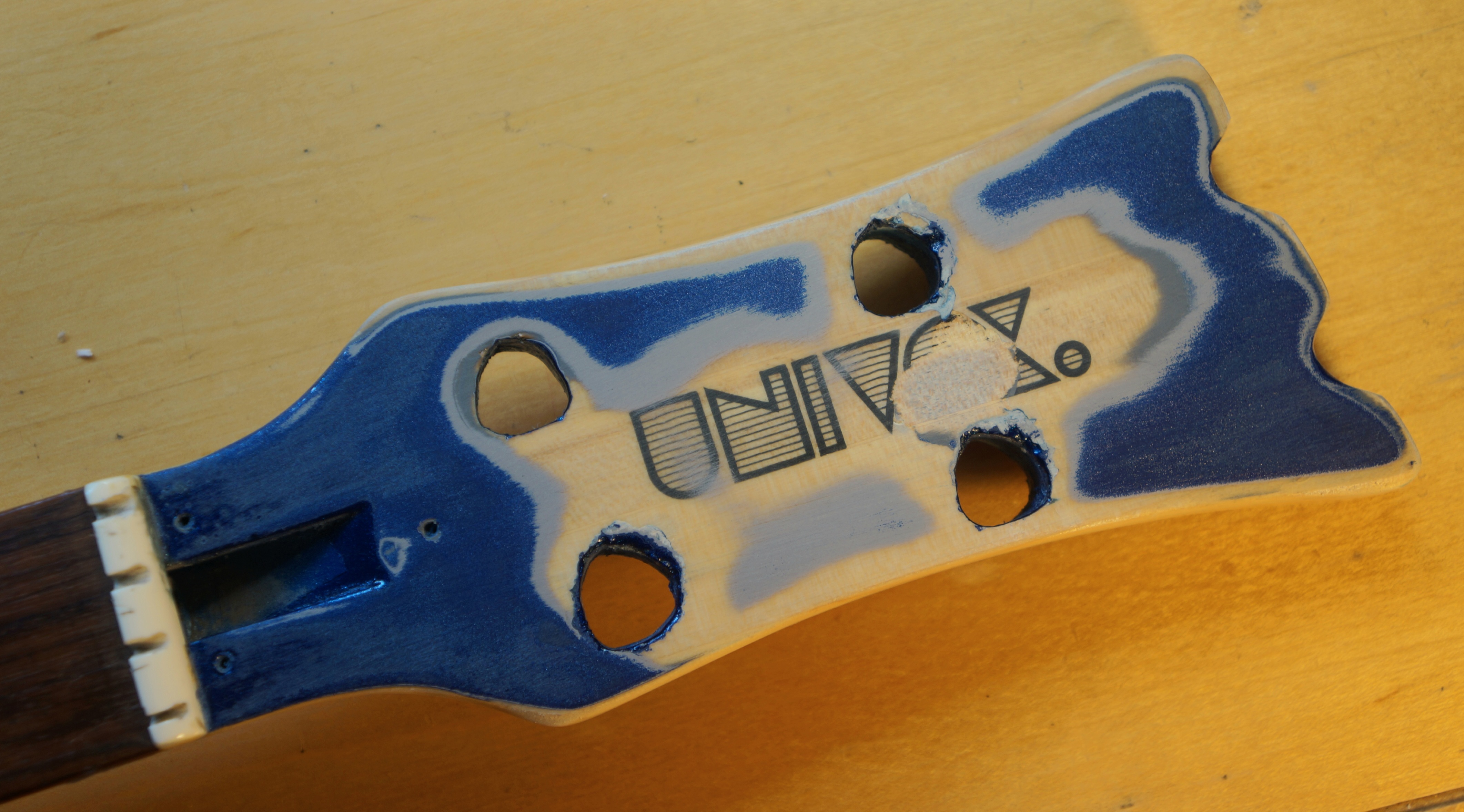
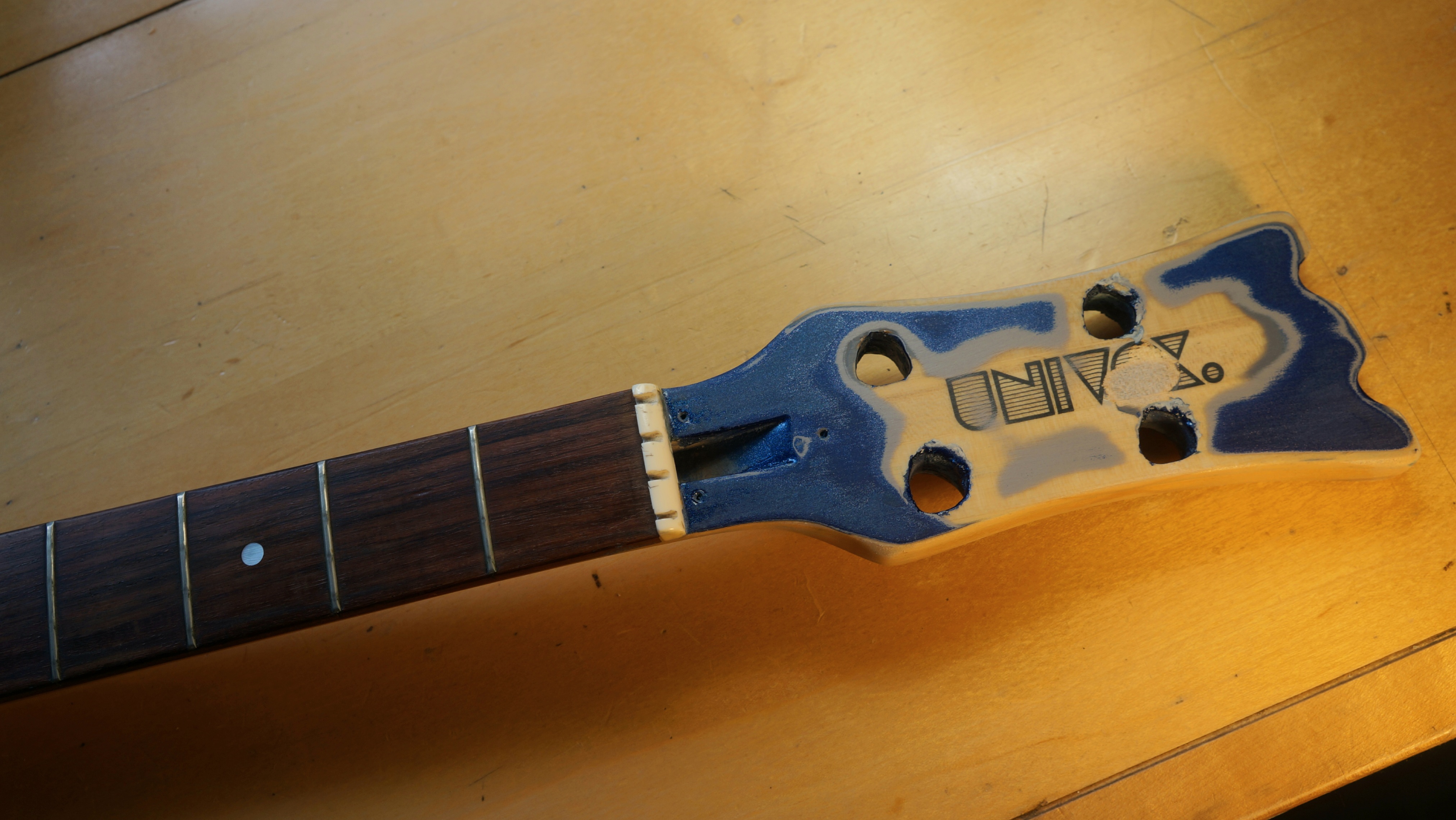
Careful sanding with 180 grit revealed the Univox logo headstock decal of lined block design.
This narrows the build date a bit to post 1970, probably.
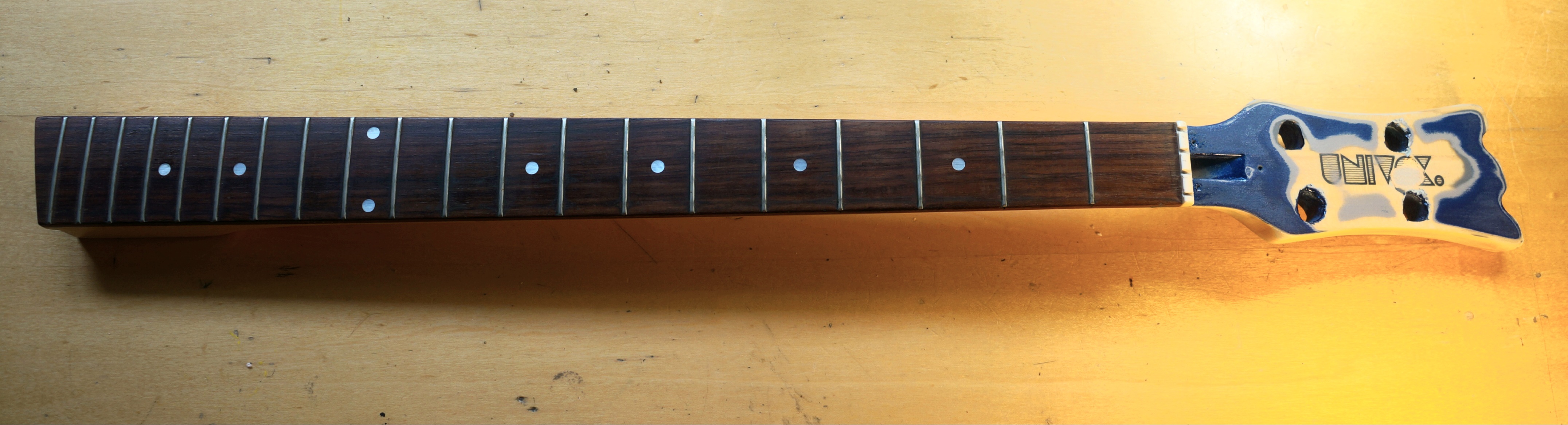
Lined block decal superceded the plastic Univox headstock badge during the Phase 2 run, which replaced the Phase I design in 1970.
Though the factory was known to keep assembling instruments with superceded components until the old stock was exhausted.
Can’t be Phase I because they used rocker switches and different colored pick guard.
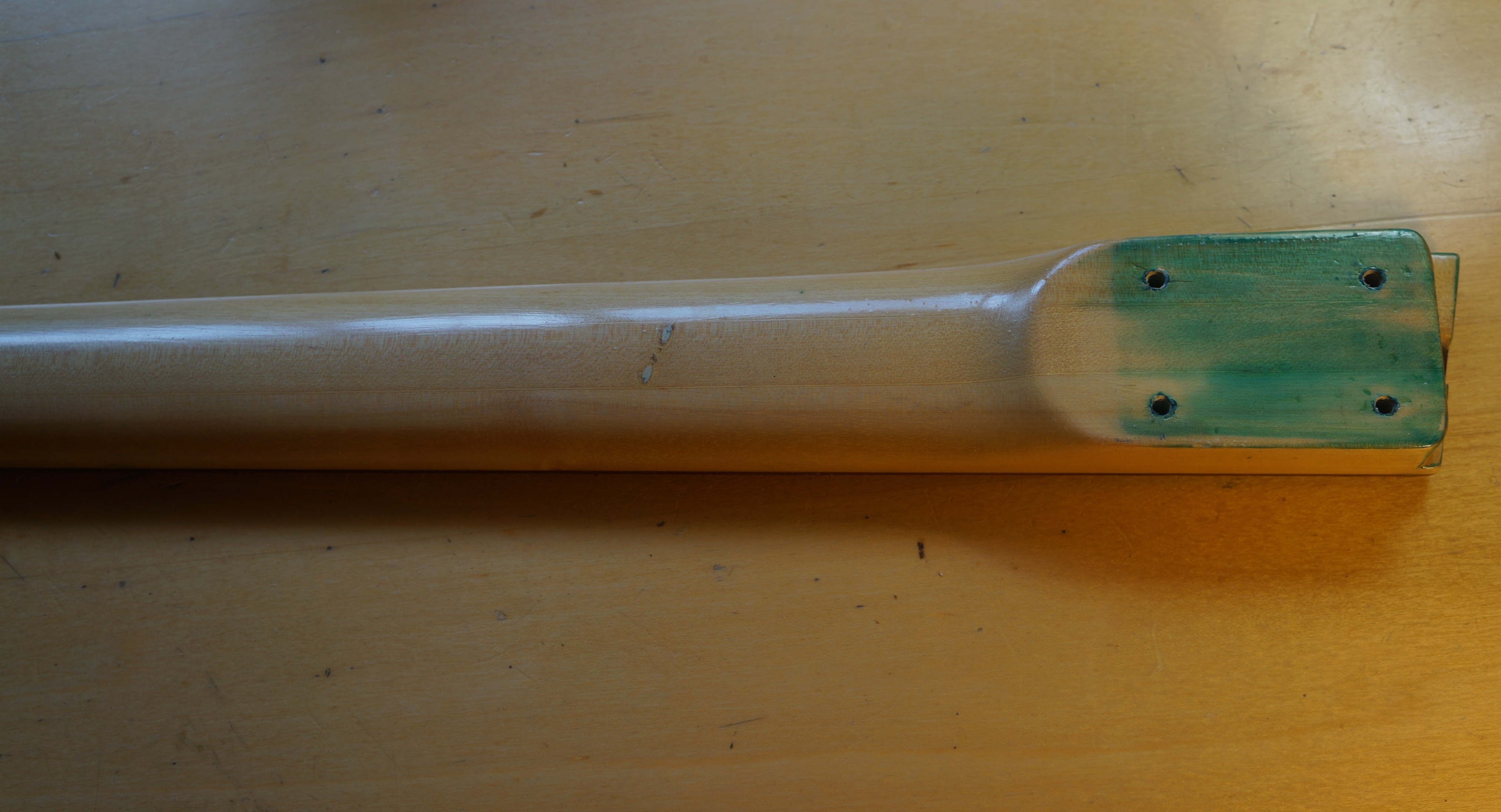
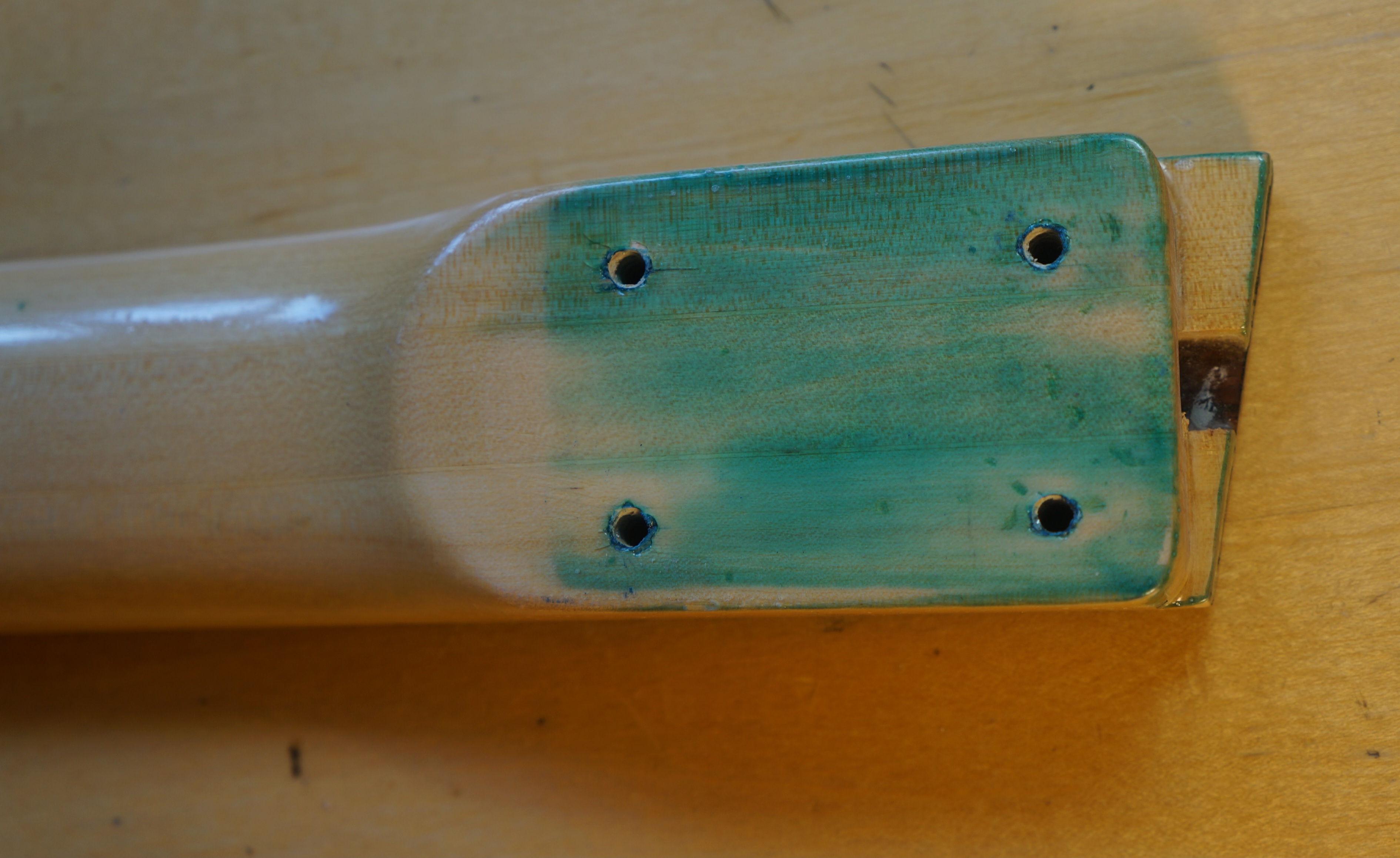
Mine does not sport the simple ‘U’ inscribed 4-screw neckplate either.
Using the older, I believe, text: ‘STEEL ADJUSTABLE NECK MADE IN JAPAN, serial number 1025051’.
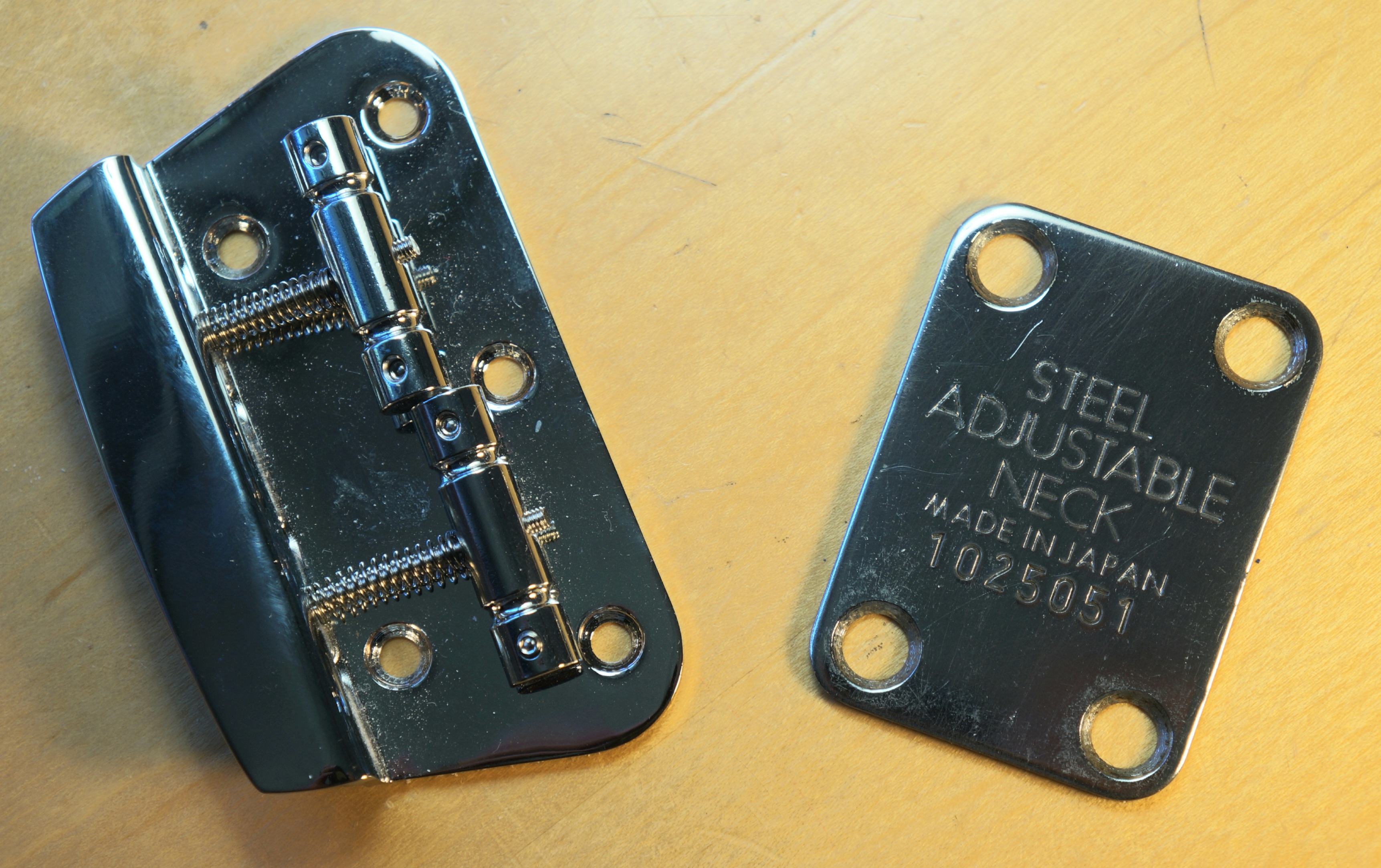
So, assuming an original body and neck, I have a late Phase II or else a Phase III bass.
No rocker switches like Phase I. And no offset staggered Volume and Tone controls like Phase IV.
Ella Fitzgerald, my deaf Whopper, simple logic. But other mysteries remain, Grasshopper.
Like what was the original body color? I suppose I could run down the seller and ask her.
But more fun to sand it down to discover the factory paint job, which in Phase II were Sunburst, Black or White.
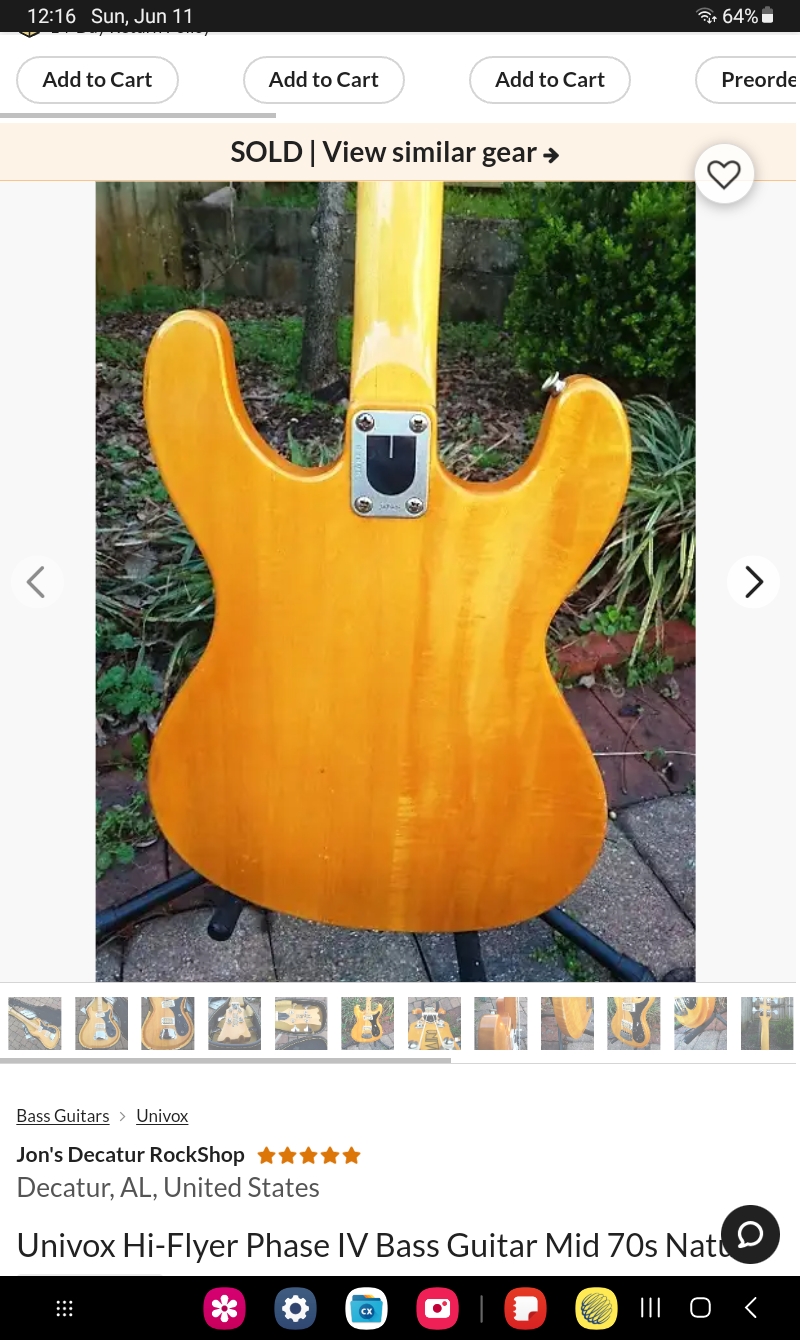
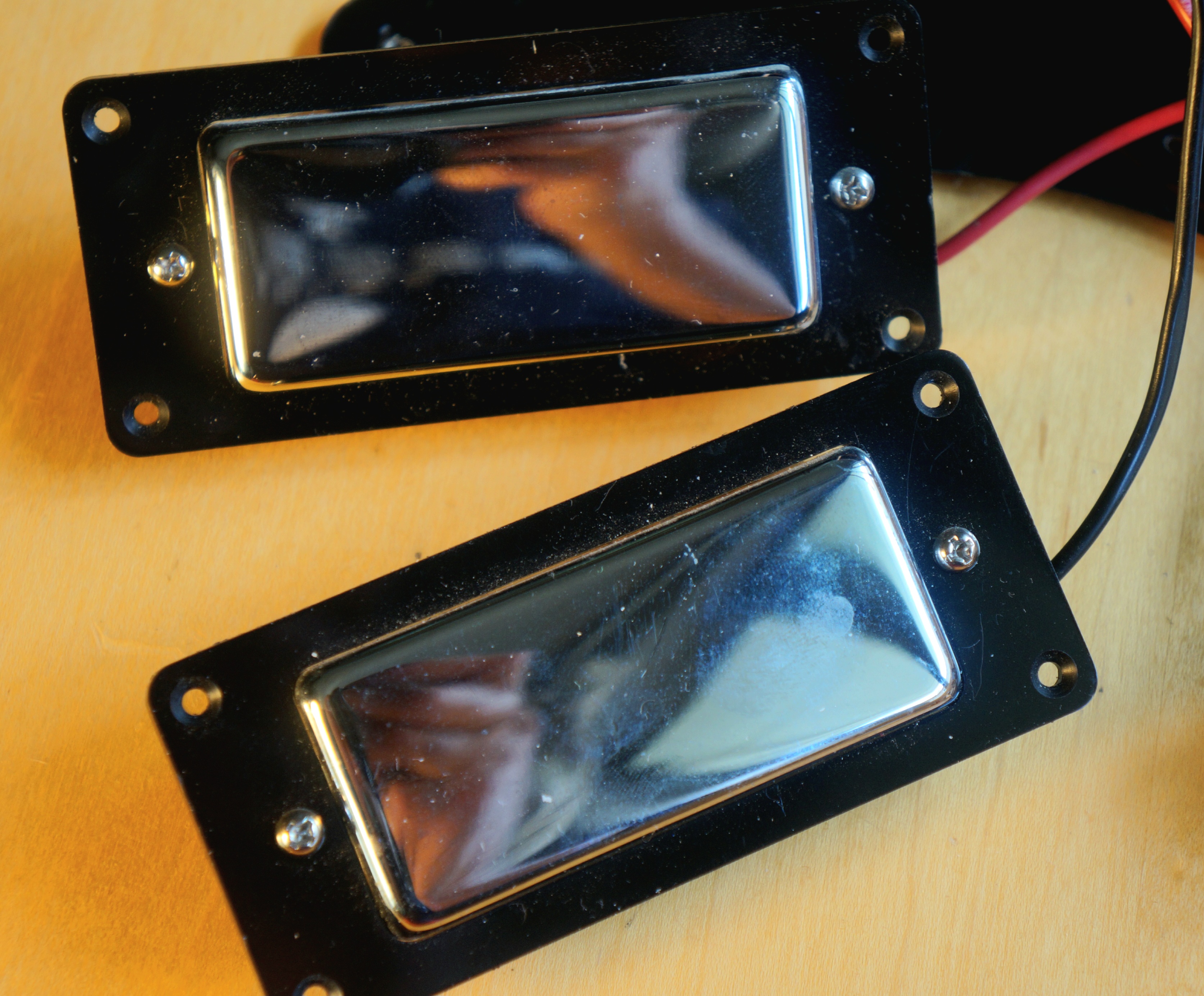
In 1974 a Natural finish choice was added for Phase III. And, per Wikipedia, ‘Twin humbuckers in black plastic surround rings replaced the P-90-type pickups.’
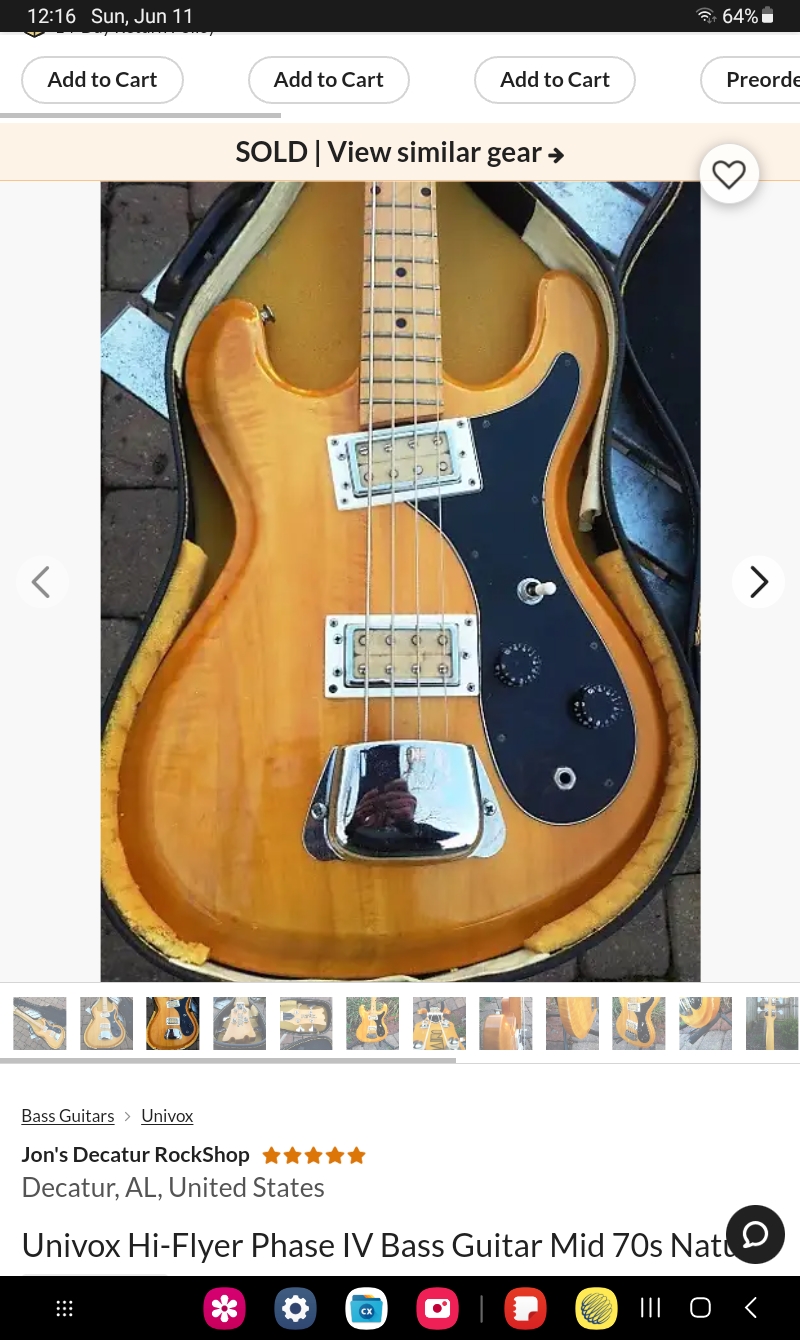
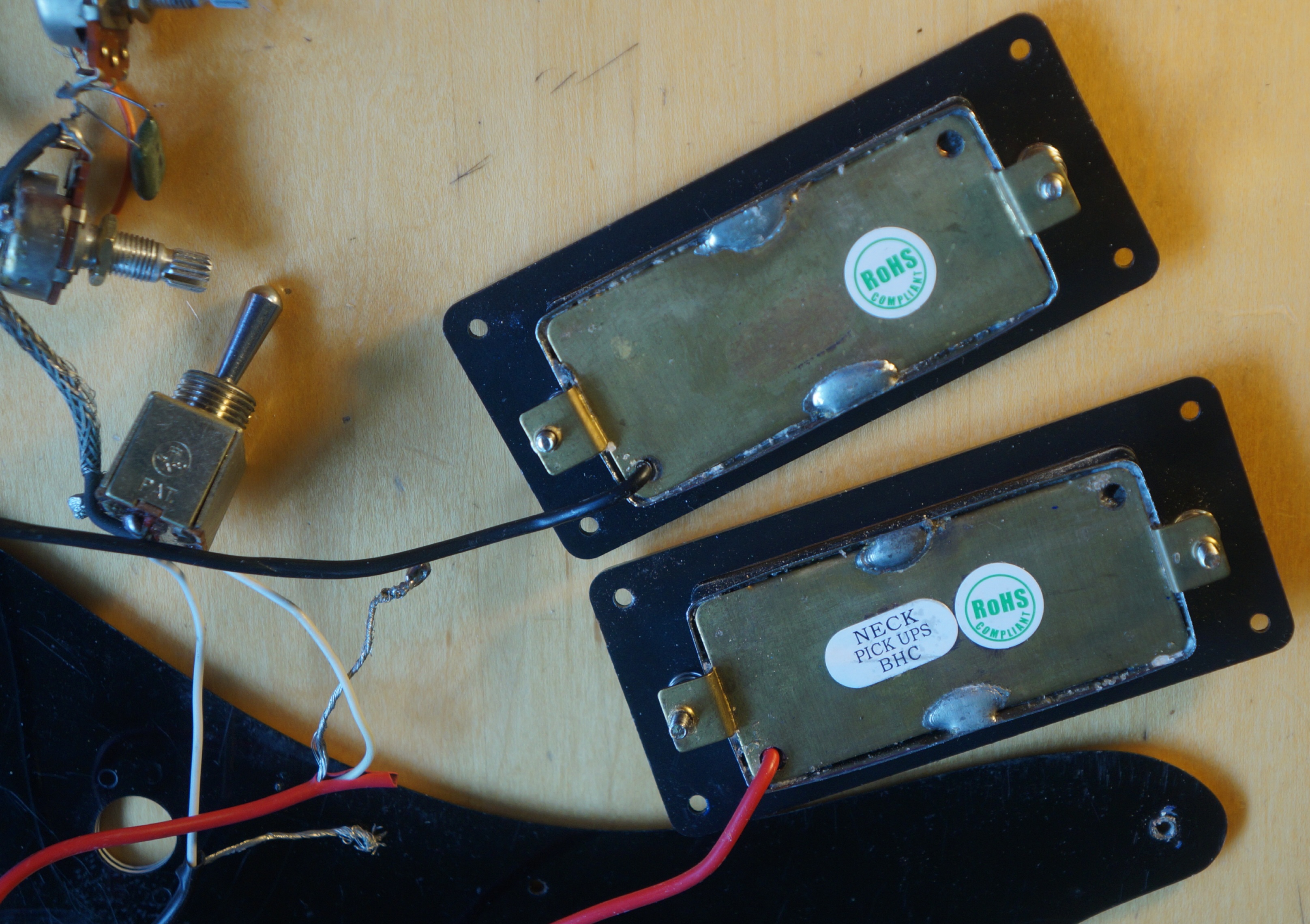
Which does not help me because the chrome humbuckers are obvious replacements.
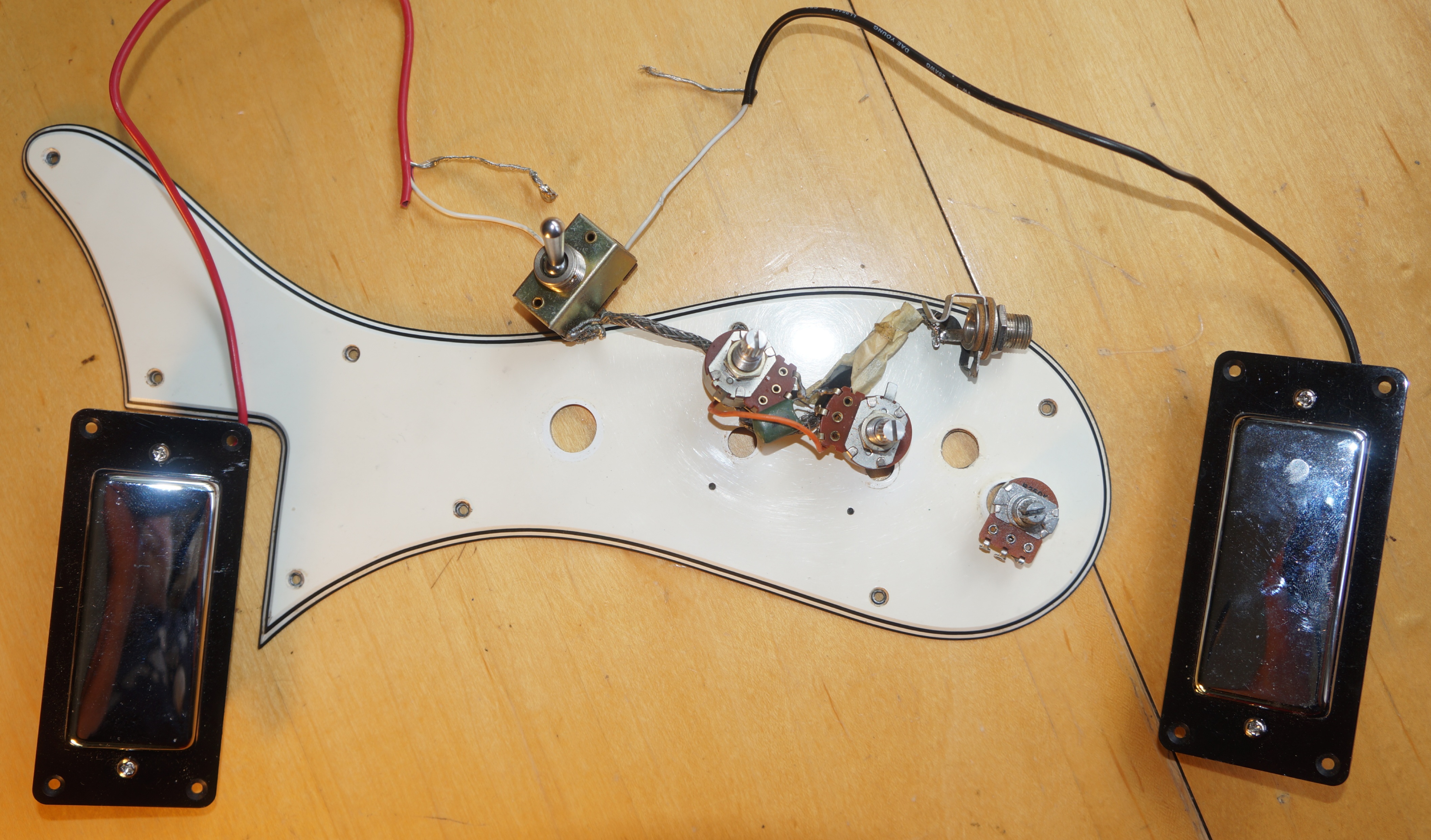
Like the chrome knobs, strange bridge and machine heads, replacements.
So if the body is Natural under the sparkly blue Rustoleum, then that dates it to post 1974.
But prior to the Phase IV advent in 1977.
I’m going to guess Sunburst or Black, Phase III, because that was peak production.
Now more hand breaking sanding labor needed to find out.
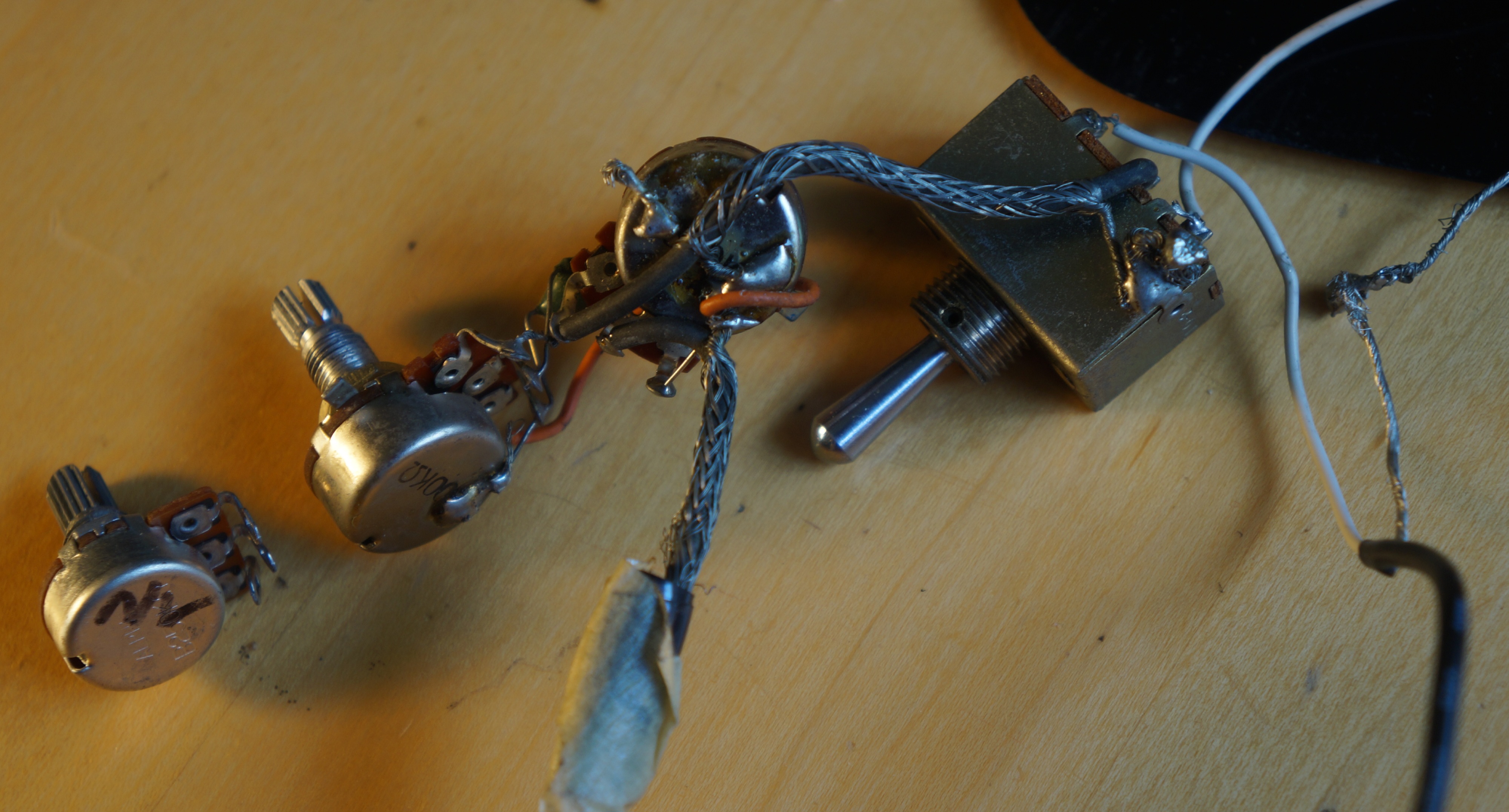
I wonder which wire I solder to get the bridge pickup working?
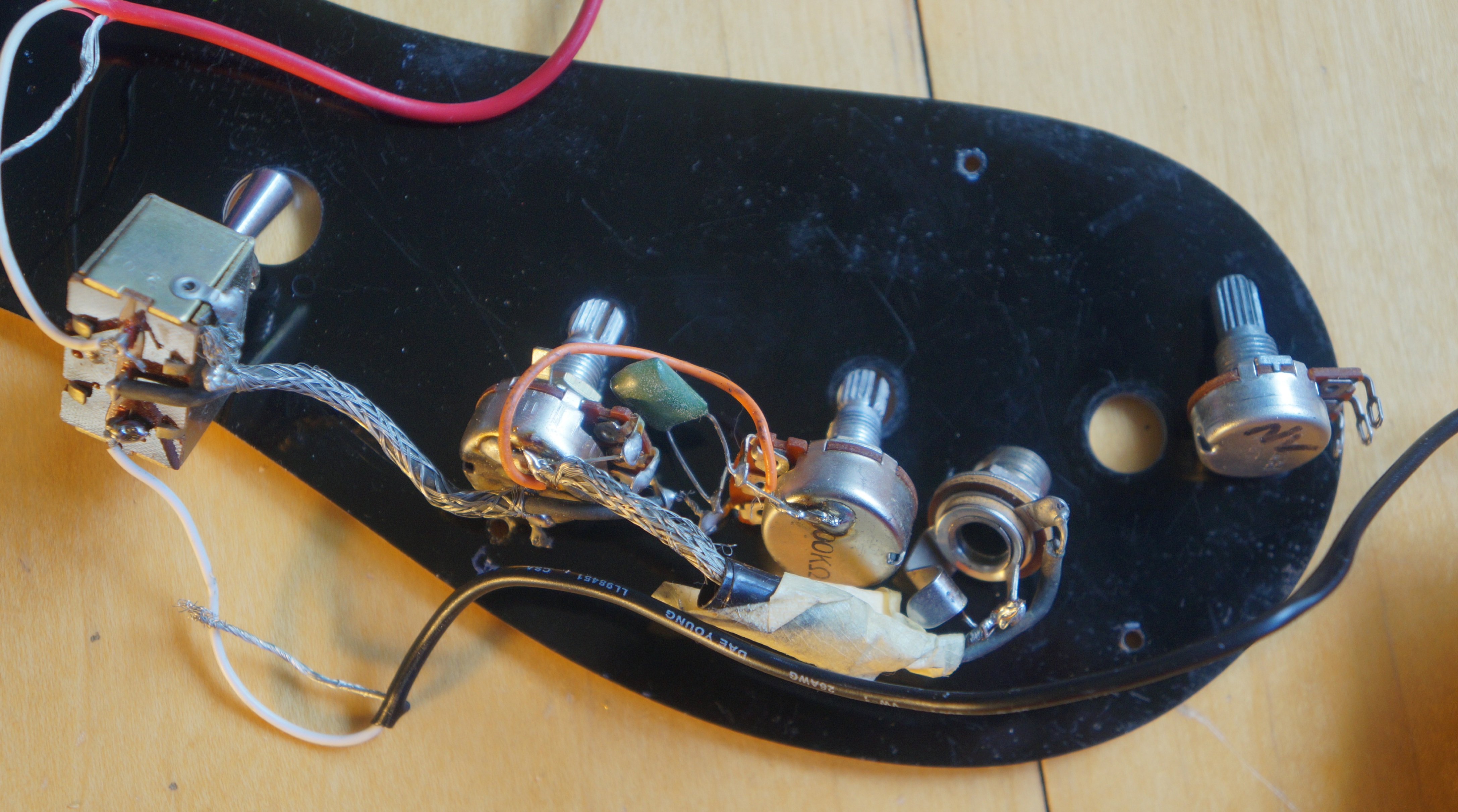
Why would an amateur luthier drill an extra hole for the output jack?
And so close to the controls?
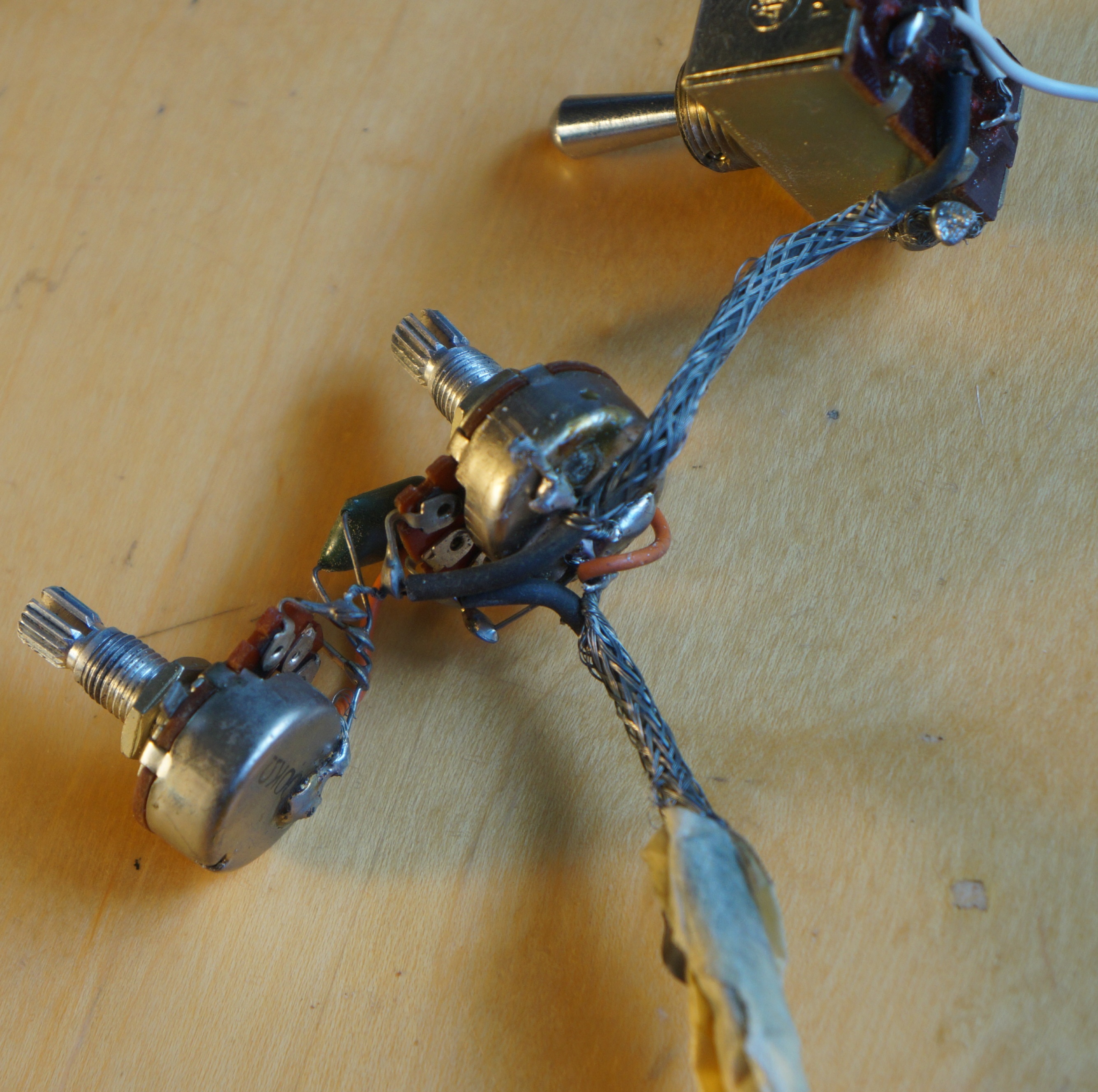
I’m guessing the output jack wire was too short to reach the original pick guard hole. For some reason.
And so an expedient extra hole higher up was drilled rather than lengthening the wire?
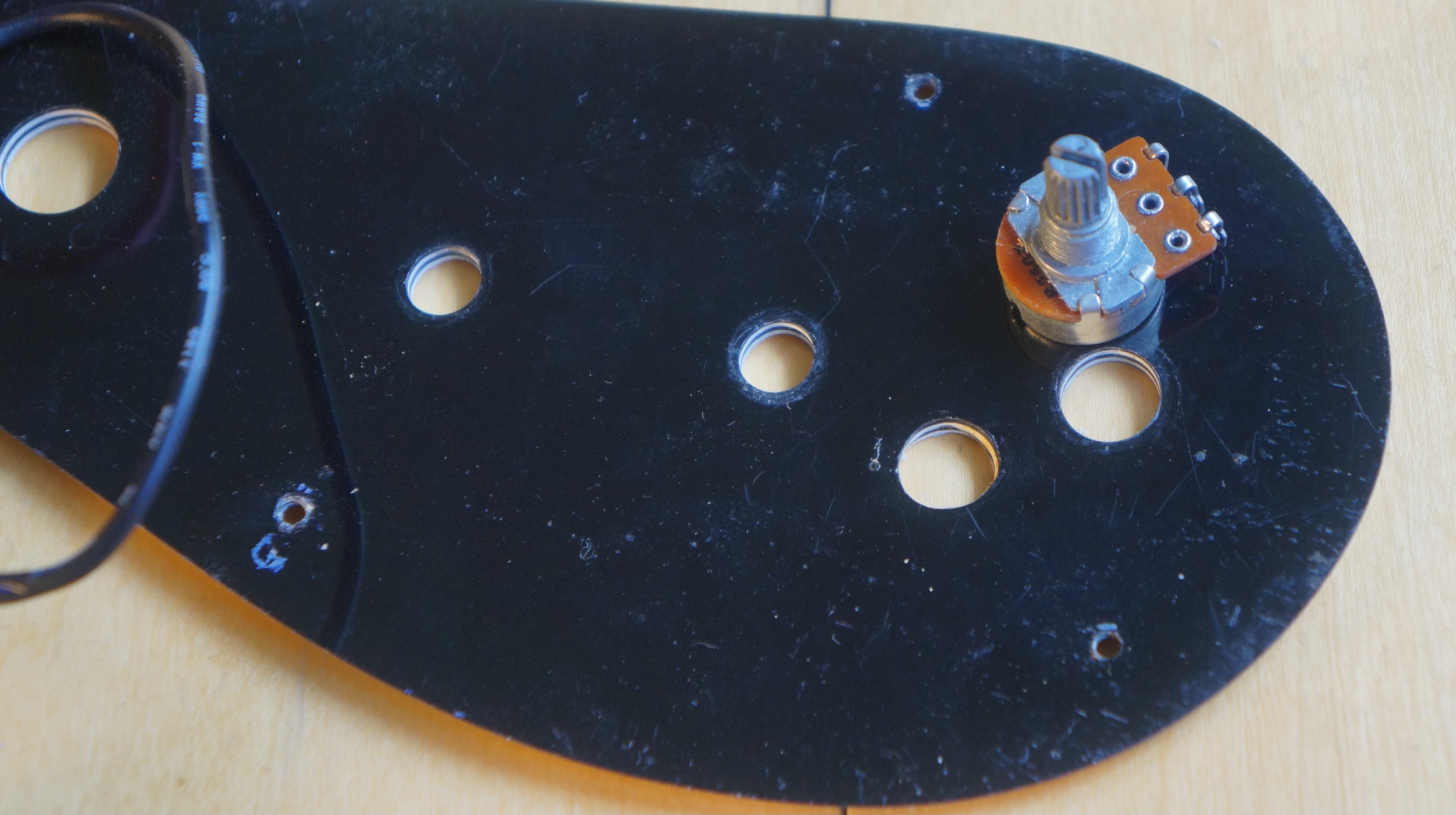
The disconnected fake control did confuse me as to any possible logical function, on a passive bass.
I’ll probably cover the extra hole with an Orange Crush amp sticker.
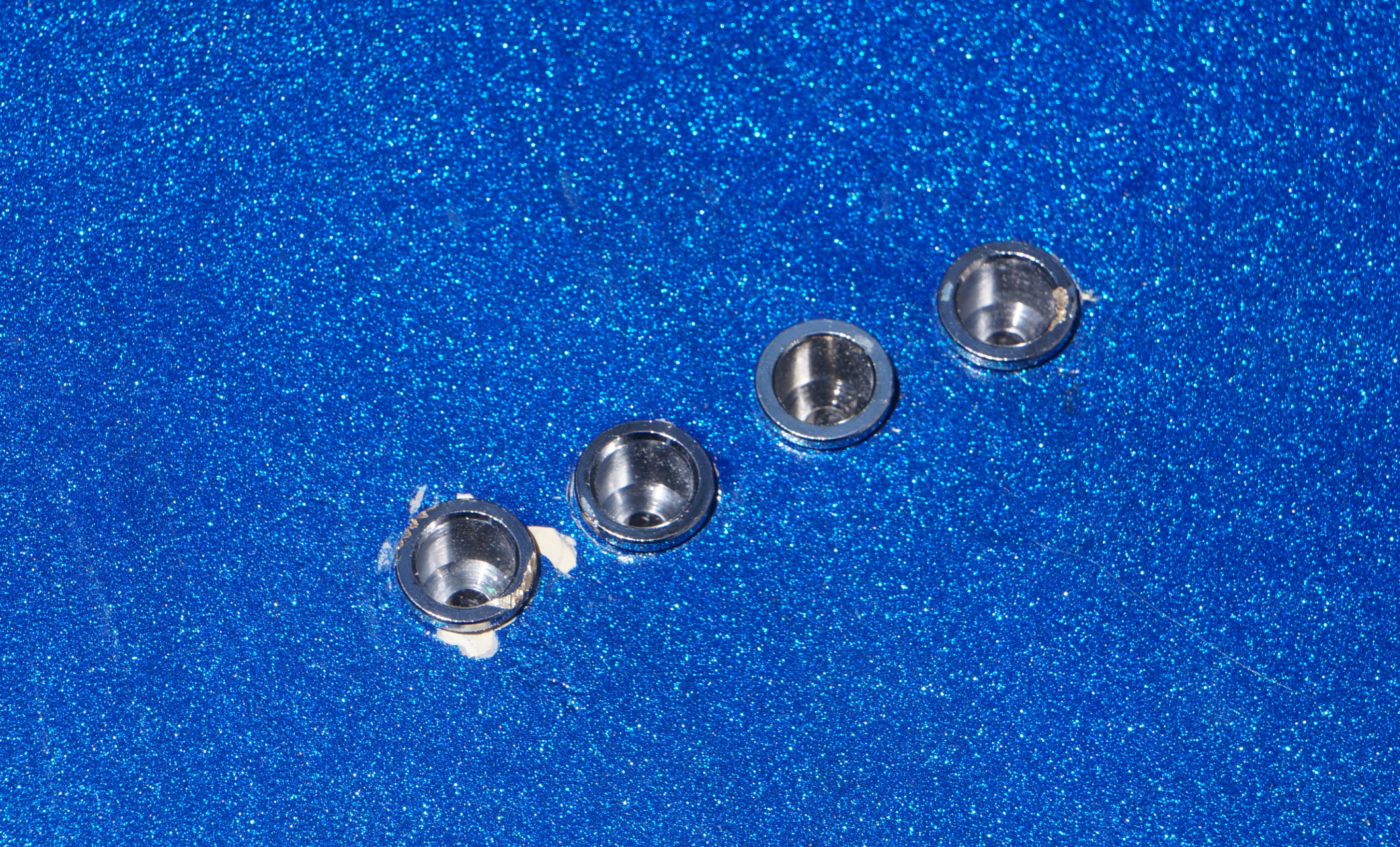
How in the world are the tuner holes so wildly out of round?
Aftermarket ones needing a larger hole but crudely drilled?
That can’t be drilled so badly out of the factory.
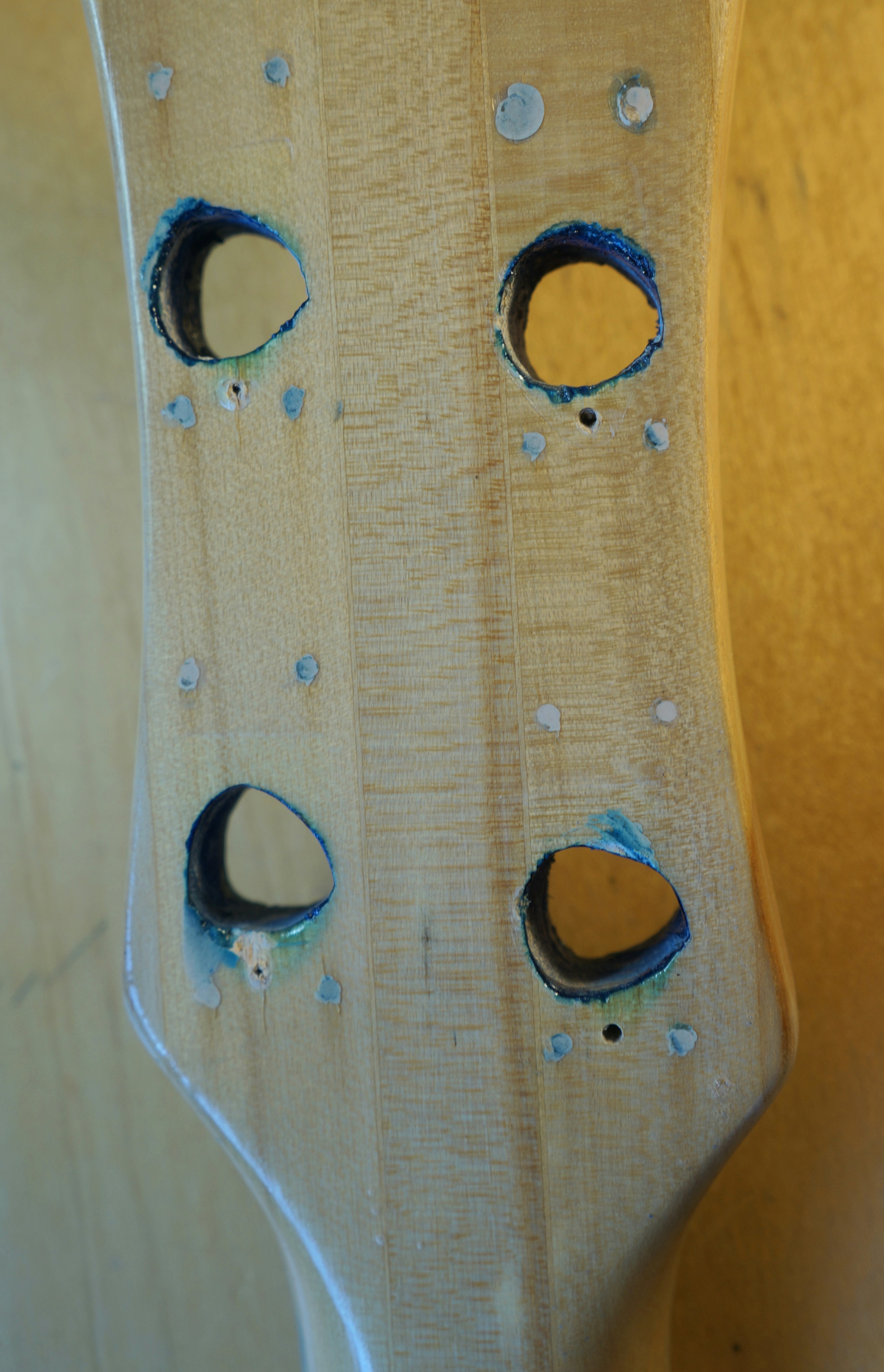
Anyhow, all fixable. I kind of like the rat-rod/relict look.
So I might leave a bit of sparkly blue on body and headstock and varnish over it.
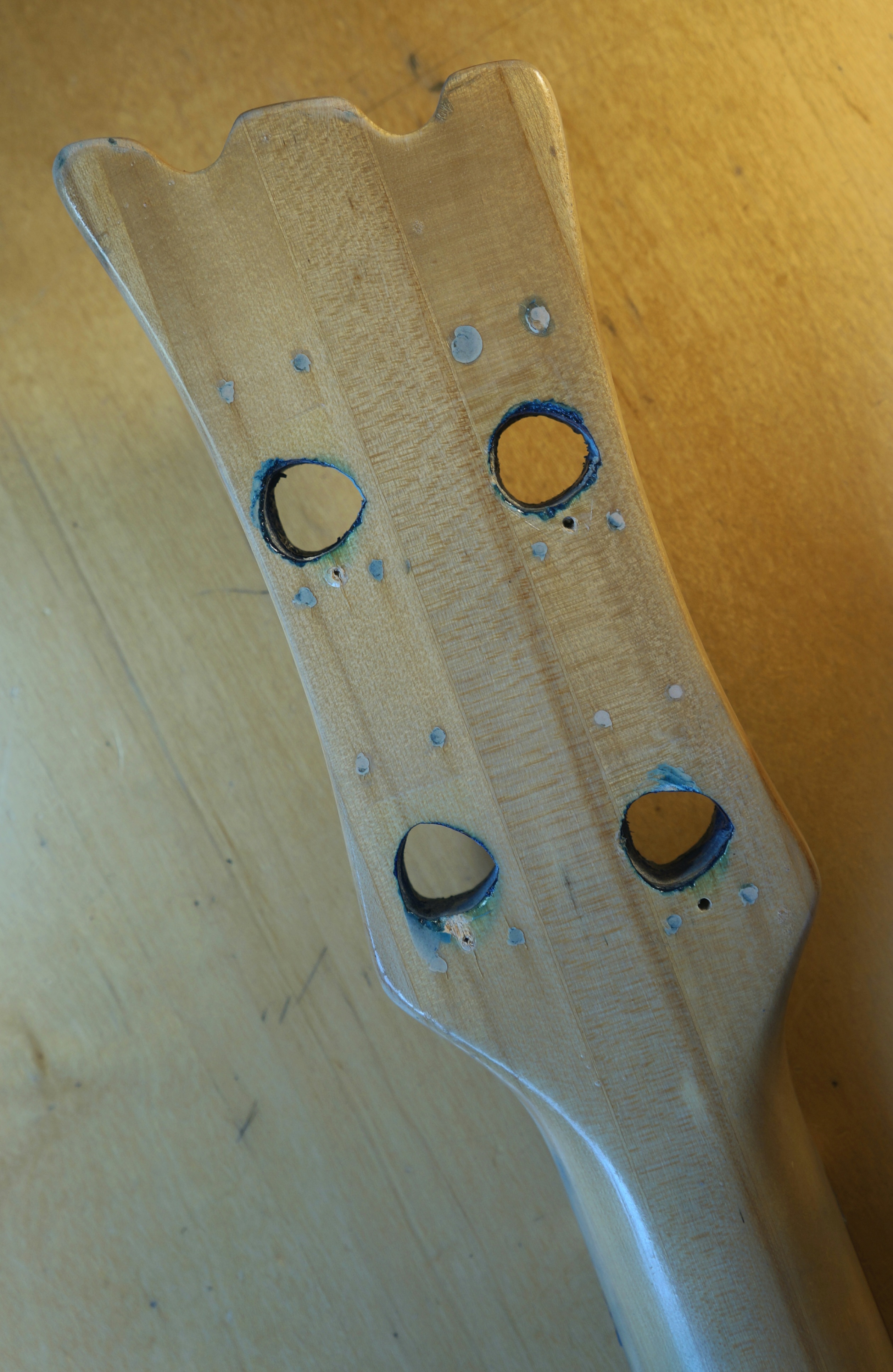
Save me buying unecological paint. I already have some unecological varnish.
The, apparently, nicely Faraday anti-RF shield painted cavities are a surprise, if that is the special expensive paint.
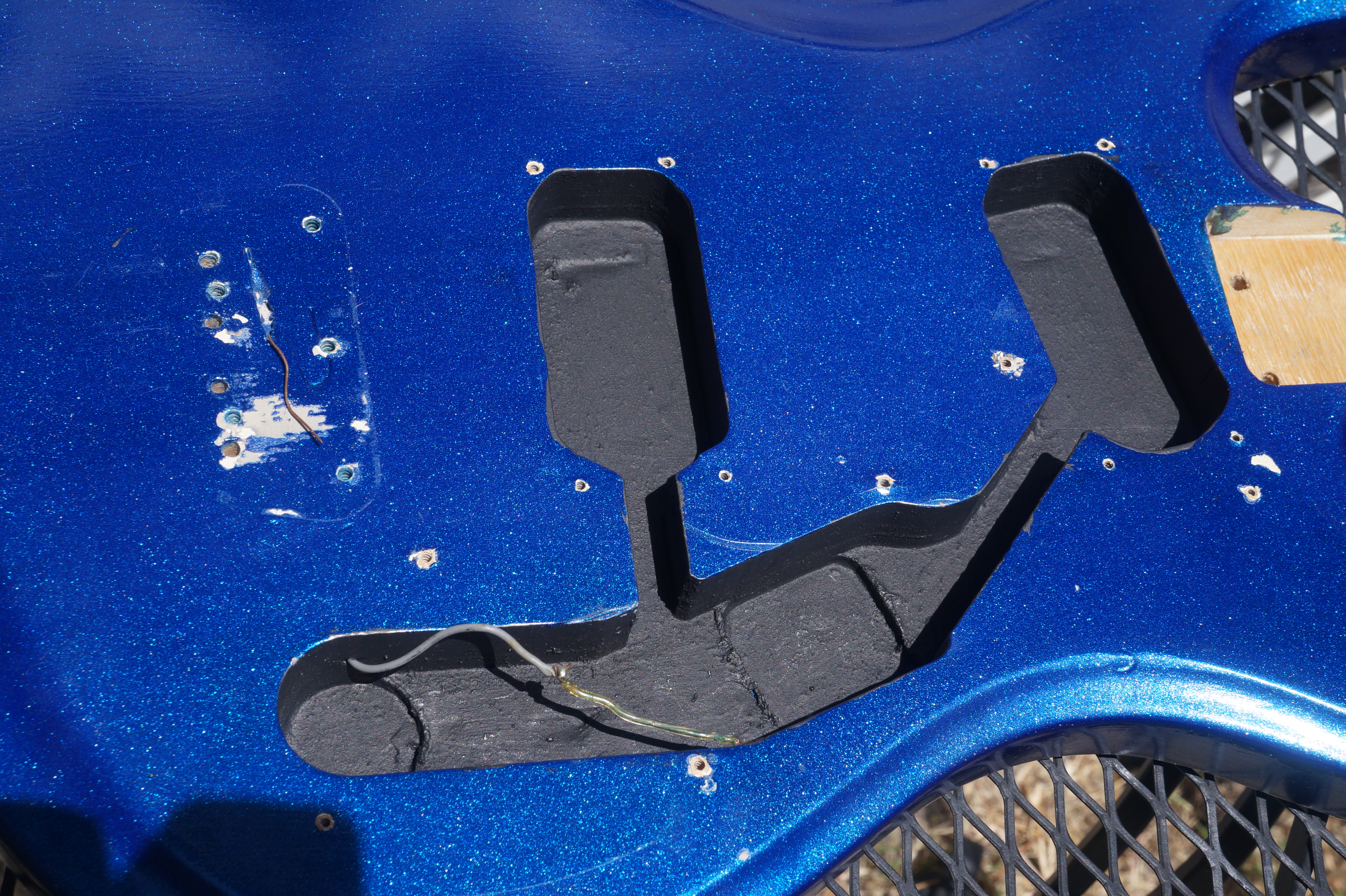
It did not hum, anyway, though the bridge ground wire was not connected to anything.
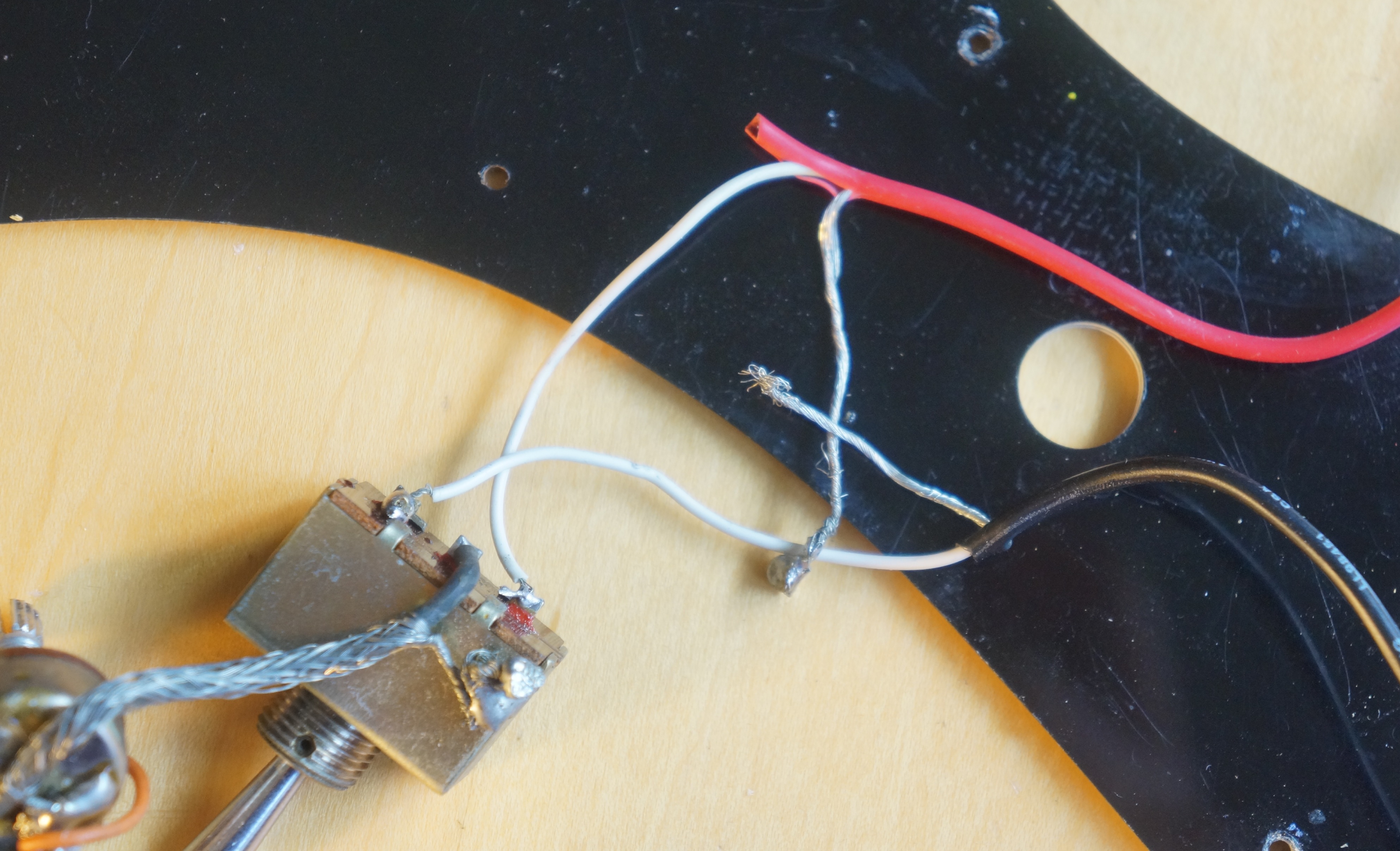
But I don’t know squat about electrics so I’ll probably solder the loose wire(s) back randomly, see what will happen. Pray for me.
Unless noted, all images and text by todgermanica.com.
 todgermanica.com