
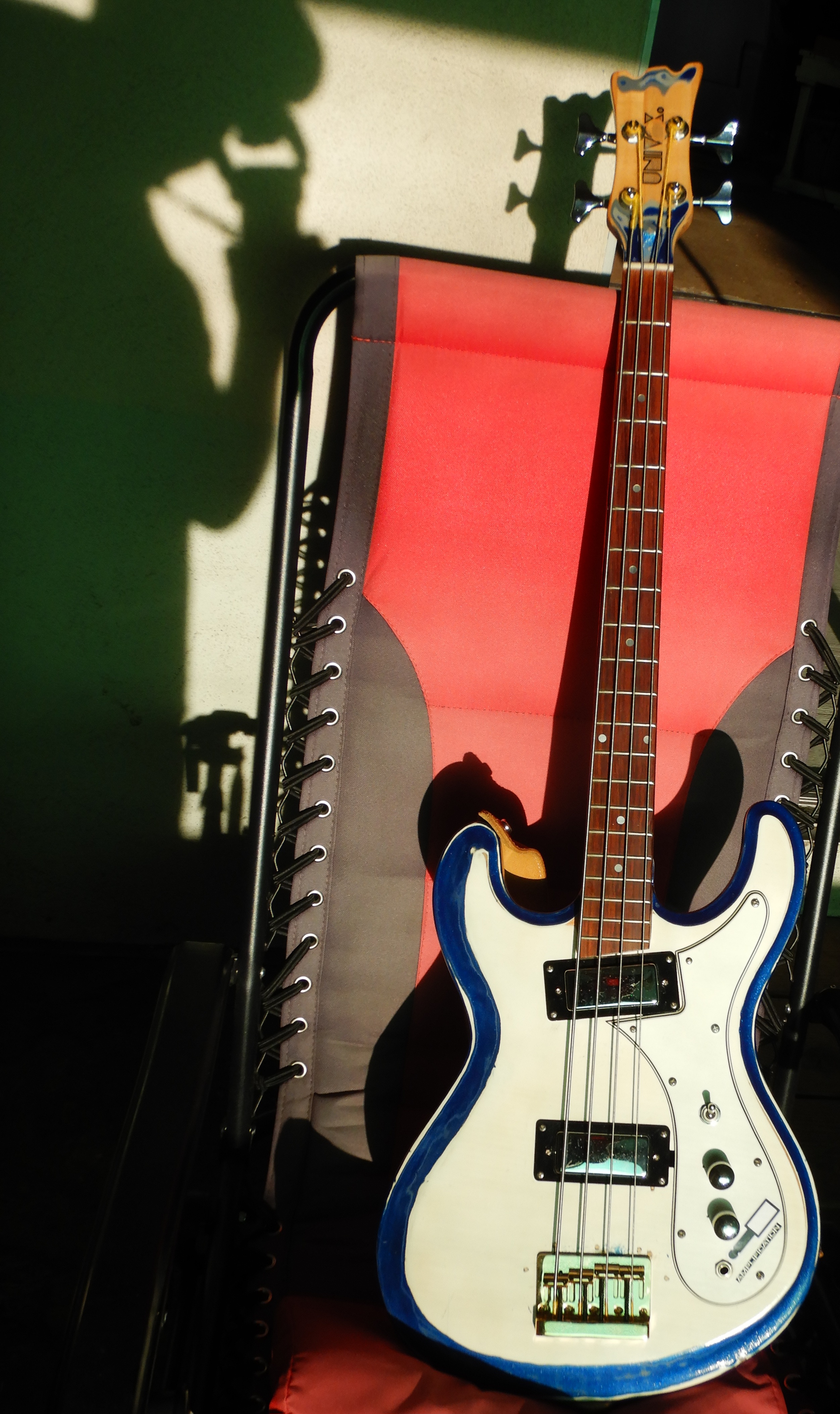
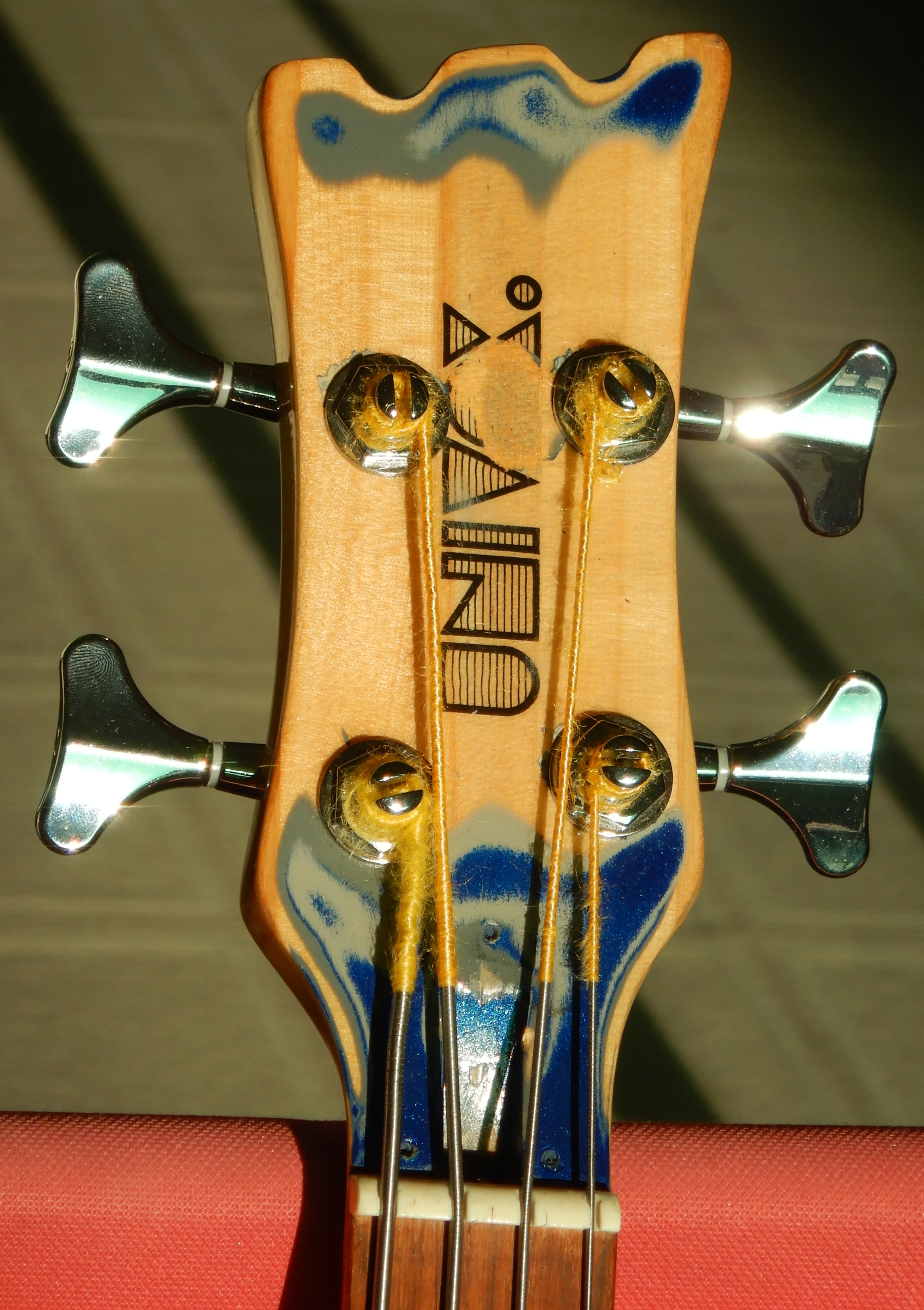
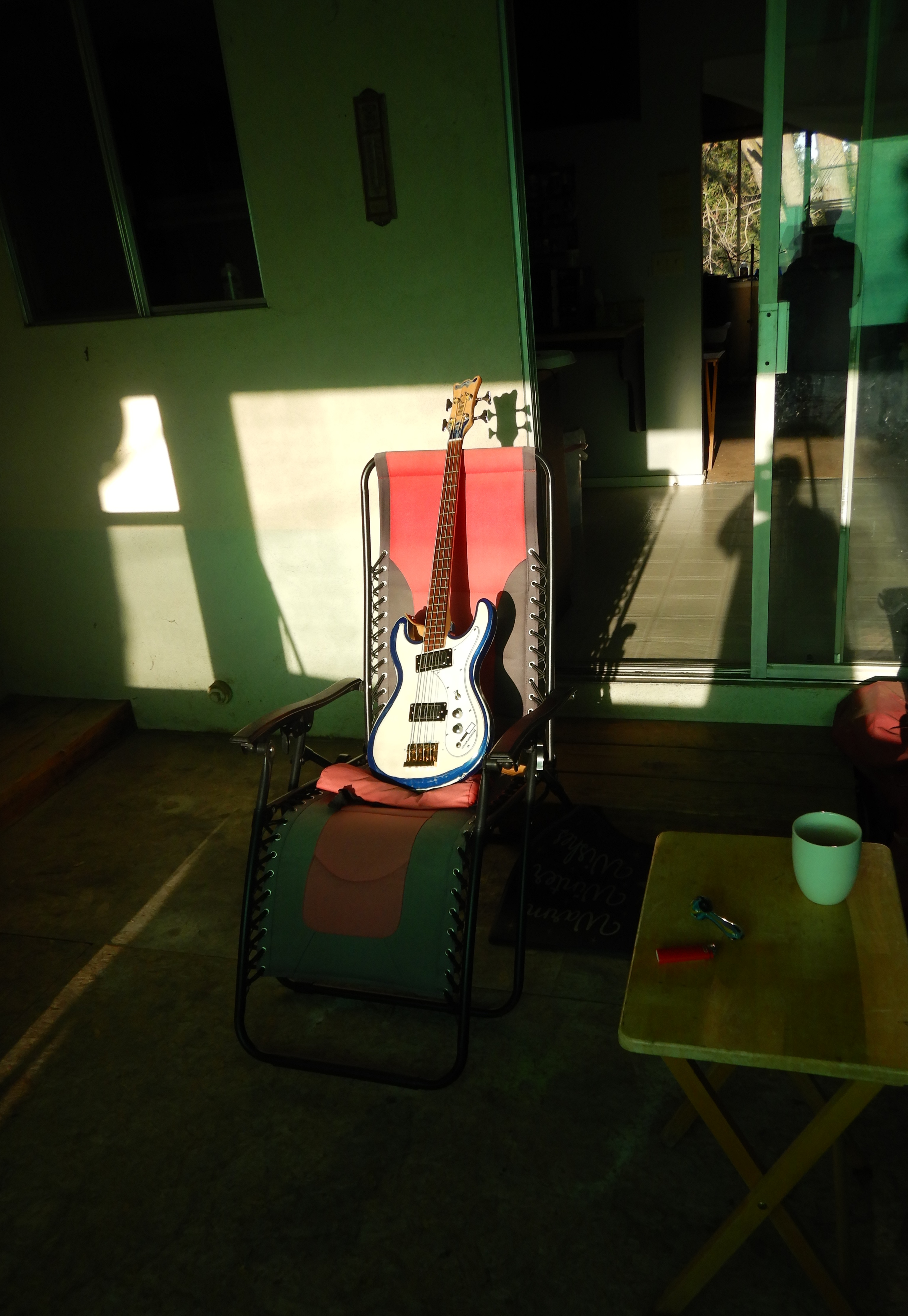
This is my early 1970s Japanese Univox Hi-Flyer bass guitar, one of the many Asian clones of the weird, legendary Mosrite Venture guitars and basses.
I got it in 2023 very cheap, $64, off Craigslist because it needed lots of work.
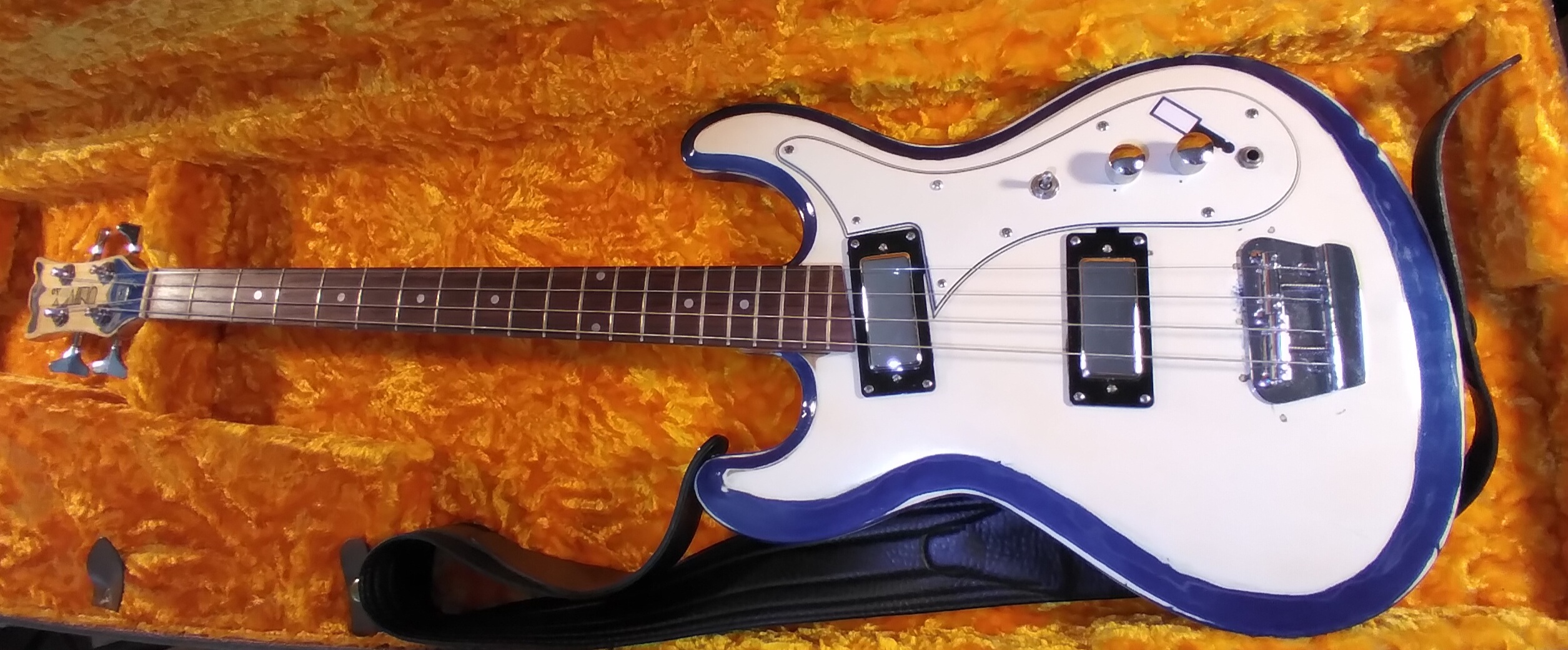
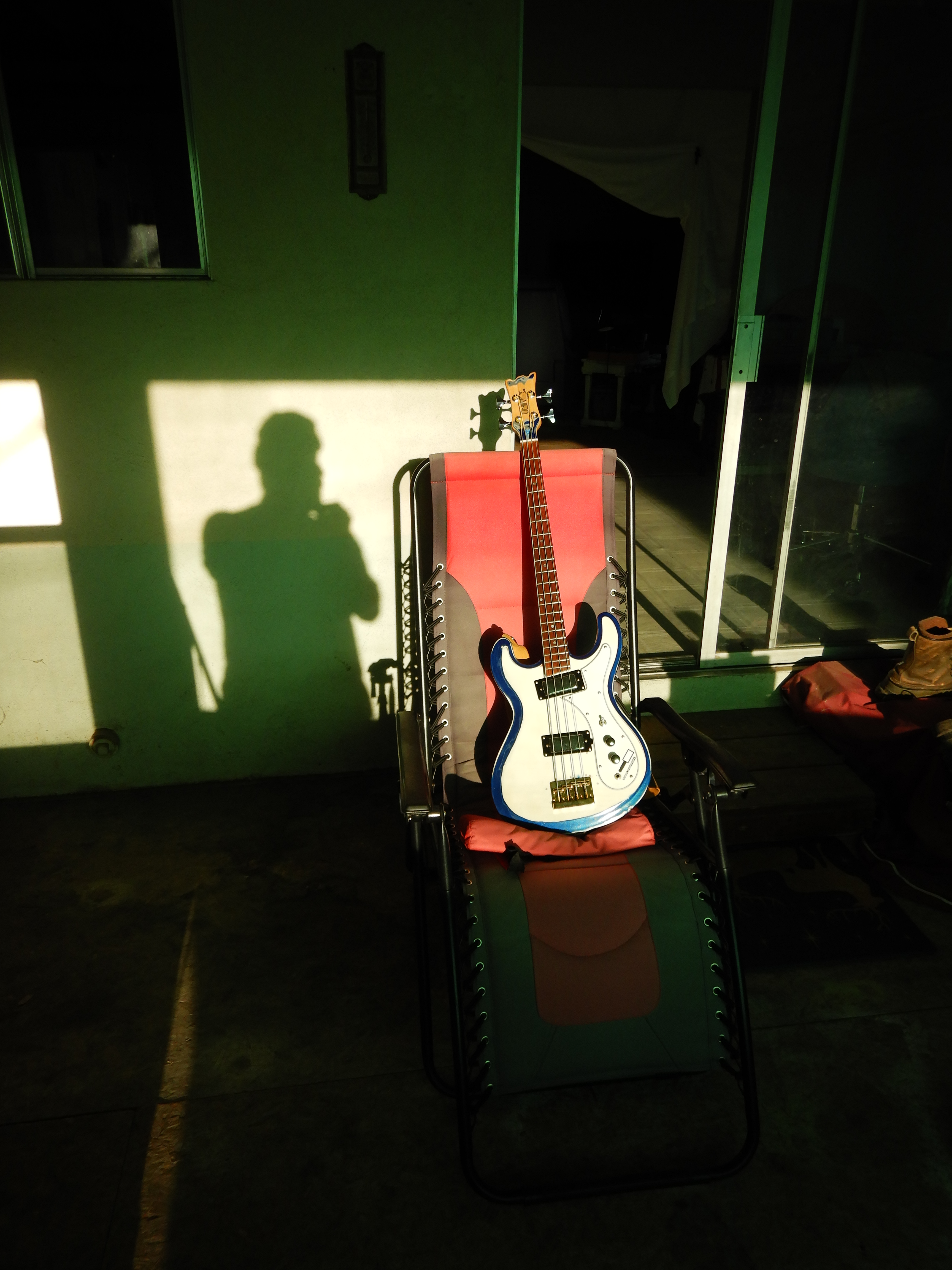
When I refurbished it I kept the ‘vintage style’ chrome bridge with only two adjustable saddles, because cheap.
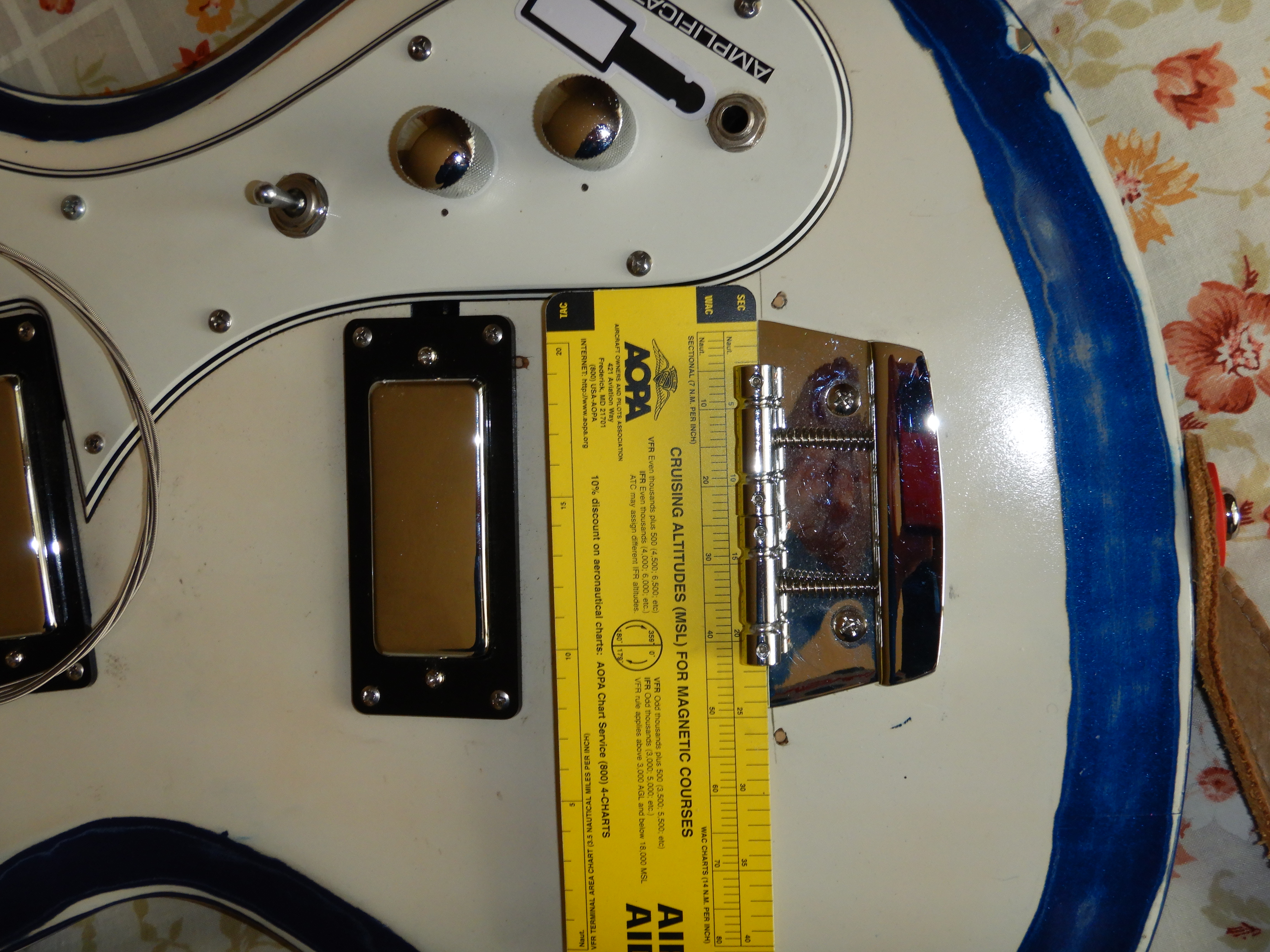
Even though that primitive type component was not used originally on Mosrite Venture basses, or on these Univox or Aria etc Japanese Mosrite clone instruments neither.
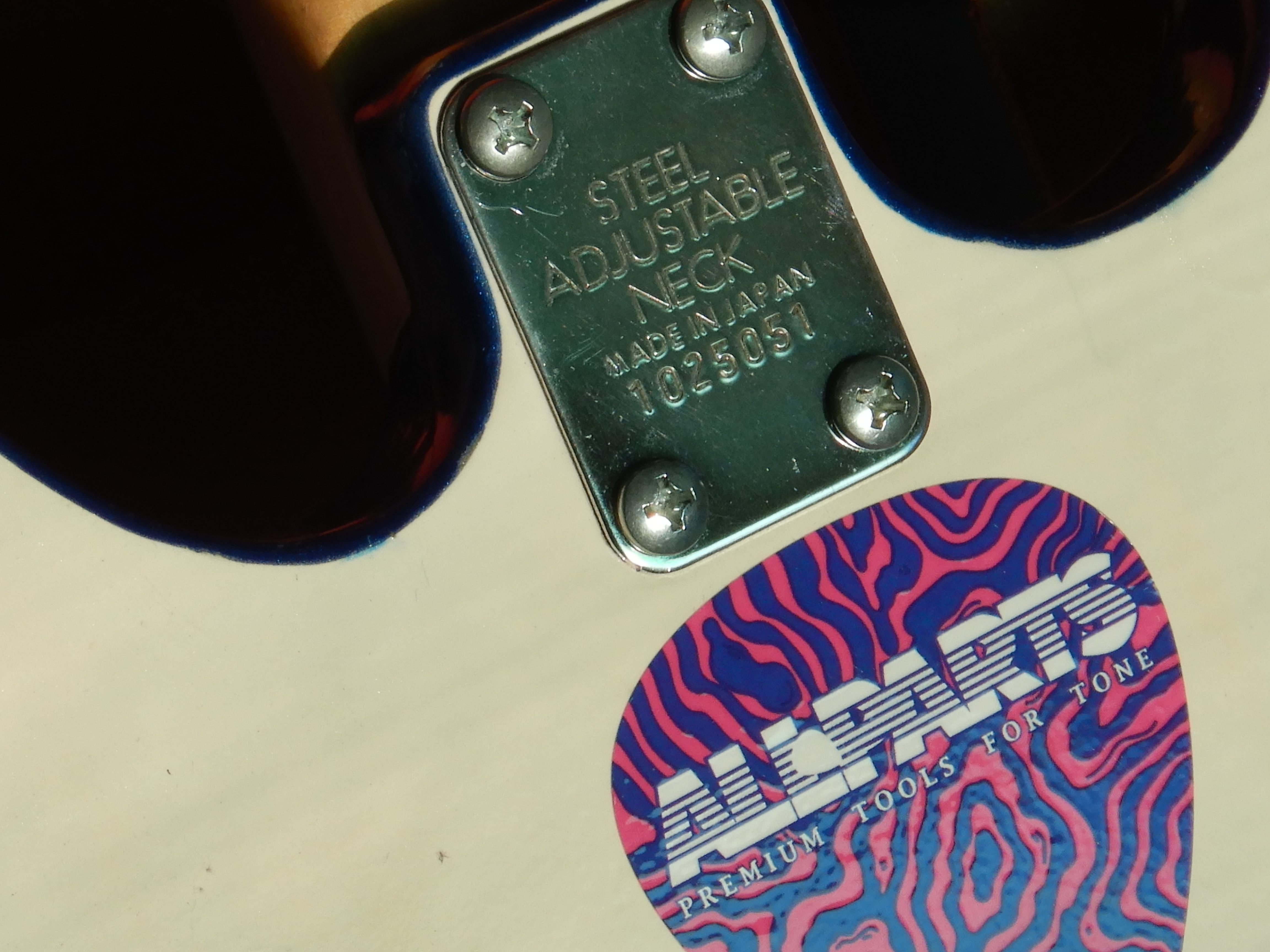
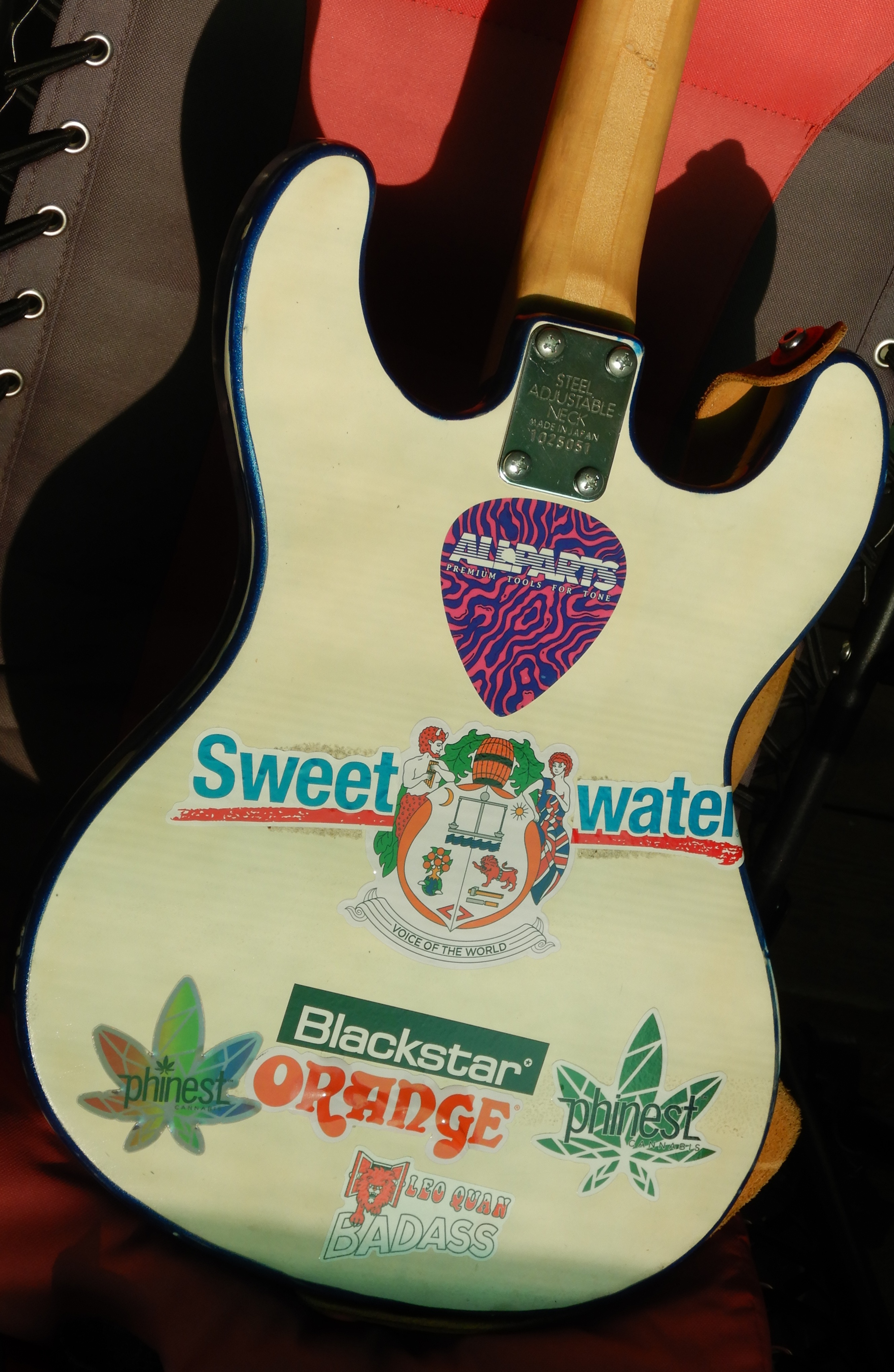
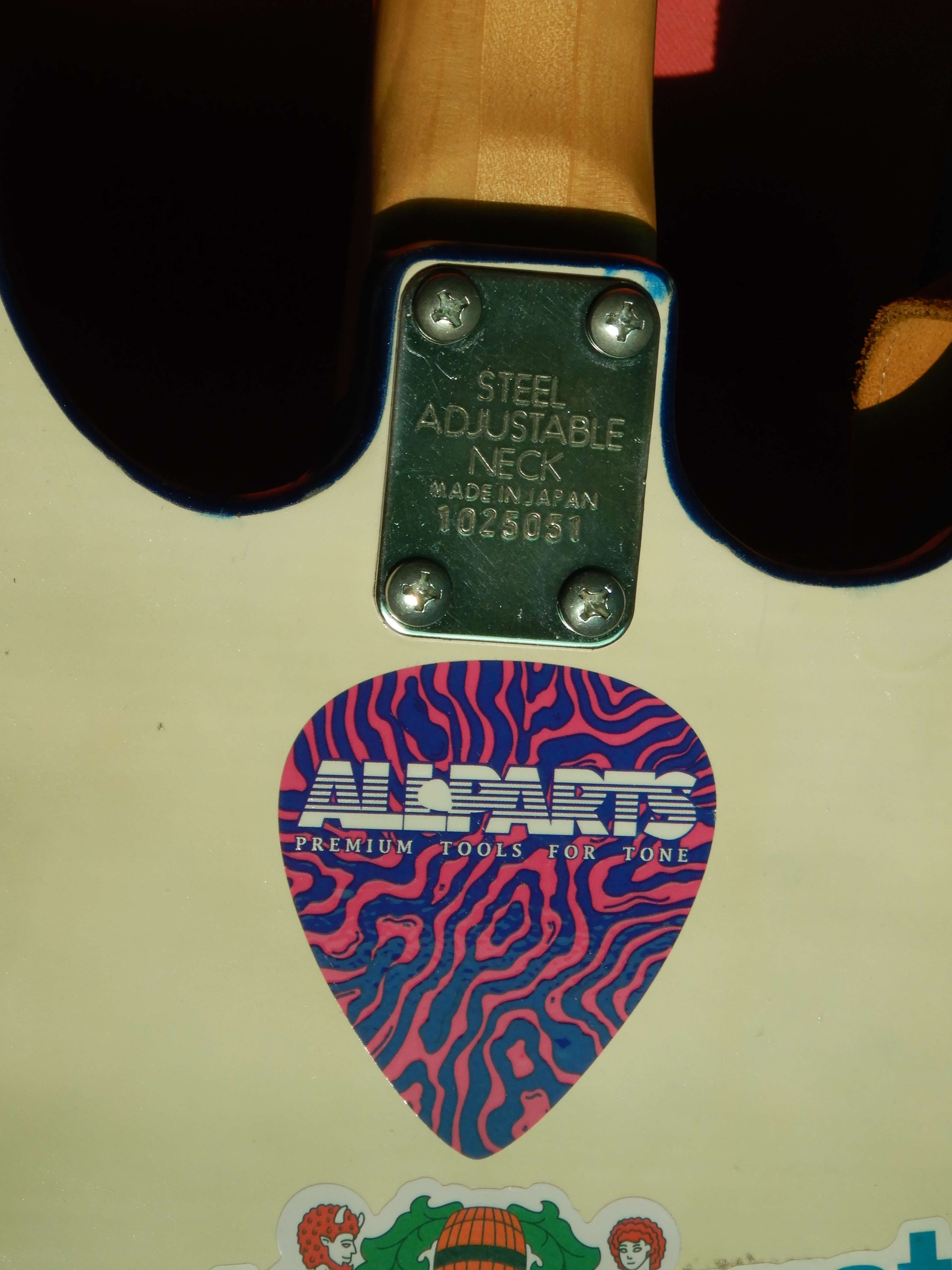
Since only the neck, body, pick guard, neck plate, wiring and potentiometers were stock when I got it, I feel free to improvise.
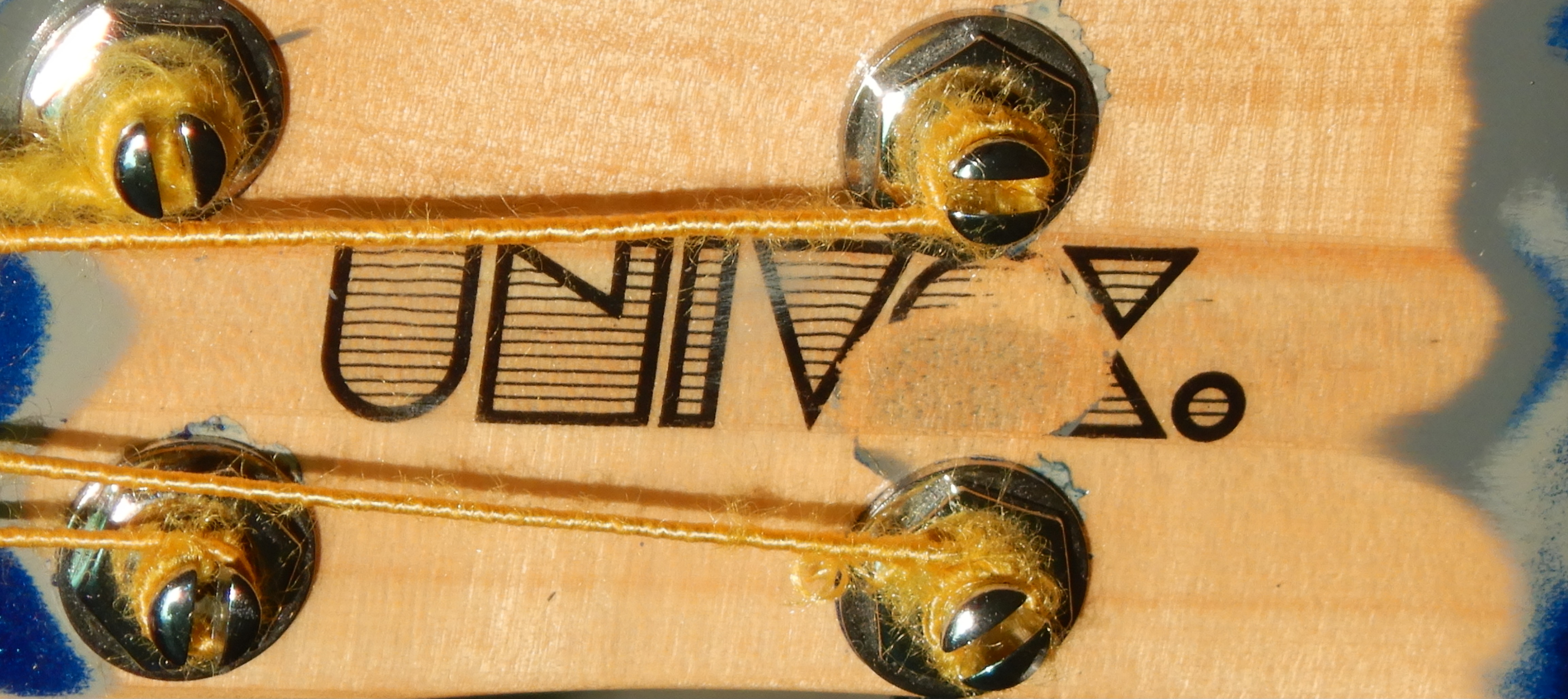
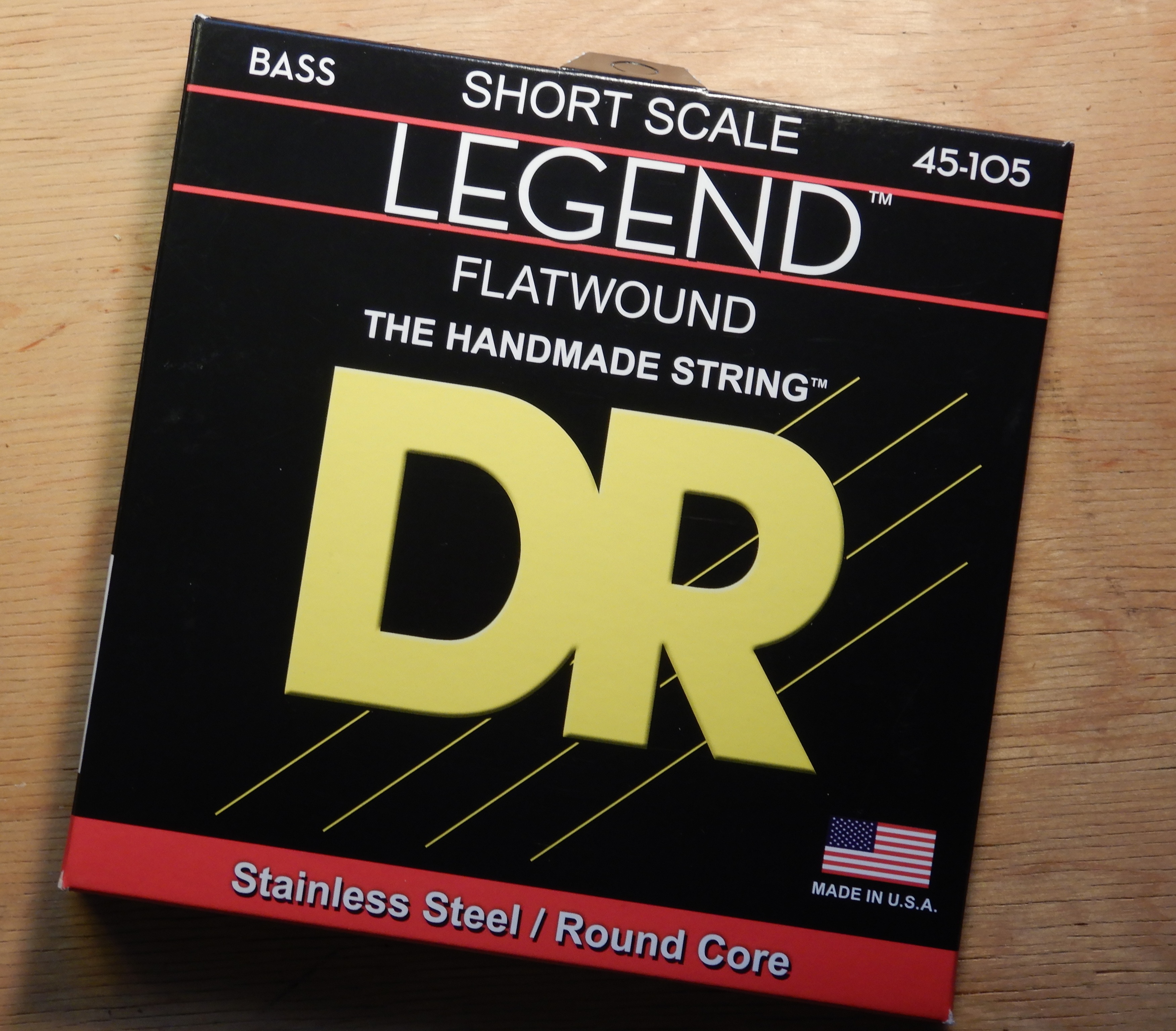
I can rationalize the discount closeout $45 gold ebay bridge as matching the golden color of the ‘silks’ on the DR flatwound short-scale stringset.
It already looks pretty quirky and ‘roadworn’, can’t really hurt its looks much further.
The Mosrites guitars and basses and their many Asian clones didn’t feature chrome pickups and controls either but I find them jolly, and downright surf worthy, like the bumper on my woodie.
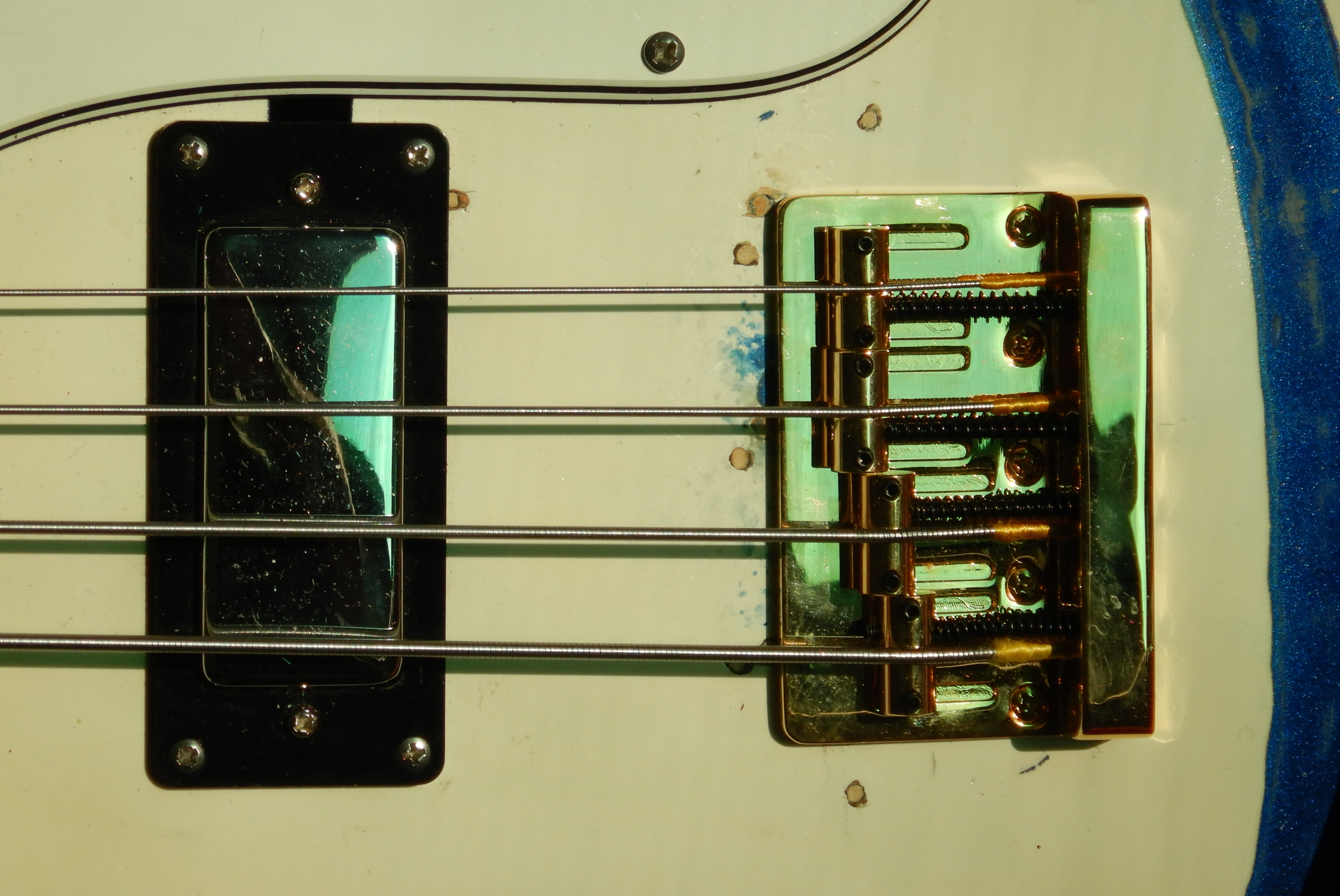
An easy fix and screw holes should stay hidden thanks to the heavy, larger bridge.
I feel no reason to swap anything else out. Though I do plan to eventually try again to re-solder the bridge pickup since it sounds pretty good when working together with the neck pickup.
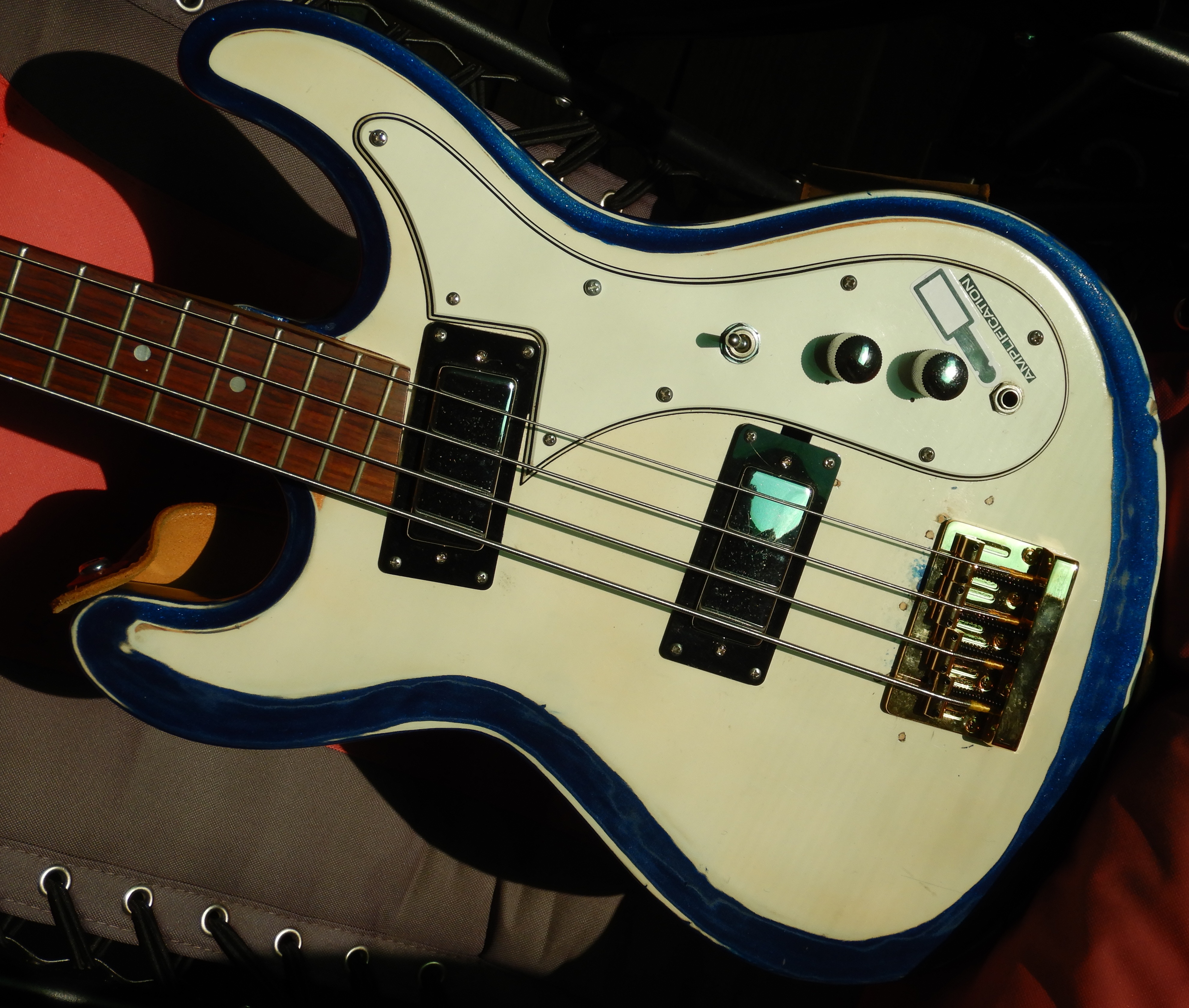
However, instruments that don’t quite intonate are annoying to me so I decided to replace the crippled-by-design 2-saddle bridge.
I also decided to swap in a newish set of flatwound DR strings to convert it back to a standard bass guitar.
I put the guitar guage piccolo bass strings on my slightly shorter new purple, $90 flea market Ibanez Mikro bass, making it now the piccolo bass.
And turned the Univox Hi-Flyer bass back to flatwound, DR, stainless steel big thump.
See the next post for the Ibanez restringing sound samples, after I did another new bridge job on that purple piccolo project.
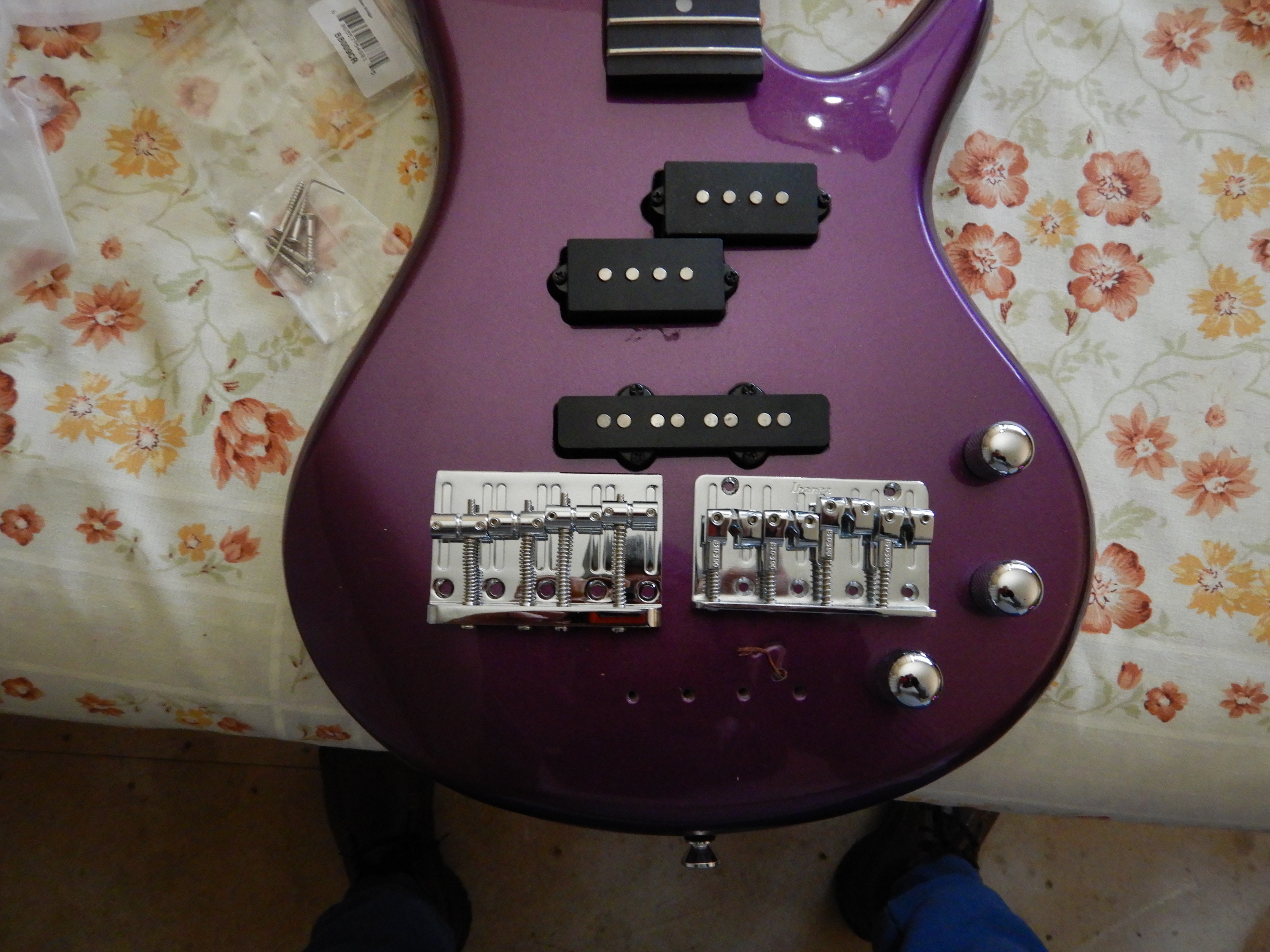
Of course I’m pretty cheap so I bought discounted closeout heavier duty bass bridges from ebay and Allparts for just over $40 each.
The one I put on the Univox Hi-Flyer is gold colored so it doesn’t match the hue of the rest of the controls but that doesn’t bother me, since the old ax is not exactly a beauty under my workmanship.
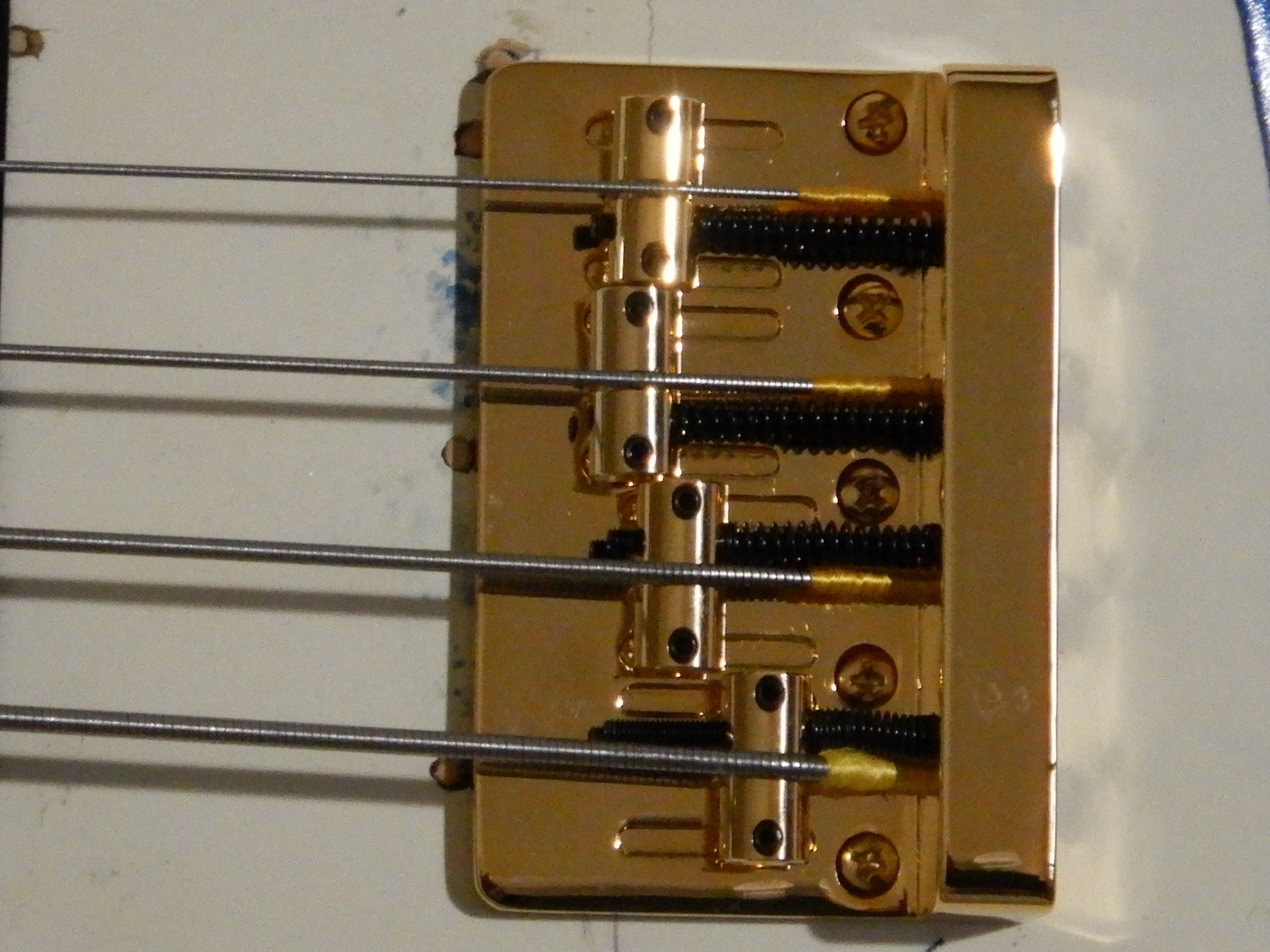
I just eyeballed the alignment when I screwed the gold bridge down and that didn’t work out adequately so I need to reattach it slightly toward the E string.
And move it 1/8 inch toward the butt of the body. Because A string still doesn’t intonate correctly!
This one is in waltz time.
This will take a half hour to fix so not a big deal. Never time enough to do it right but always time enough to do it over.
The selections are mostly textbook blues bass lines from my fine old blues based textbook Progressive Bass by Turner and Gary, much modified and expanded.

I’m including only a few Samsung Voice Recorder samples of tunes played down the neck so the weak intonation is not apparent.
I’ll post more amp/bass samples when I reposition the solid gold bridge and get the bridge pickup reconnected.
Most of the samples are played through my newish Fender LT50 bass amp with 12 inch speaker cone, with many different sound effects available, though I played the tunes largely clean in tone except for the last long noodle in A.
Below is the long blues noodle in A if you’re a glutton for punishment. Definitely funked up the tone with flanger or reverb, something dirty sounding. This was my old Roland bass amp with its blues drum track.
The intonation is still slightly off played up the neck because I mispositioned the new gold bridge and ran out of saddle adjustment thread length, but it is not very noticeable, and easily fixed by repositioning the bridge.
The nonop bridge pickup is most probably my bad solder job shaken loose, and again is not hard to repair even with my weak soldering talents.
Unlike my bad fingering, timing and muting, which are not easily fixed. I’ll post more samples when I get it further sorted out.
Unless noted, all text and images by todgermanica.com.
 todgermanica.com