I’ve decided to call this instrument a 4-string, cigar box, piccolo bass guitar, for no obvious reason except the confusion of my enemies. Since nobody knows what it means, not even me.
Lots of screwholes to cover from previous builds, or at least attempts.Even more random holes from mounting various bridges and sound hole covers, with little success until now.
I’ve spent big chunks of four days working on it outside in the nice spring weather and it’s just about ready to try. I know I’ve failed at this twice already but this time I’m pretty confident.
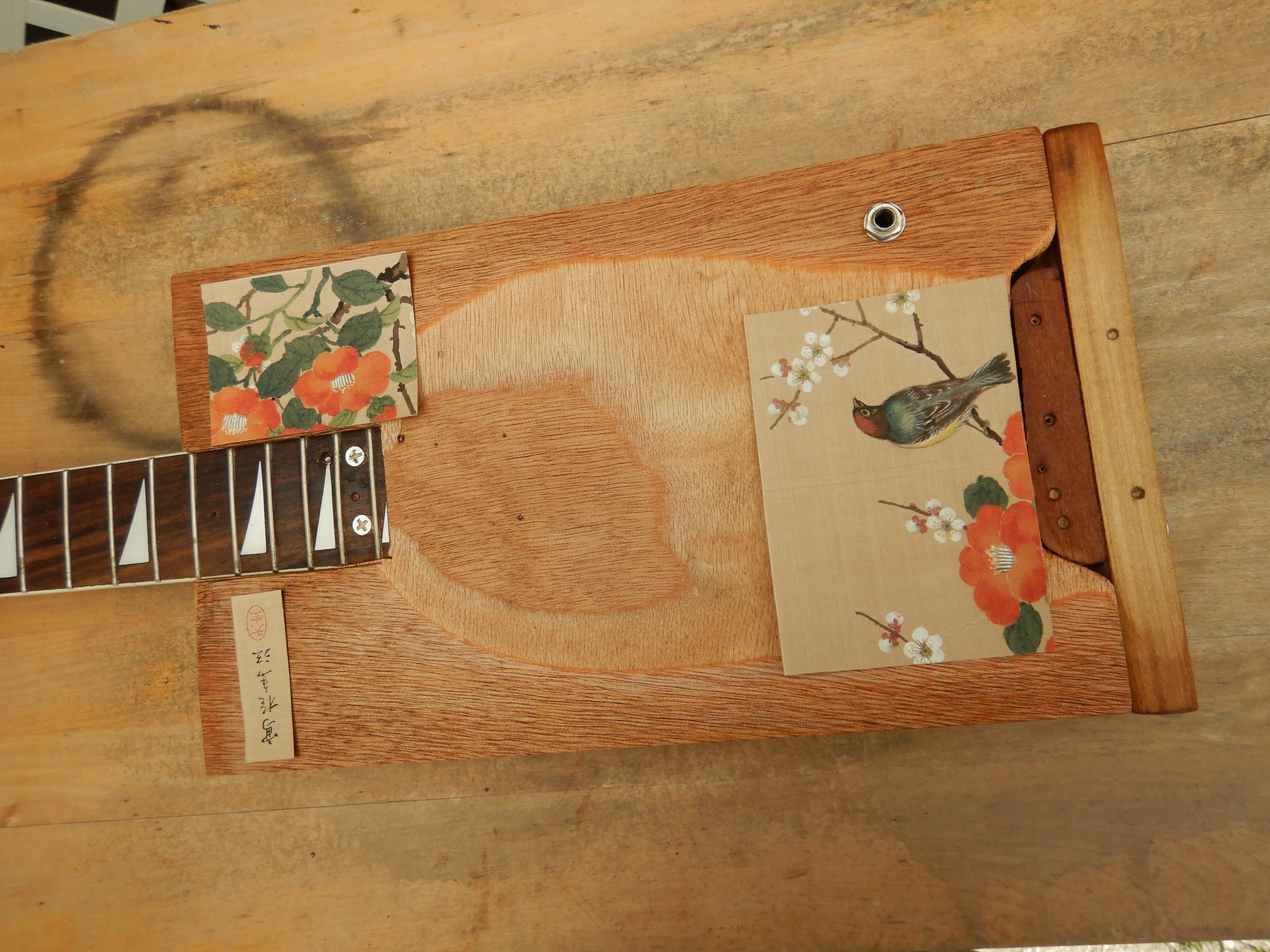
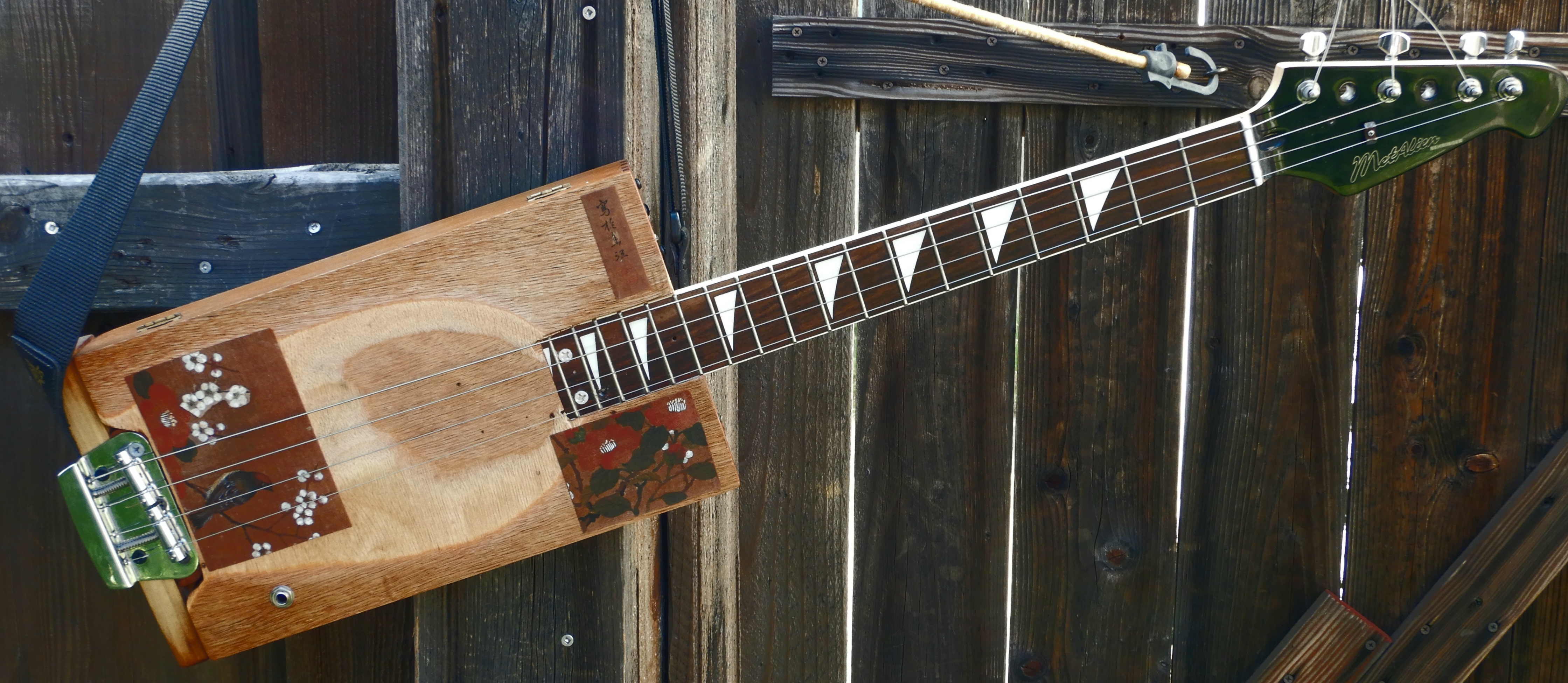
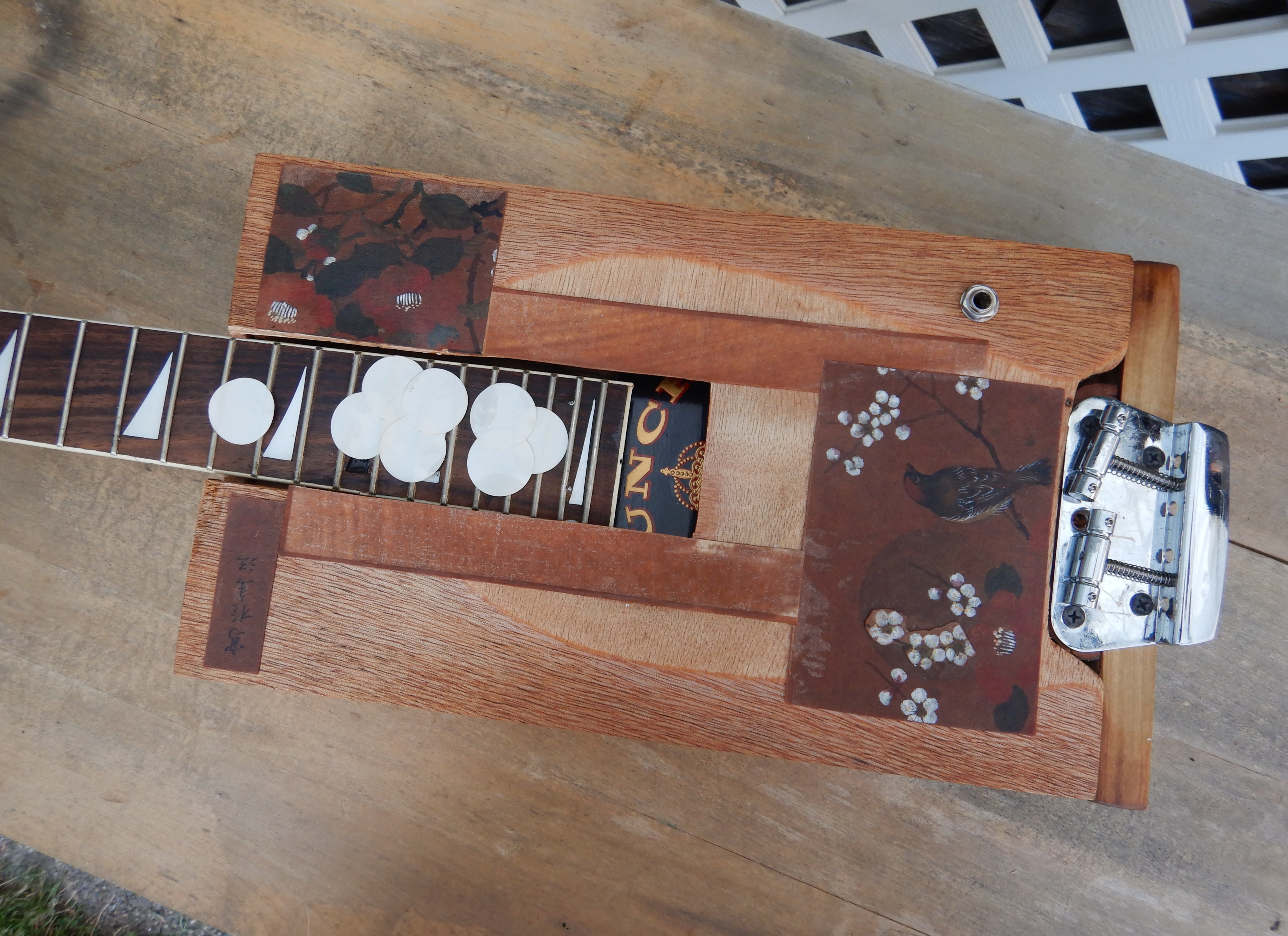
Yes, finest kind $5 flea market Kona brand strings. Cheap in the cigar box guitar tradition. Accept no substitute.At this point I’d sanded the top deck lid down to onion paper thinness and still kept hitting it with my fingers anyway, so I decided to cut the deck away entirely where I kept tapping it on accident.I got the bird and flower painting from a neighbor’s yard sale and cut and glued it to cover the sound holes and wild screwholes, before I cut away the top. It was painted by Hong Kong refugees.The weak cigar box is under no tension at all, the stress being taken by the central hardwood plank keel and the two cross brace sticks screwed solidly in to front and back.
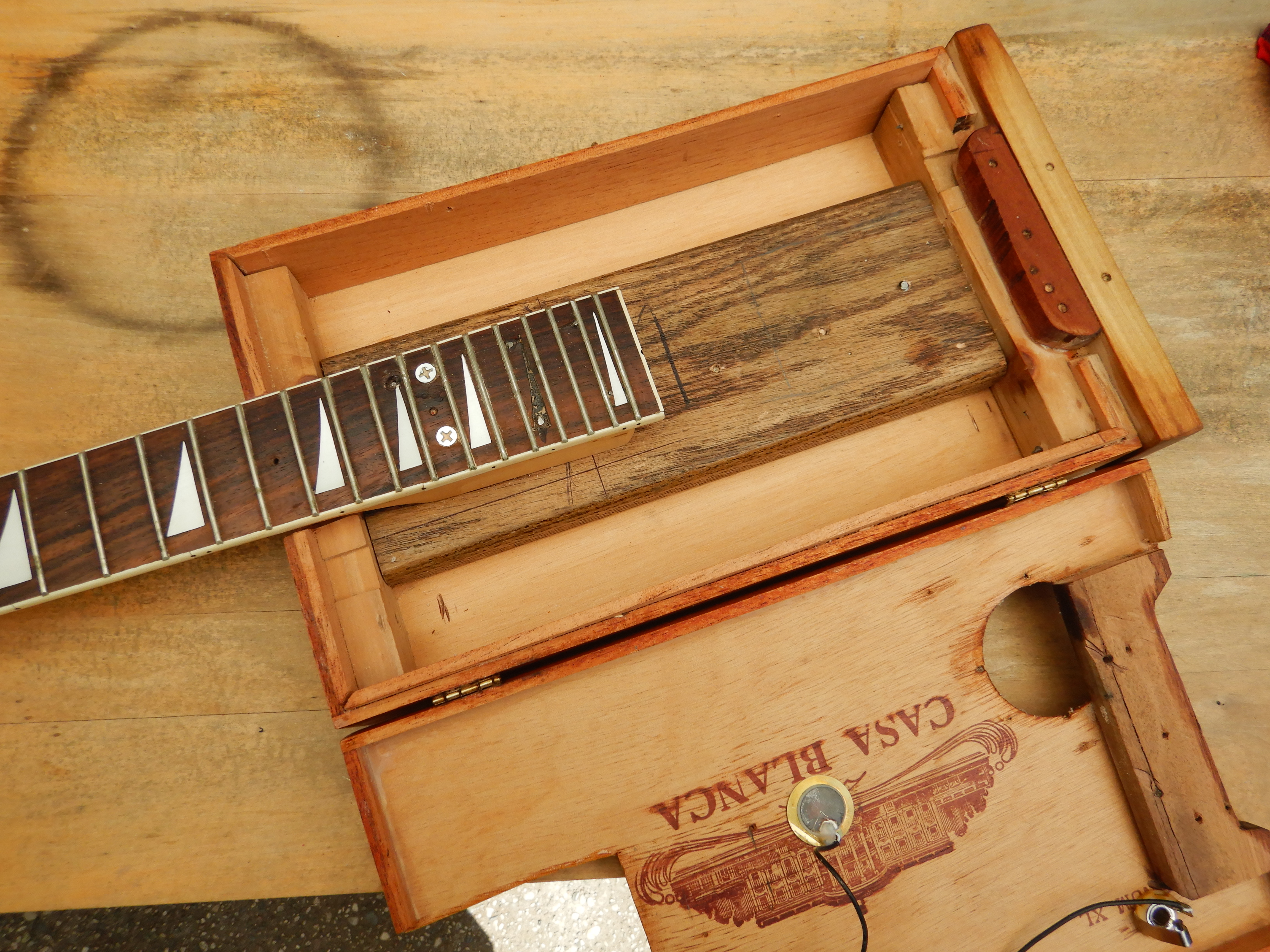
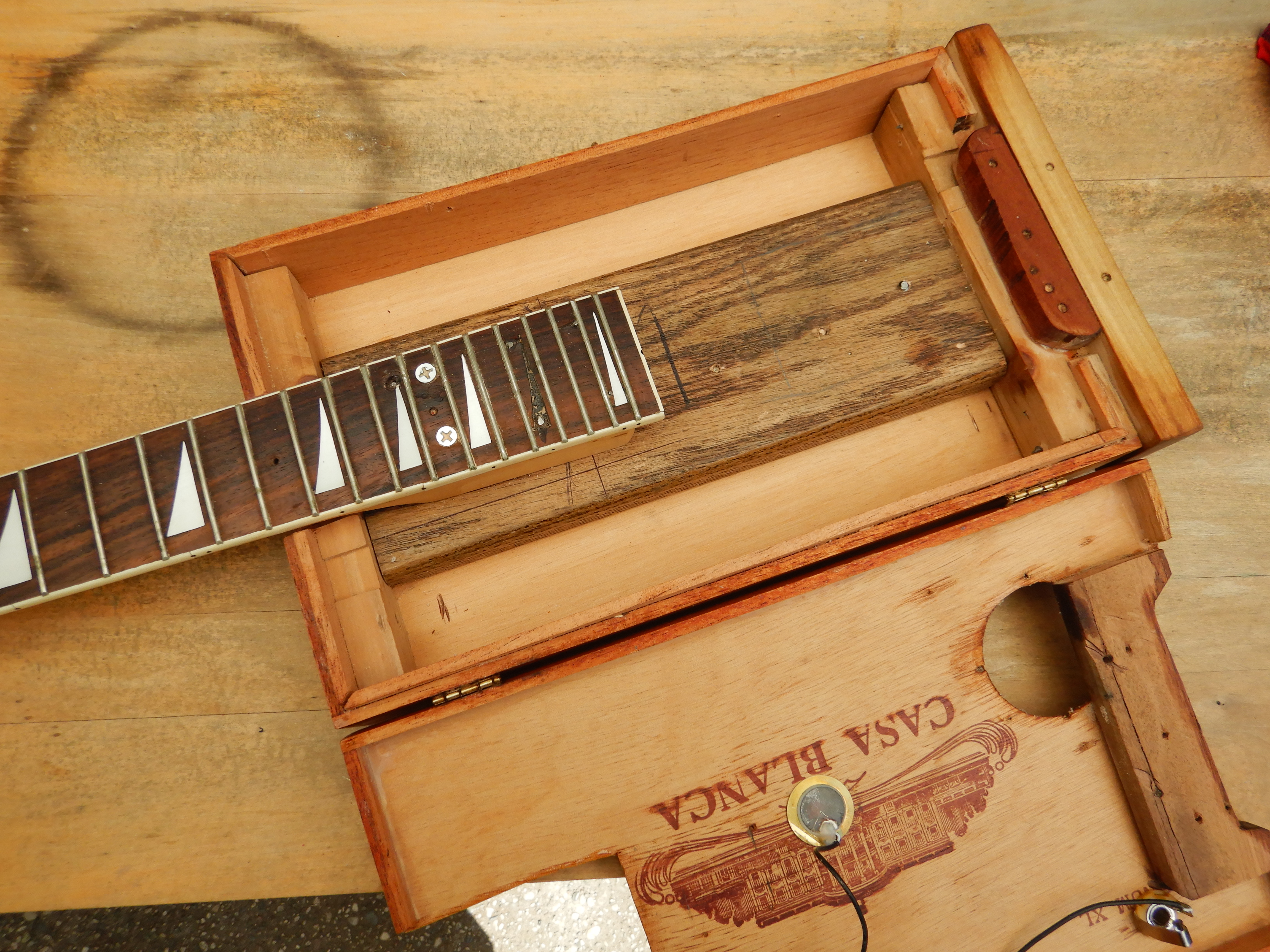
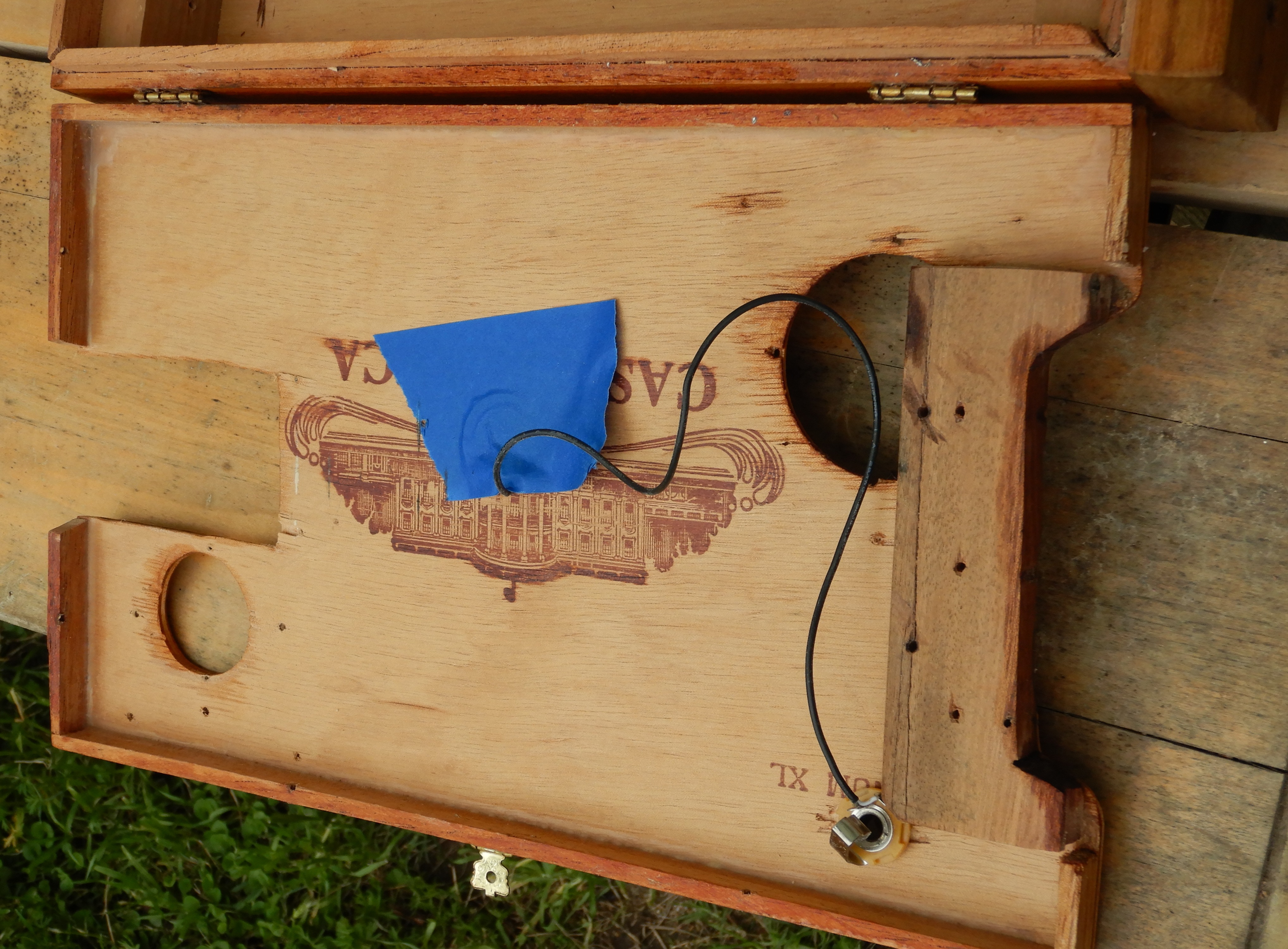
To fight weakness and excessive flexibility in weak cigar boxes, I cut a solid plank of wide hardwood into a base or keel for the box. I solidly attached it inside the box with multiple strong wood screws.
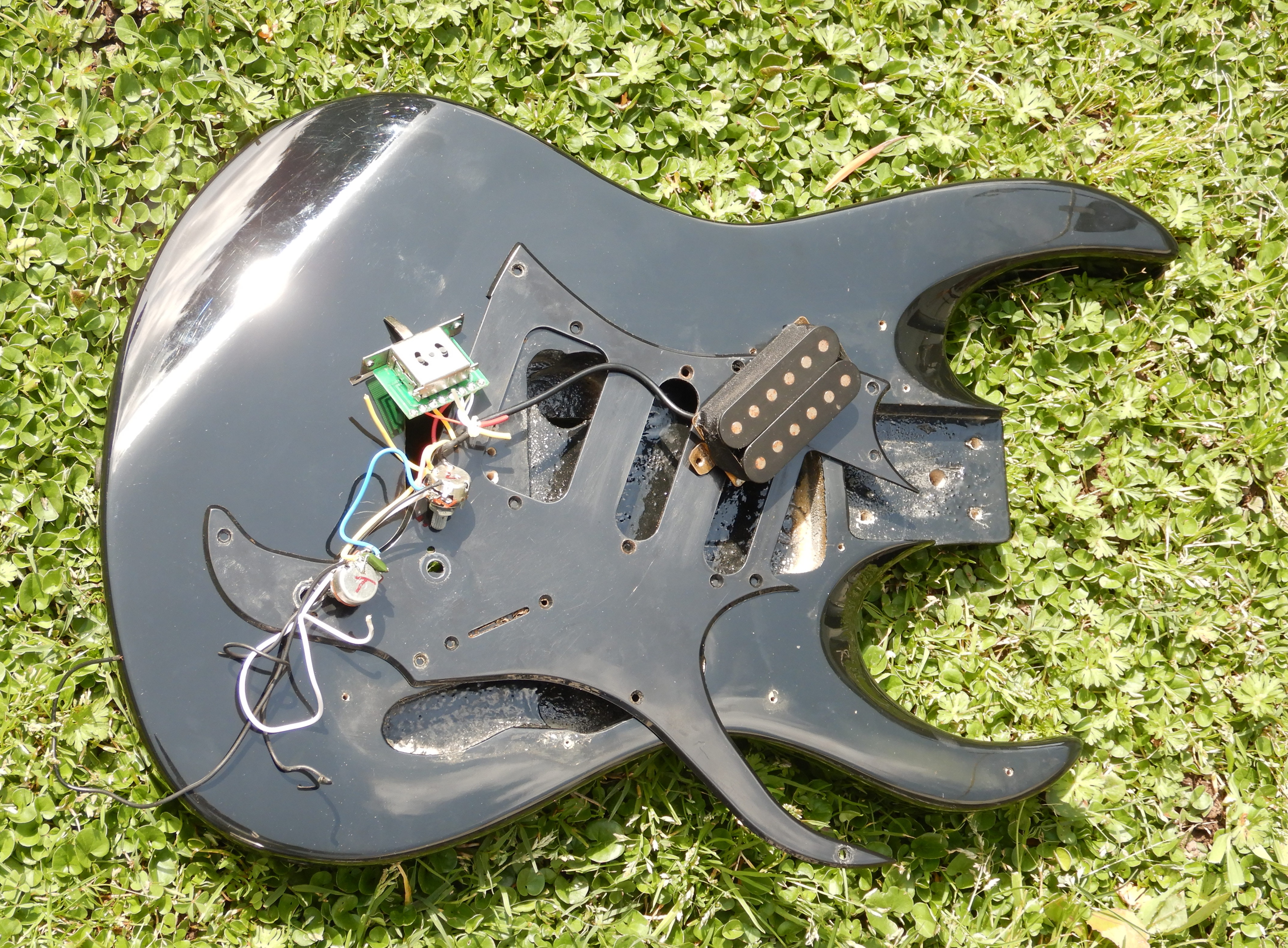
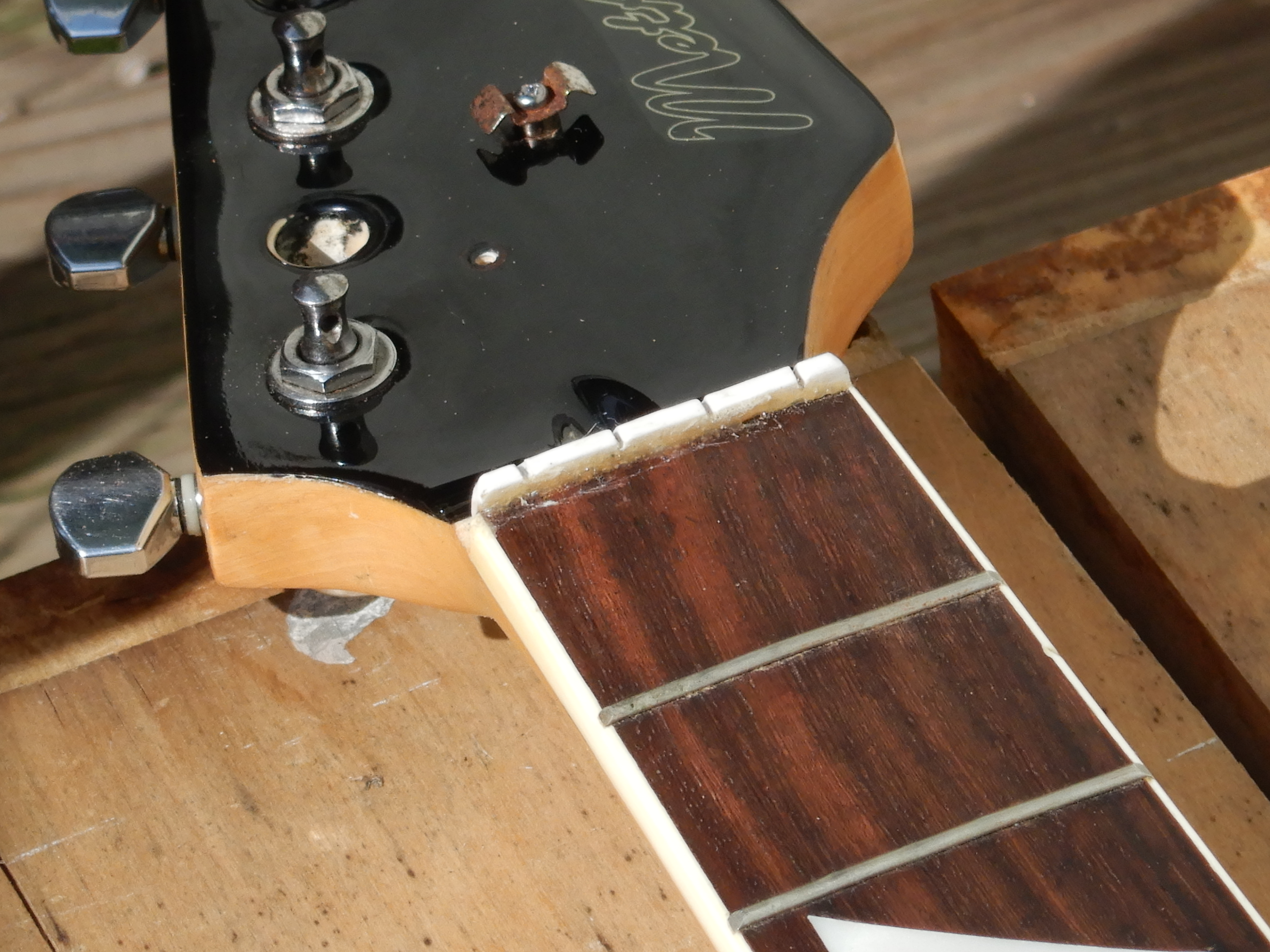
The neck I’m using I removed from a trash-find Behringer 6-string guitar my sharp-eyed brother salvaged for me and cleaned up. Thanks, bro. I stripped it down to components for various projects.
This wiring harness is going into my 1973 Univox Hi-Flyer short-scale surf/punk bass, and maybe the humbucking pickup.
The neck torsion rod is stripped but I’m hoping that won’t matter in this instance since I attached it rigidly to the hardwood base with several wood screws, top and bottom. Or so I’m hoping.
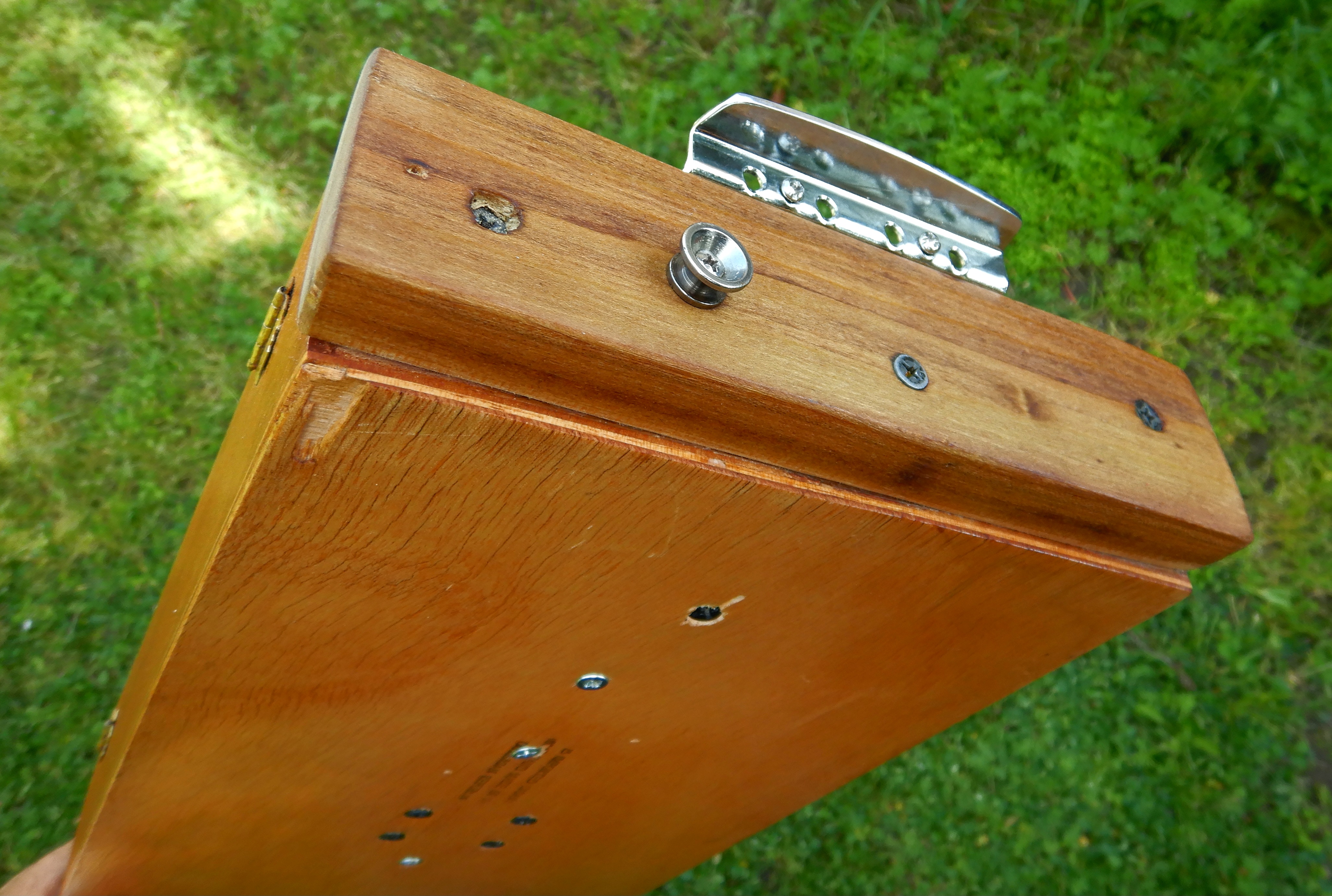
I needed to add this tail block to locate the bridge and saddles 25.5 inches from the nut.The penultimate iteration before I began cutting away the box top in order to cut down on extraneous finger and hand sounds from the sensitive piezo stick-on pickup. You’ll hear it in the 5 minute sound sample below:
The piezoelectric pickup I stripped from a cardboard cigar box guitar I bought at Denio’s flea market for $30 for the parts, and I tested it before I stripped it.
I liberally sprayed the somewhat corroded machine heads in Remington gun oil and let them soak for a day. I suspect the donor guitar got damp in the trash.
But they seem to work OK for now, who knows for how long. But the price was right.
I used Elmer’s School glue to attach the piezo pickup to the underside of the box lid, taping it with masking tape for extra stiction.
At this point I could sand no more and began cutting away the box top where I was plucking the notes. The slightest touch sounded like a snare drum.
Cigar box instruments can be cheap. The 2nd hand store cigar box cost me $8. Strings are a finest kind generic Chinese $5 set from my pal Dennis at Liberty Loan pawn shop. The strap and hanger pins I already had.
An earlier iteration here with a failed Ibanez bridge. You can see how I was reluctant to carve away such a pretty logo, but cut I did, for better playability and tone.Easier to get good sound out of my Fender Rumble 25LT amp rather than this $91 Blackstar Fly3 amp, but OTOH it weighs nothing and fits in the tiny gig bag pocket.
I bashed off the Behringer neck’s 6-string nut and glued on a ukulele nut I had, using automotive trim glue I found in my garage. I filed the string slots lighly to lower the action.
I plan to cover the bad neck end of the box with a logo facade from a different cigar box to cover the screws and my crude cutting.I tried the strap pin in various locations but the ax is a bit of a neck diver, despite the solid hardwood bracing inside.
The $30 for the pickup and output jack were my biggest expense and the grand total is $43 usd so far. If I’d been content to keep it acoustic only it would have cost me only $13.
But I needs me the noise. Cheapness is in the cigar box guitar tradition.
I’m gluing down a logo I cut from another cigar box to hide the crude hardwood scrap plank I used as a backbone to attach the neck to.
Here’s the latest version, after cutting away some of the box lid for more finger room.
I covered over the ugly gray/black, bugle head, self tapping, wood screws I used to build it with, using white adhesive index dots.
Here it is with the tung oil drying, with paper trim glued on lining the sound hole, and white adhesive index dots beautifying the trash-find, salvaged, Behringer Metalien guitar neck.I’ll string it up and provide more sound samples in the next post. The noisy sound samples provided above demonstrate how hard it was not to touch the box too loudly before I cut away more of the box lid.
Hopefully with a good bit of the deck cut away it may sound less noisy from my errant fingering.
Unless noted, all text, audio, video and images by todgermanica.com.











 todgermanica.com
It looks good.
>