
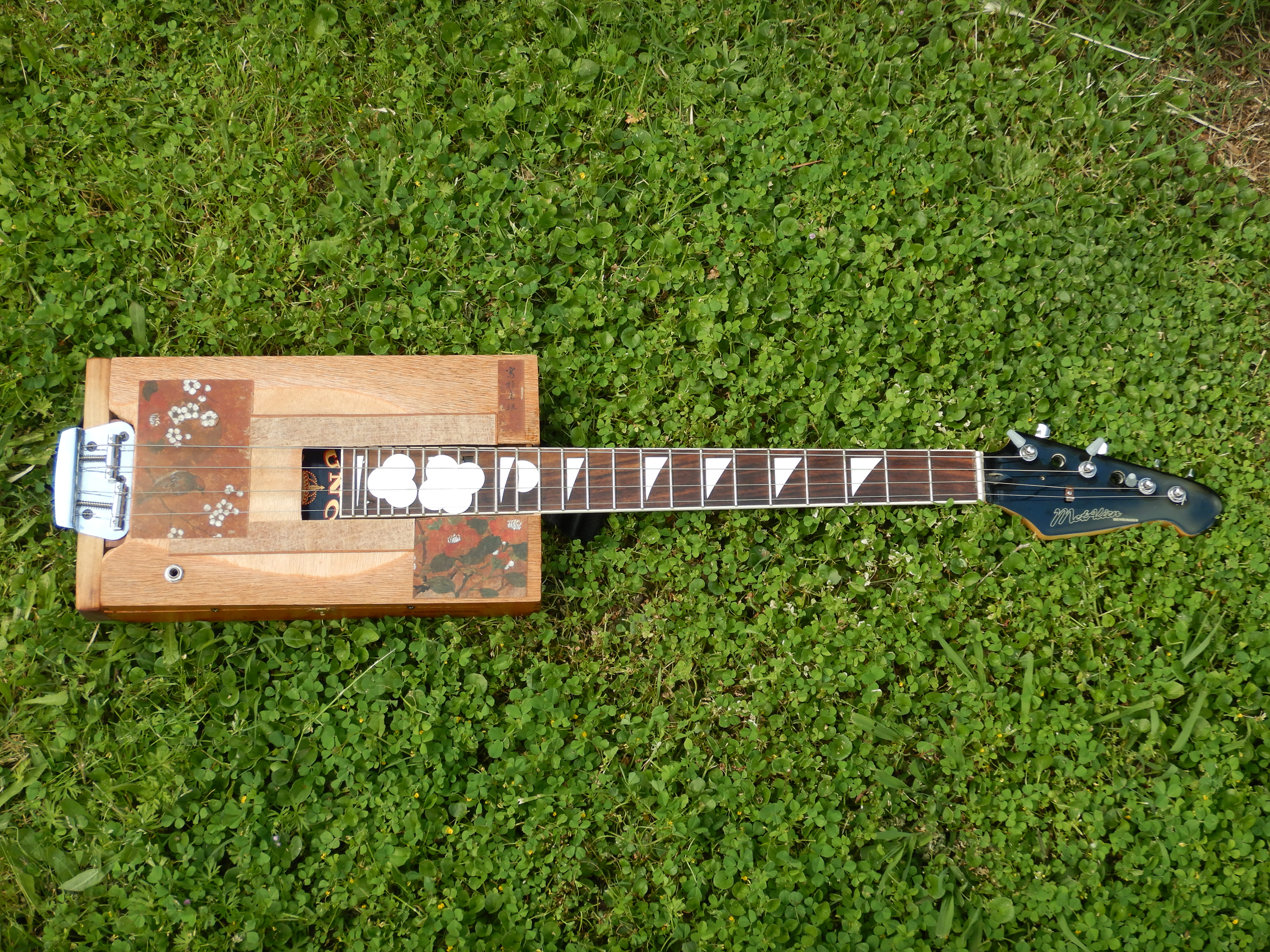
The cigar box piccolo bass guitar build project is now ‘finished’ and sounds pretty good. I recorded a sound sample and will post it below.
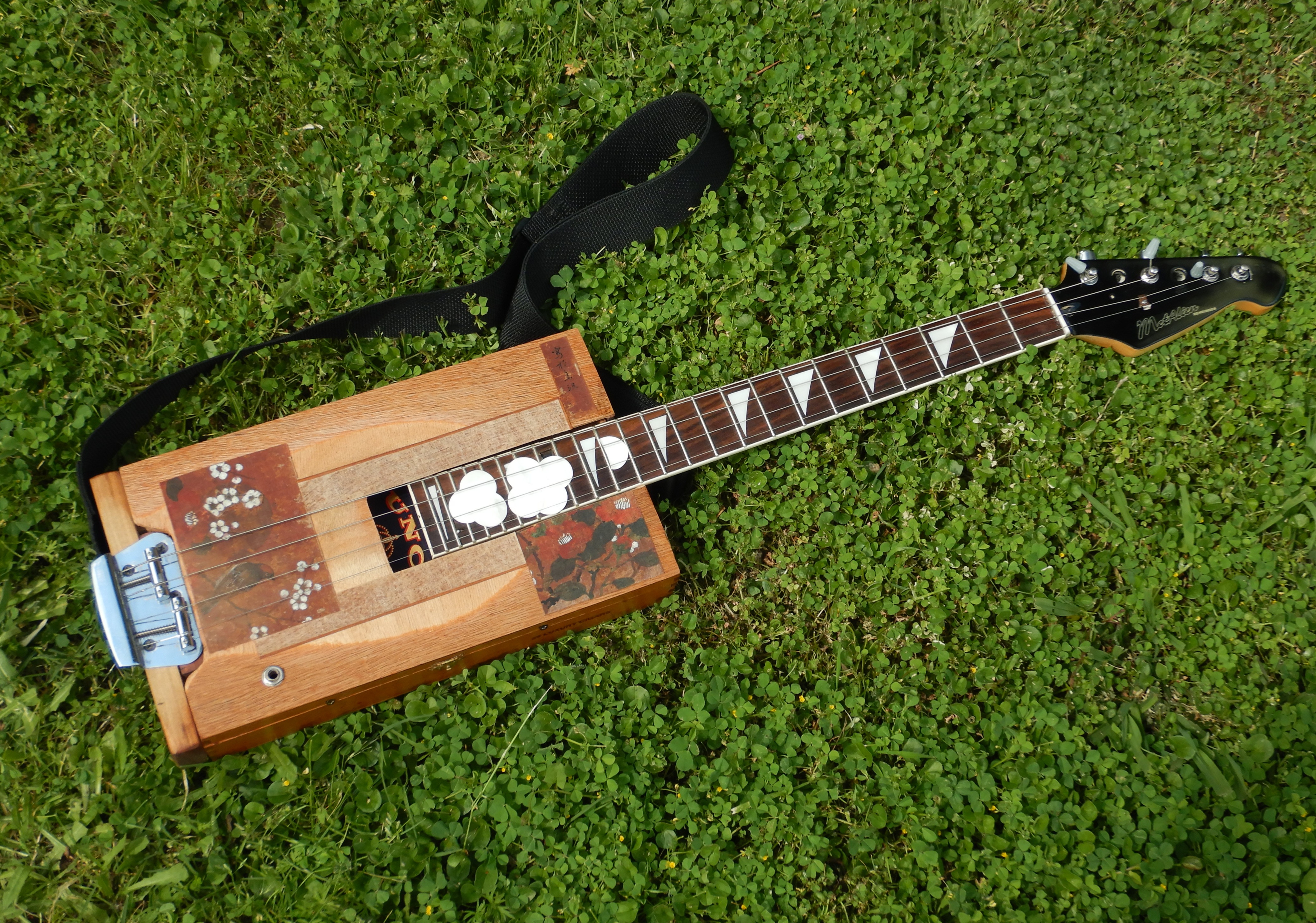
I’m preparing to strip it back down again for repairs, upgrades, and improvements, but I’m calling good result at this point, especially compared to my earlier failures.

It’s fun to play and plenty loud when plugged in. It goes into tune and the intonation at the 12th fret is not bad considering the broken-by-design bridge/saddles.
The ergonomics and weight seem no worse than a regular guitar, and I believe I can improve playability with some of the changes I will detail below.

Maybe because of the worn strings, maybe because the box construction is too flexible, or maybe the old ukulele nut is failing, but the tuning wanders off. Installing fresh strings is an easy and cheap first step.

I’ll cut another inch off the boxtop toward the bridge, and on both sides of the square sound hole, seeking plucking room.

My biggest design flaw was recessing the salvaged neck too deep in the box by a fraction.
So I will unscrew the neck and add a thin plywood shim or spacer underneath the neck base to raise the neck and fretboard slightly.
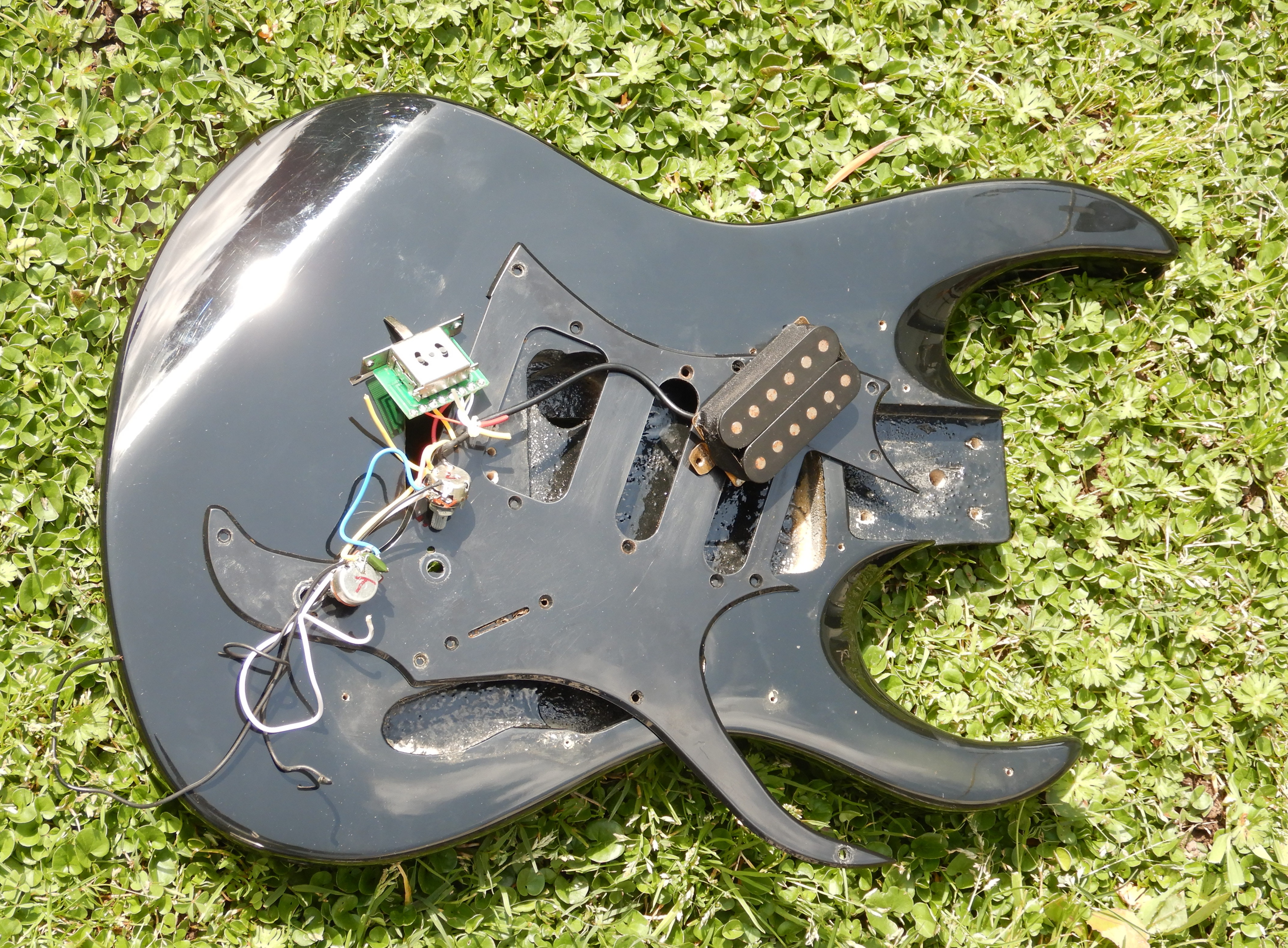
I have some extra guitar pickups, taken from the Behringer donor guitar carcass, and I’d like to mount one in this box in place of the piezo one.
A higher quality pickup which will probably improve the tone. It will also cut down on the random finger thumps and scrapes which the new magnetic pickup will ignore.

Whereas to a piezoelectric pickup those accidental and unwanted scrapes and thumps are more important than the silly string sounds.
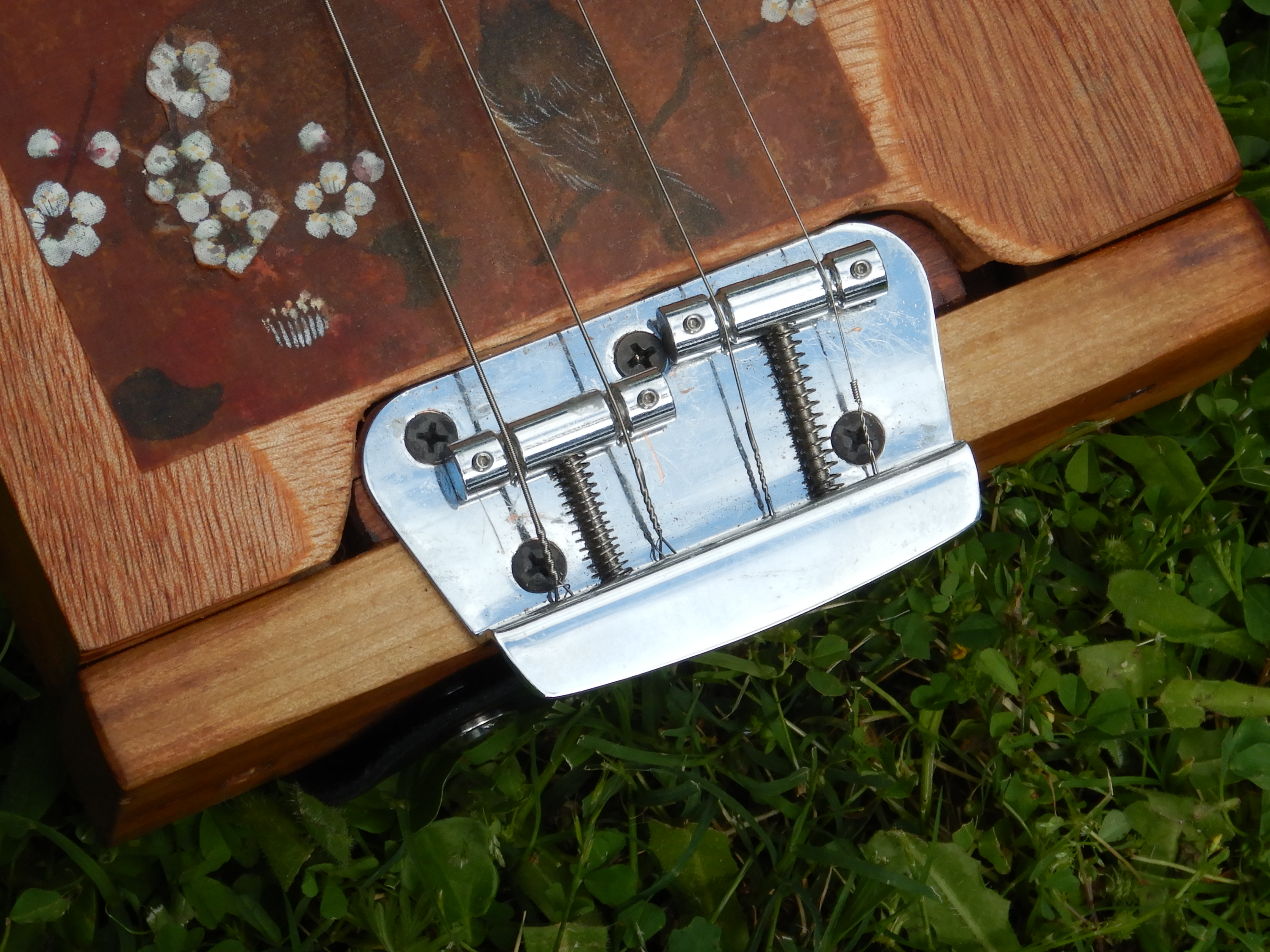
The crap ‘vintage style’ bridge cost me nothing since it came on my Japanese Univox bass and that’s about what it is worth.
I put a $30 eBay bridge on the Univox bass but I don’t feel like spending that much on a $43 cigar box ax.

So I’ll look around for a surplus, used, cheap bass bridge. And if all else fails then I’ll buy the cheapest $11 bass bridge off ebay.
Same story with the ukulele nut I’m using. Battered, old, and cheap plastic to start with, maybe a cause of tuning instability as well as harming the sound.
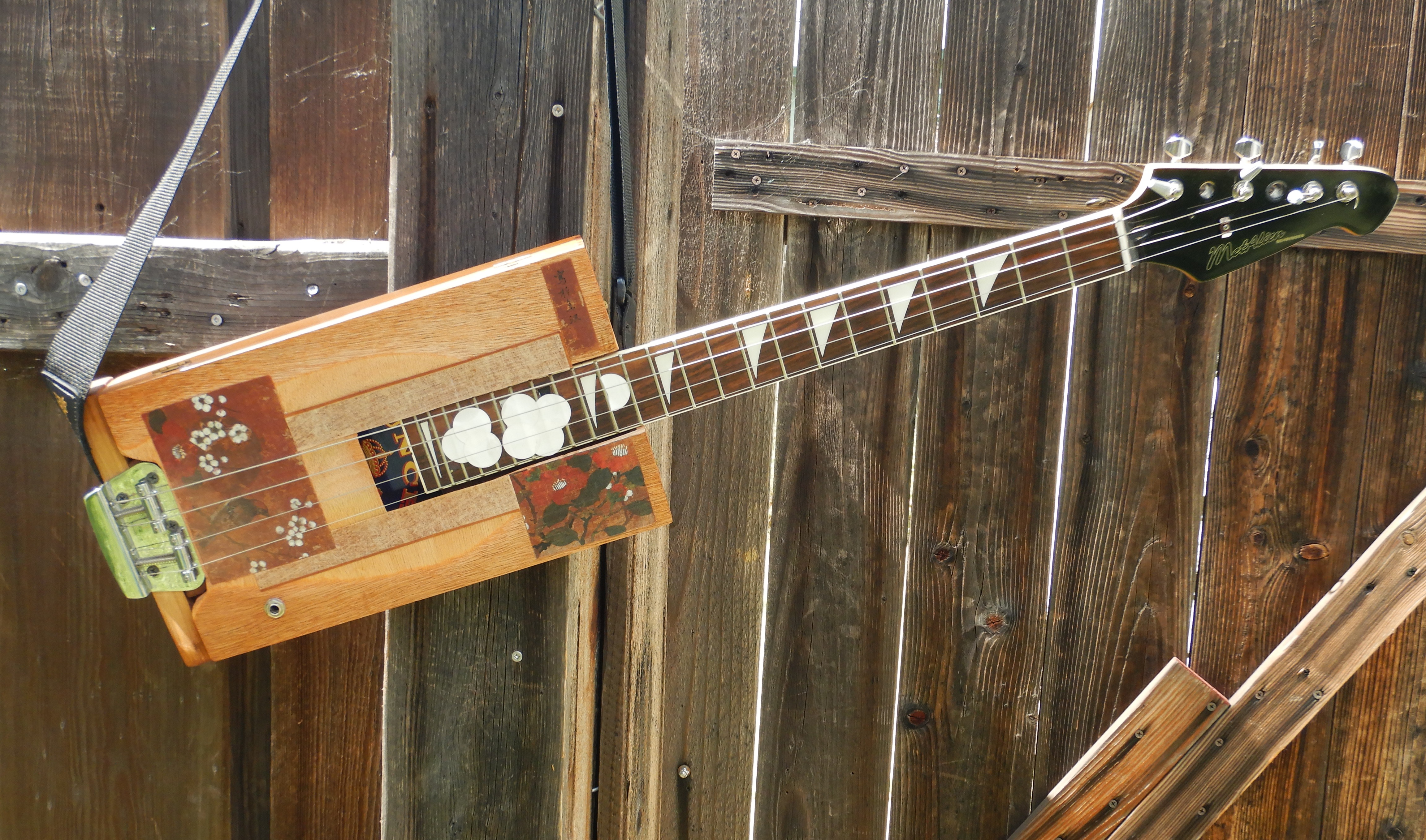
So I’ll first try filing it carefully down, for a lower action: and slope filing the nut from the headstock direction, see if that helps.
Time for the Behringer Metalien 4-string cigar box piccolo bass guitar (what a mouthful!) to go under the knife again.

The next sound samples you hear should be more melodious than the piezoelectric pickup samples above, with the magnetic pickup’s dynamo hum.
[Plans change: after carving it up further, changing strings, and sorting it out, I decided to keep the piezo pickup, sounds pretty good. See sound sample in the next post.]
Unless noted, all text, images, video and audio by todgermanica.com.
 todgermanica.com