
It took me three tries but I finally built a functional, good sounding (I know that’s relative), easy to play, 4-string cigar box piccolo bass guitar. It stays in tune and sustains forever. I’m calling good result.

In my last post I mentioned changes and improvements I had planned to improve tone and playability and here I’ll detail how it worked out.

The neck and fretboard are nearly level here, prior to me shimming up the neck with wood scraps.
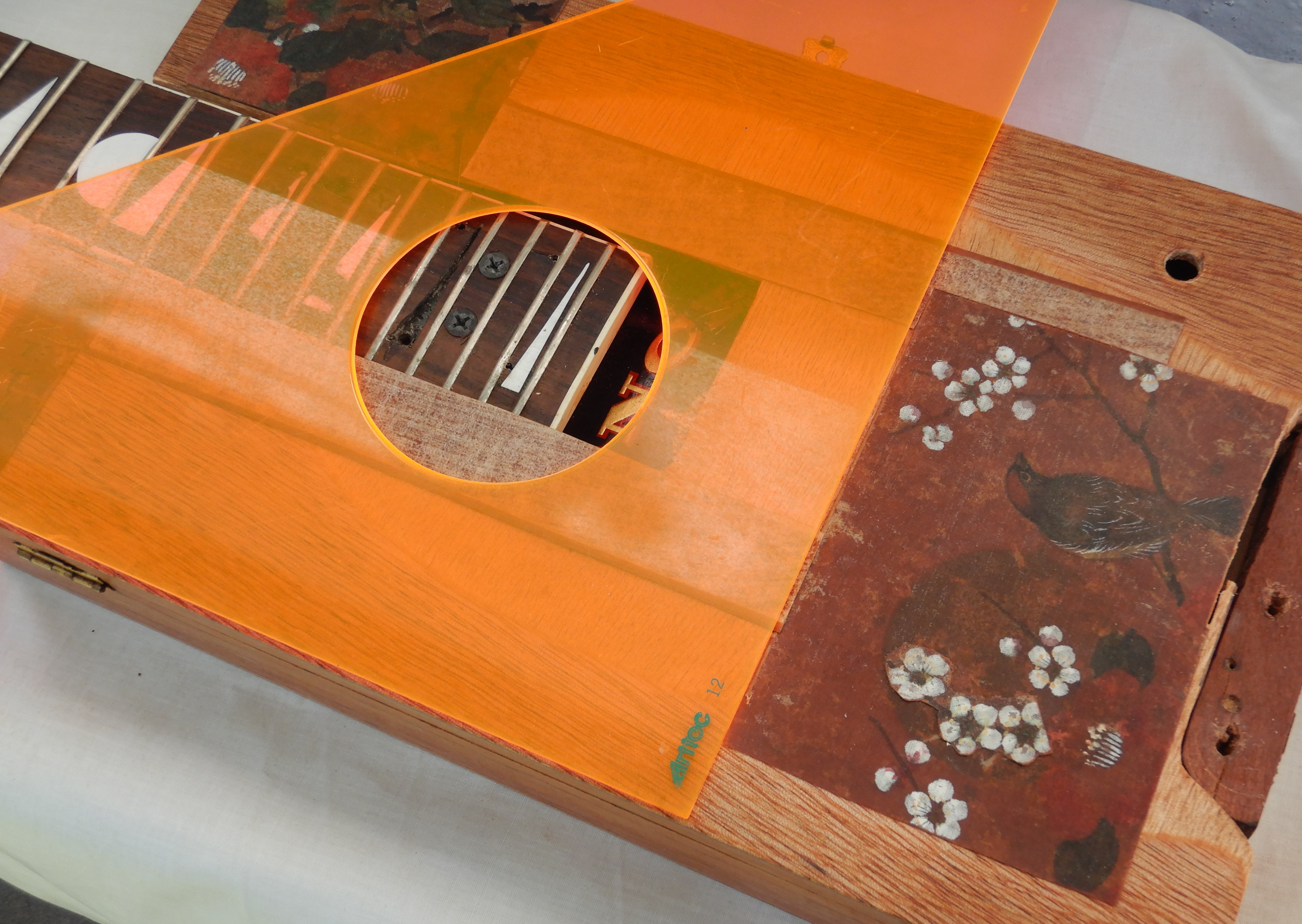
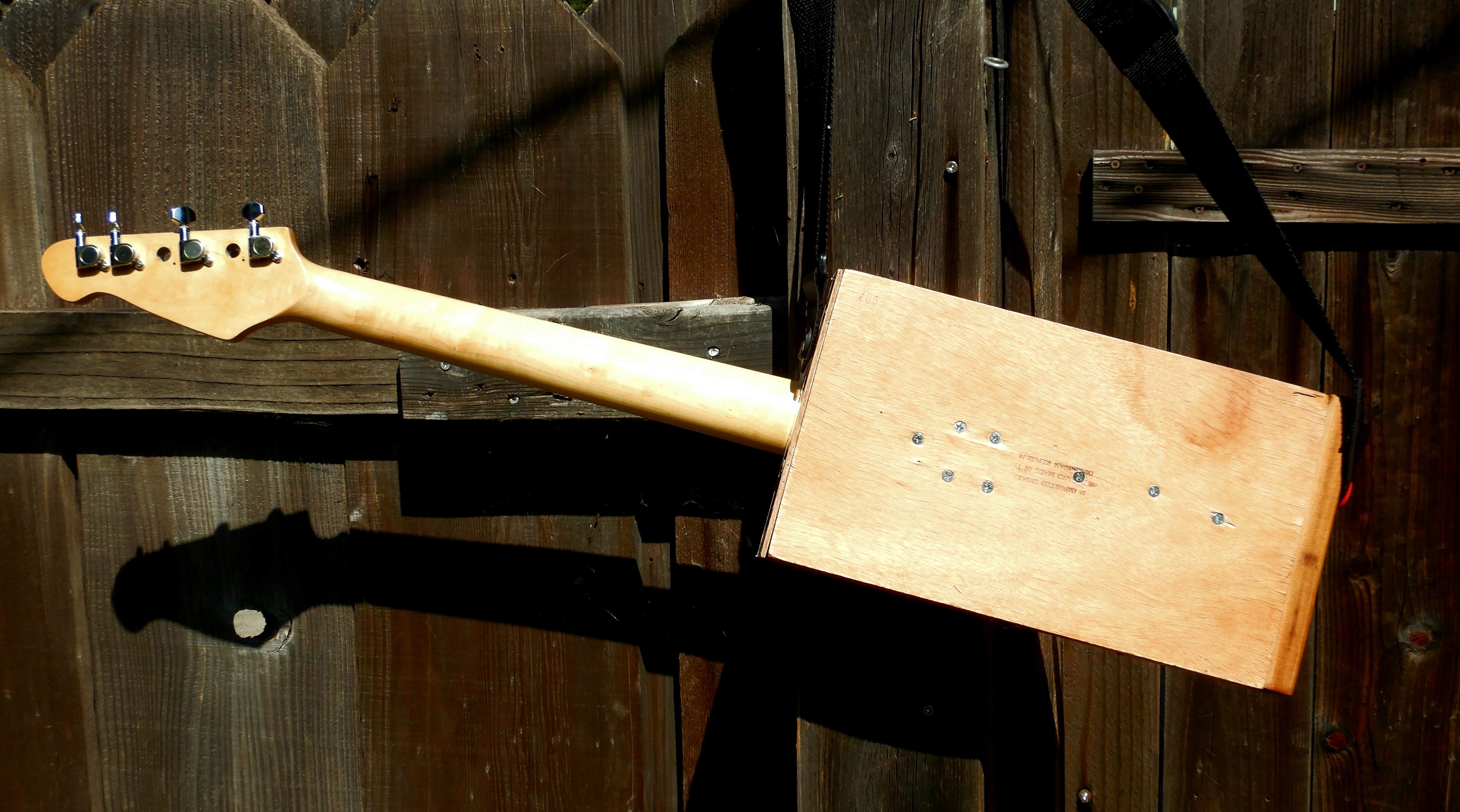
My biggest design and construction error was installing the neck too deeply into the cigar box body. This made the action too high and lead to me inadvertently tapping or scraping the box top.
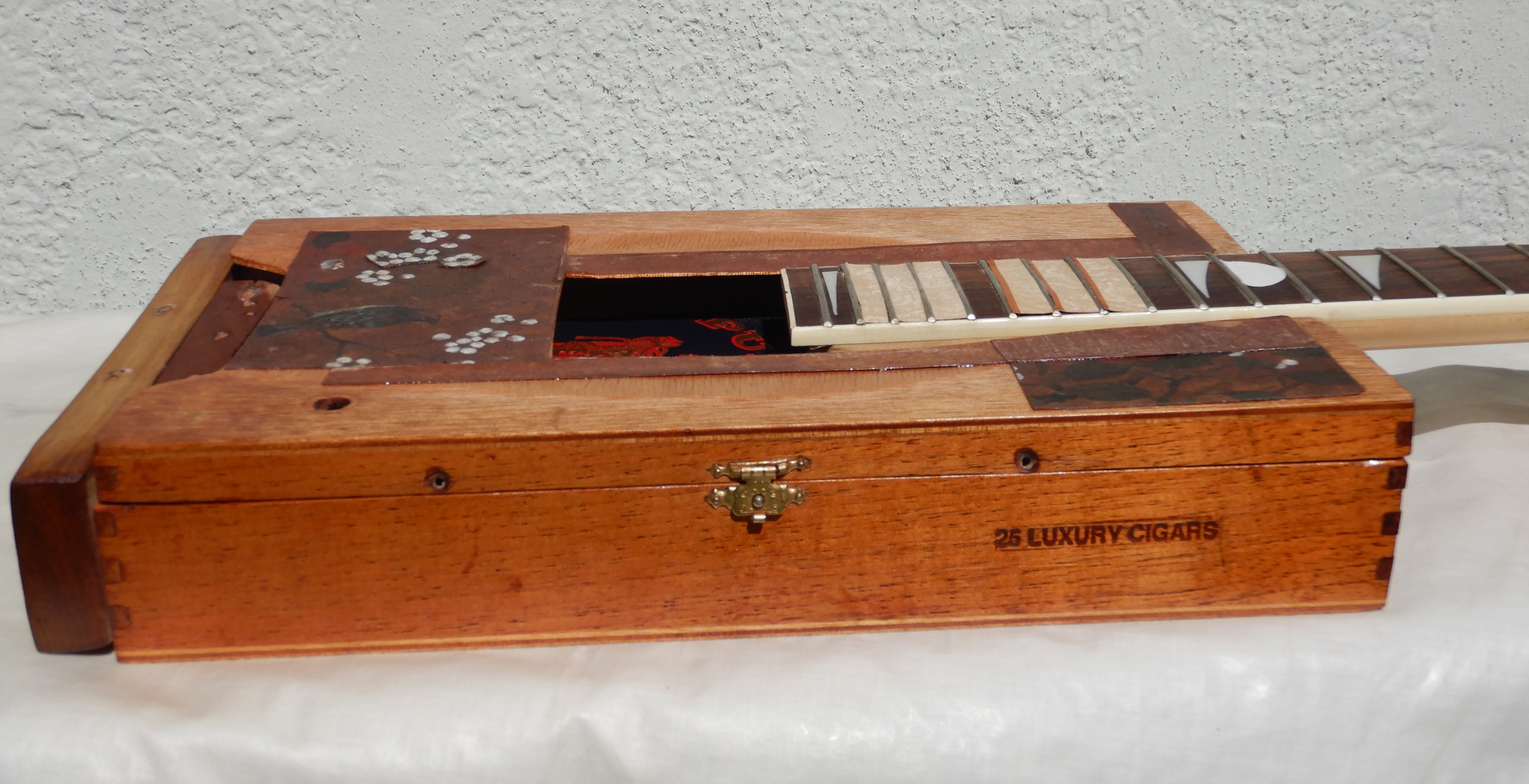
Which when using a piezoelectric pickup means snare drum levels of nasty thumping noise, and piezo fueled foul scrape sounds.

This was an easy fix consisting of placing a shim made of cigar box plywood scrap underneath the hardwood plank I cut and installed as a solid backbone to which I screwed down the neck.

The shim lifted the fretboard higher above the box top so I have a better chance to pluck the note without the finger follow-through loudly striking the box top.


Third, I more aggressively cut away more of the cigar box top in the area where I play the strings.
Like raising the neck and fretboard, this cut down on my loud random accidental taps and touches of the box top.

Finally, I stripped off the strings I’d been using in favor of this new set of $8 flea market Alice brand strings.

Repeated removal and reinstalling of instrument strings is a bad thing, leading to sour tones, tuning instability and loss of intonation.

Some of the improvements I had mooted I did not try for various reasons. The ukulele nut is a cheap one I salvaged from a previous project but seems to be working well enough so I left it on for now.
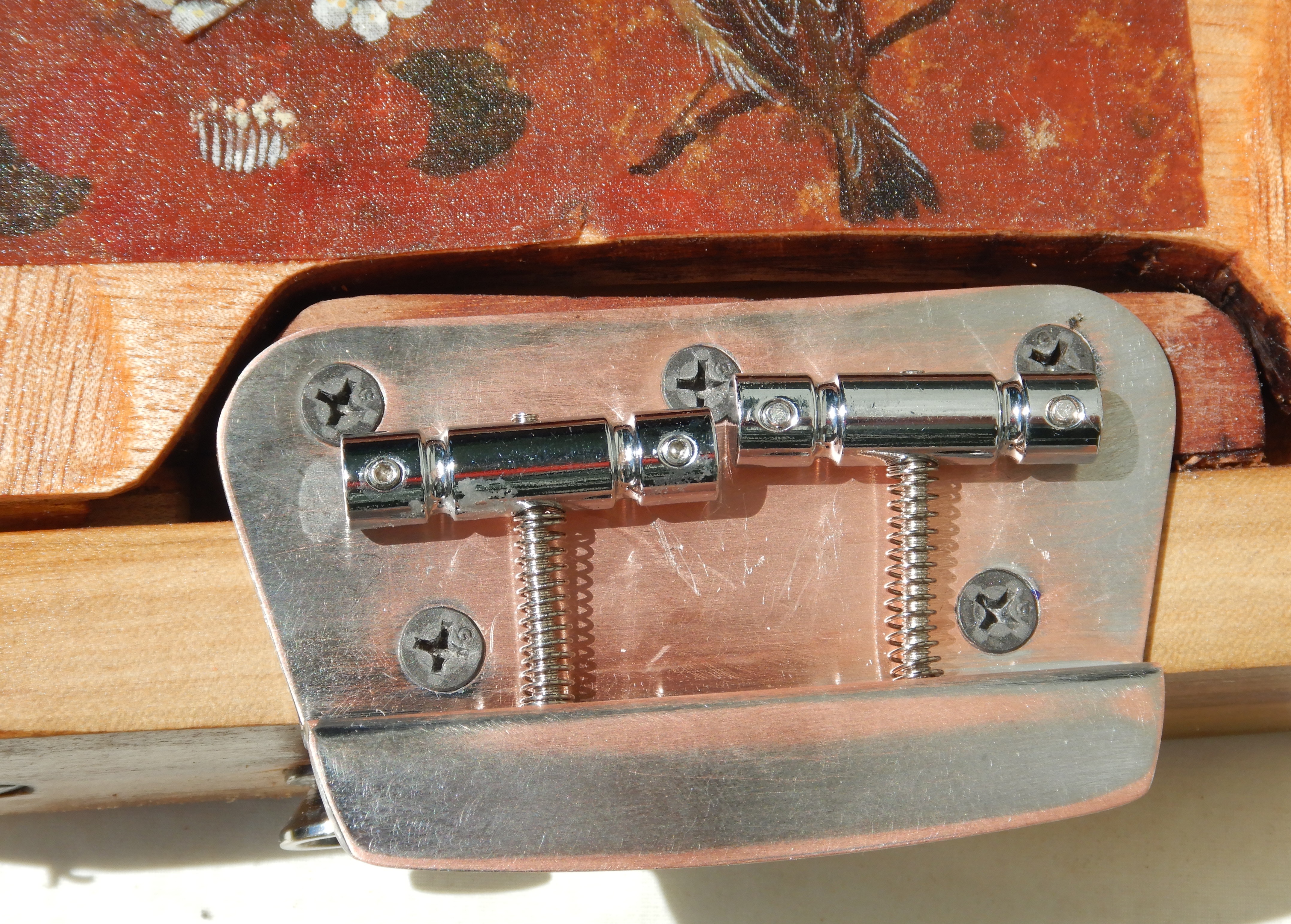
I sanded down the bright but battered chrome bridge, crippled in setting intonation by its very design, to show the pinkish brass plating under the chrome plating.
Then I filled all bridge holes with white school glue and jammed in toothpicks cut in half. I tapped them in with a wood mallet.

Tomorrow I’ll cut them flush and sand them flat to match the surface. Then line the bridge up (correctly this time!), drill 5 pilot holes, screw it down.

I needed to tape the pickup to another spot on the box top, and screw in the output jack and string it up with a new string set.

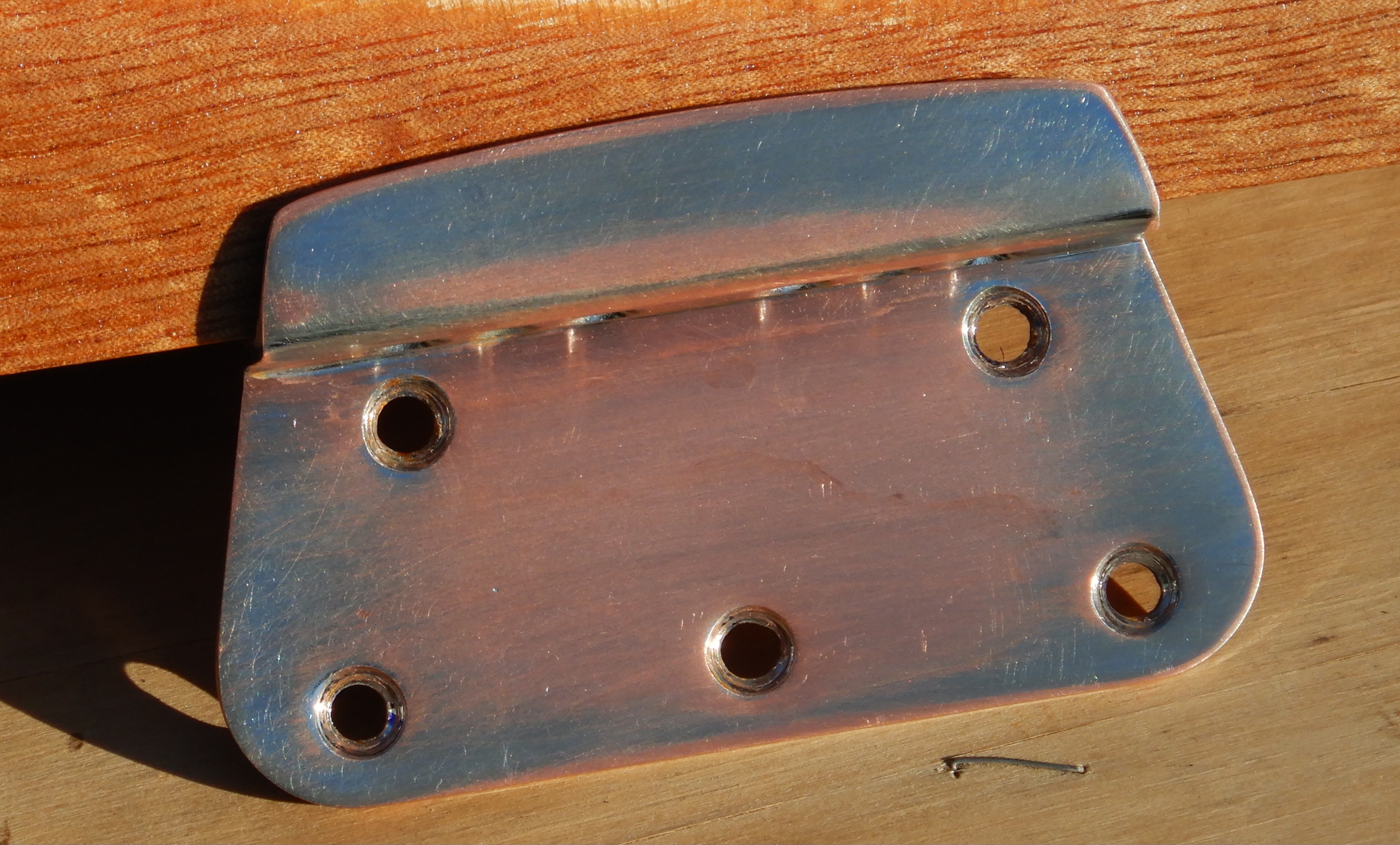
I’d bet it will sound better and keep in tune longer with me using four tiny nuts as washers on the ball ends of the strings at the bridge.

Ensuring the bridge doesn’t let the tiny guitar string ball ends slip into the bass bridge, made for bigger drums, which I found when I removed the bridge.

I had also planned on swapping out the piezoelectric pickup in favor of a straight coil pickup I salvaged from the Behringer donor guitar that supplied the neck.

But after fixing my design and construction glitches I decided I liked the tone result and ease of playing too much for further experimentation.
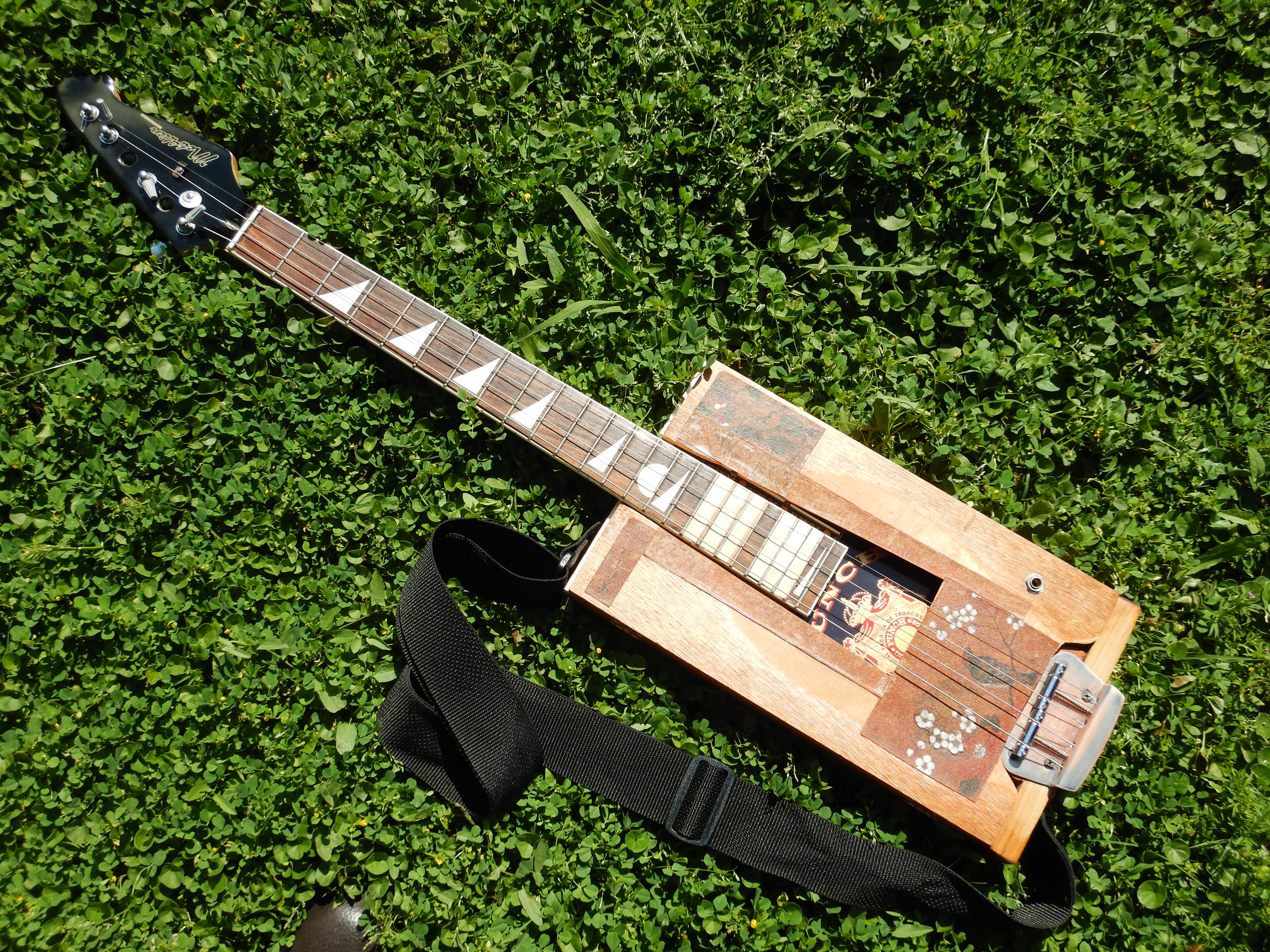
So I’m keeping the piezo pup in this unit and saving the magnetic pickups for a future project.

I have not adjusted the saddles for string height because there is no fret buzz on any fret I can reach, and the action is low and even as is.

Nice to pluck it and not make drumming sounds on each note from tapping the box top. I’m guessing that when the strings stretch out the tuning will be stable.

This batch of sound samples I recorded acoustic only, no backing track or drums, outdoors in the wind, through a Blue Yeti microphone on a Samsung A14 cell phone, using DolbyOn recording software.
No software sound manipulation was done. I left in my humming, sniffling, foot pounding and counting. From Progressive Bass, by Turner & White, they’re mashups of my bass textbook student exercises.
So I’m calling the 4-string, cigar box, piccolo bass guitar completed and am moving on to the next project, finishing the Peavey Rockmaster trash can guitar find.
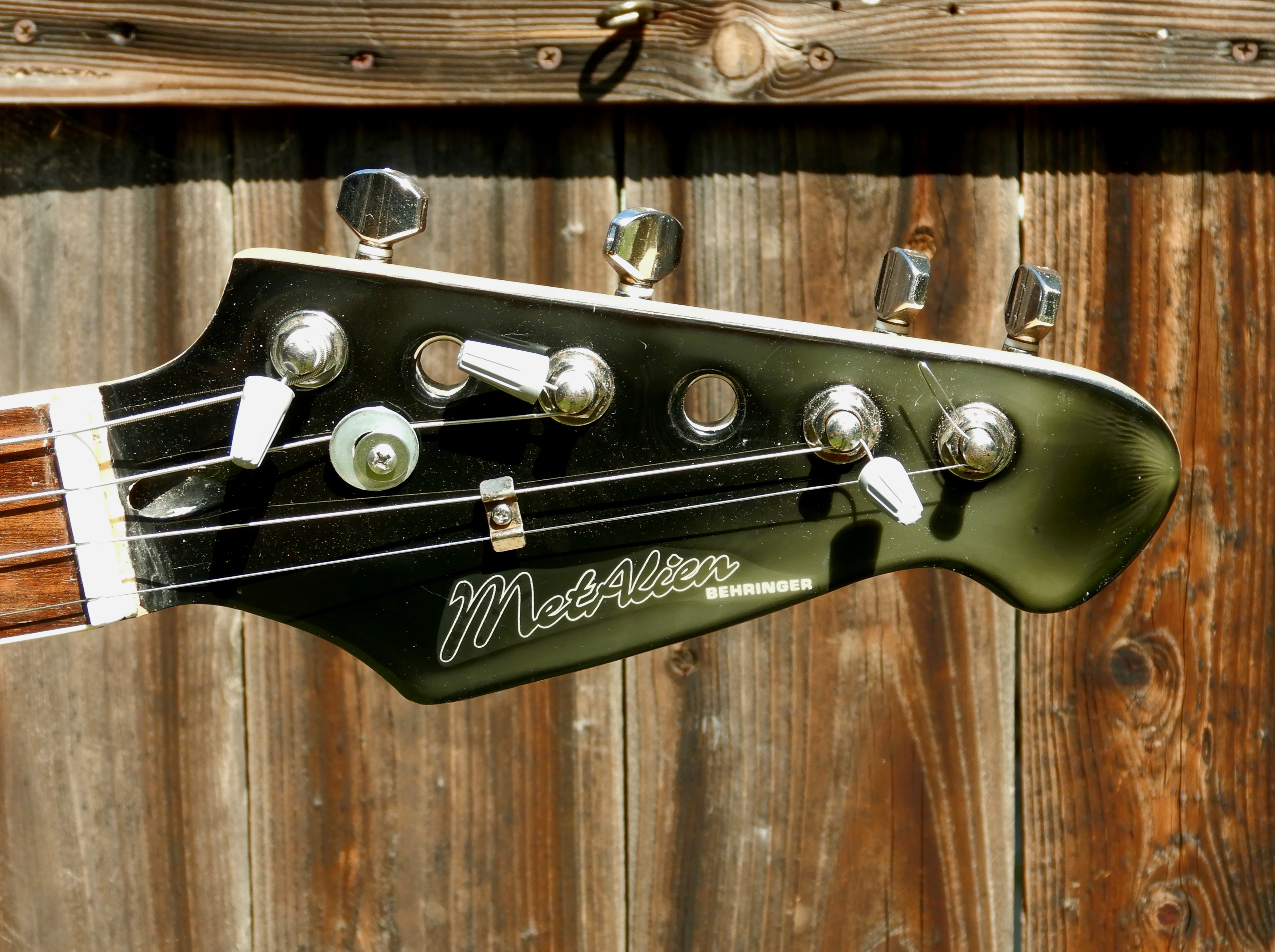
It took me three and a half tries but I’m happy it succeeded in the end. When I run across a better bridge and nut I will upgrade the box. Or else I won’t.

But for now I’m happy with it and look forward to taking it traveling, to make happy sounds with it in the woods, lakes and deserts of the great American West.
On this sample I turned on lots of the Roland Bass Cube amp effects for max weirdness.
Here’s my cost:
$8.00 flea market cigar box
$5.00 flea market strings
$5.00 pawn shop strap
$30.00 flea market fake cardboard cigar box guitar for the piezoelectric pickup and a fretless neck for a future project
$3.00 Fender strap security gaskets
Total = $51.00
Unless noted, all text, images, audio and video by todgermanica.com.
 todgermanica.com