
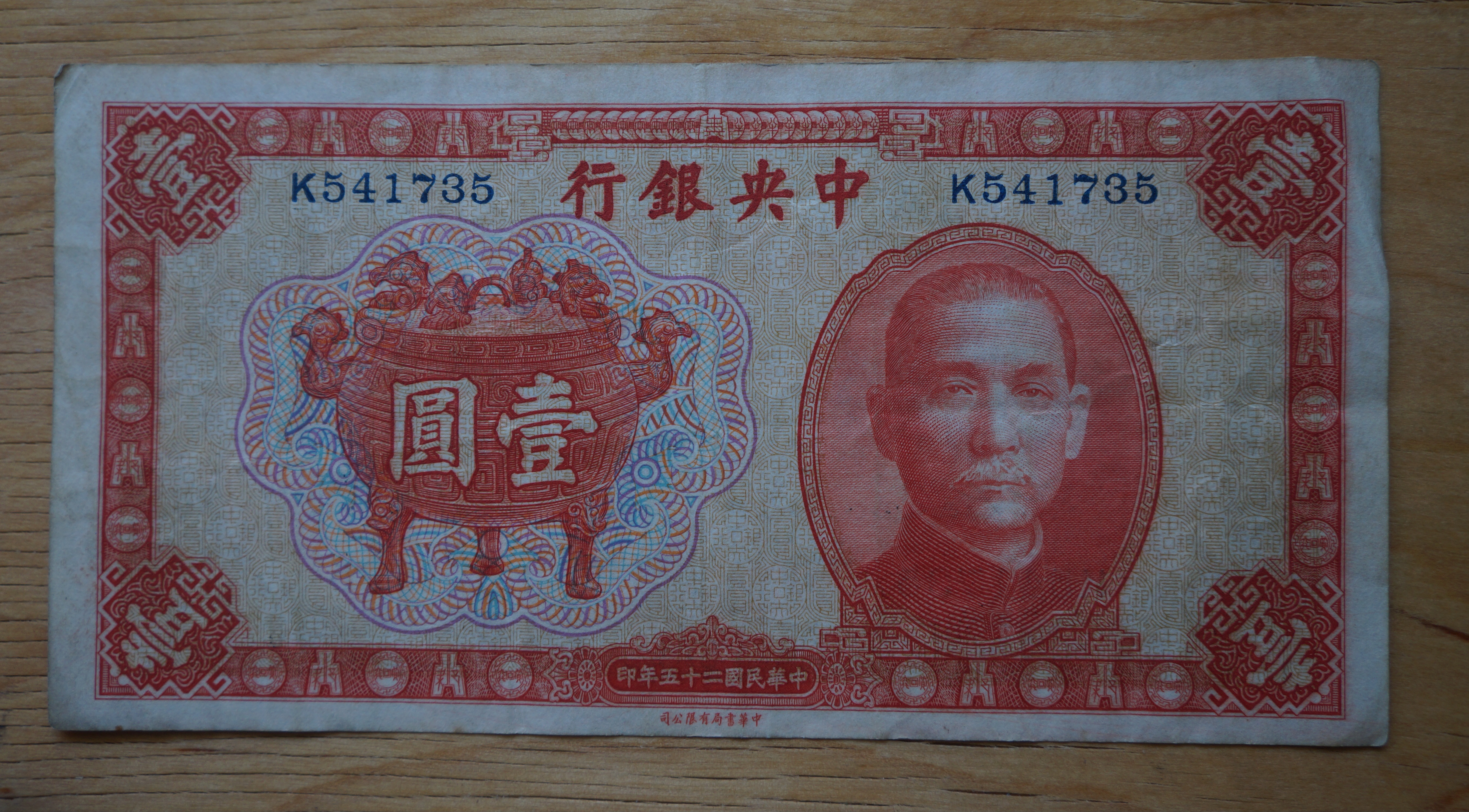
My father collected most of these WWII Chinese bank notes and Japanese military occupation script currency during his postwar US Navy cruises in Asia, he often talked about Shanghai.
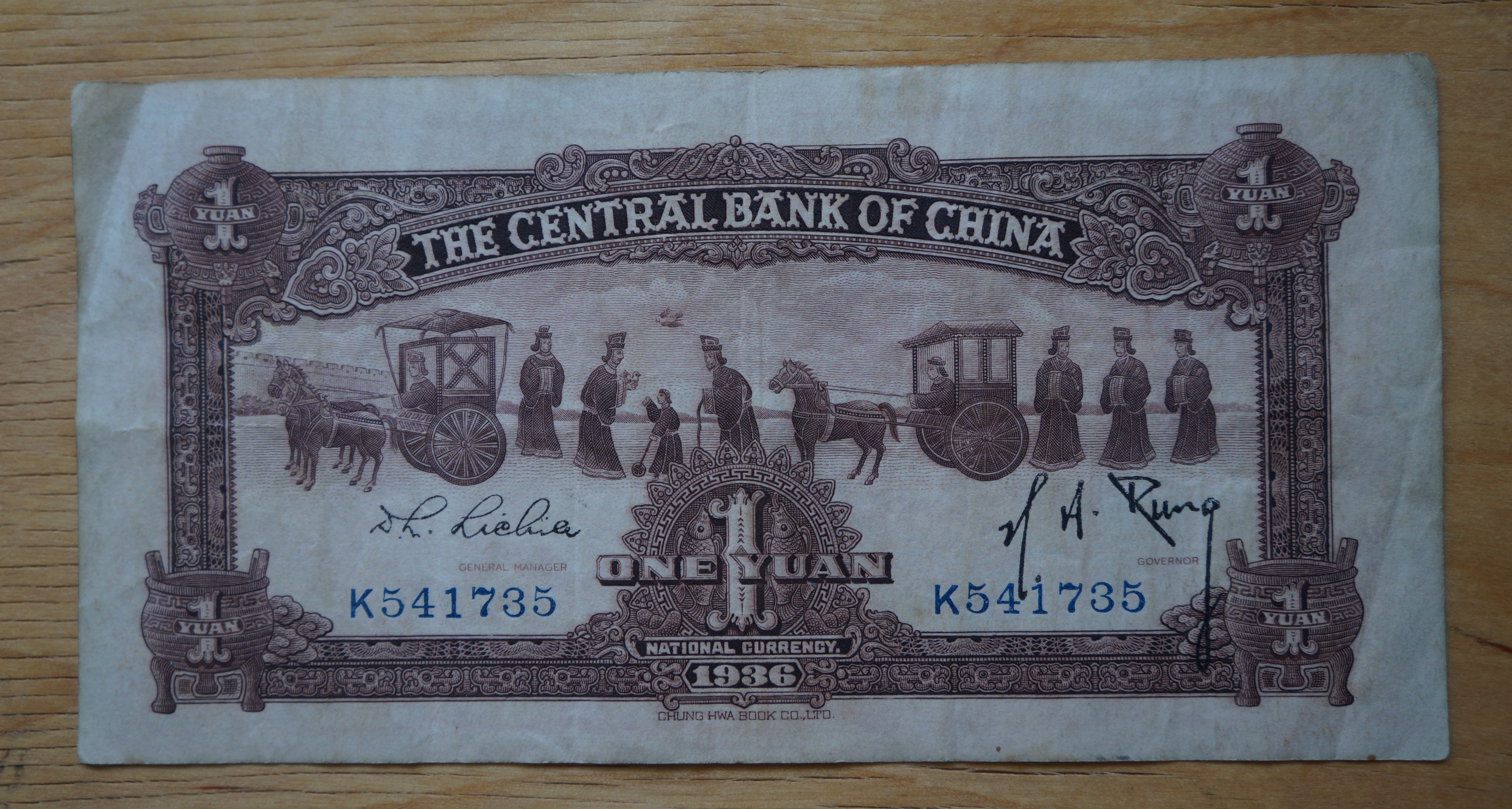
Printed in China.
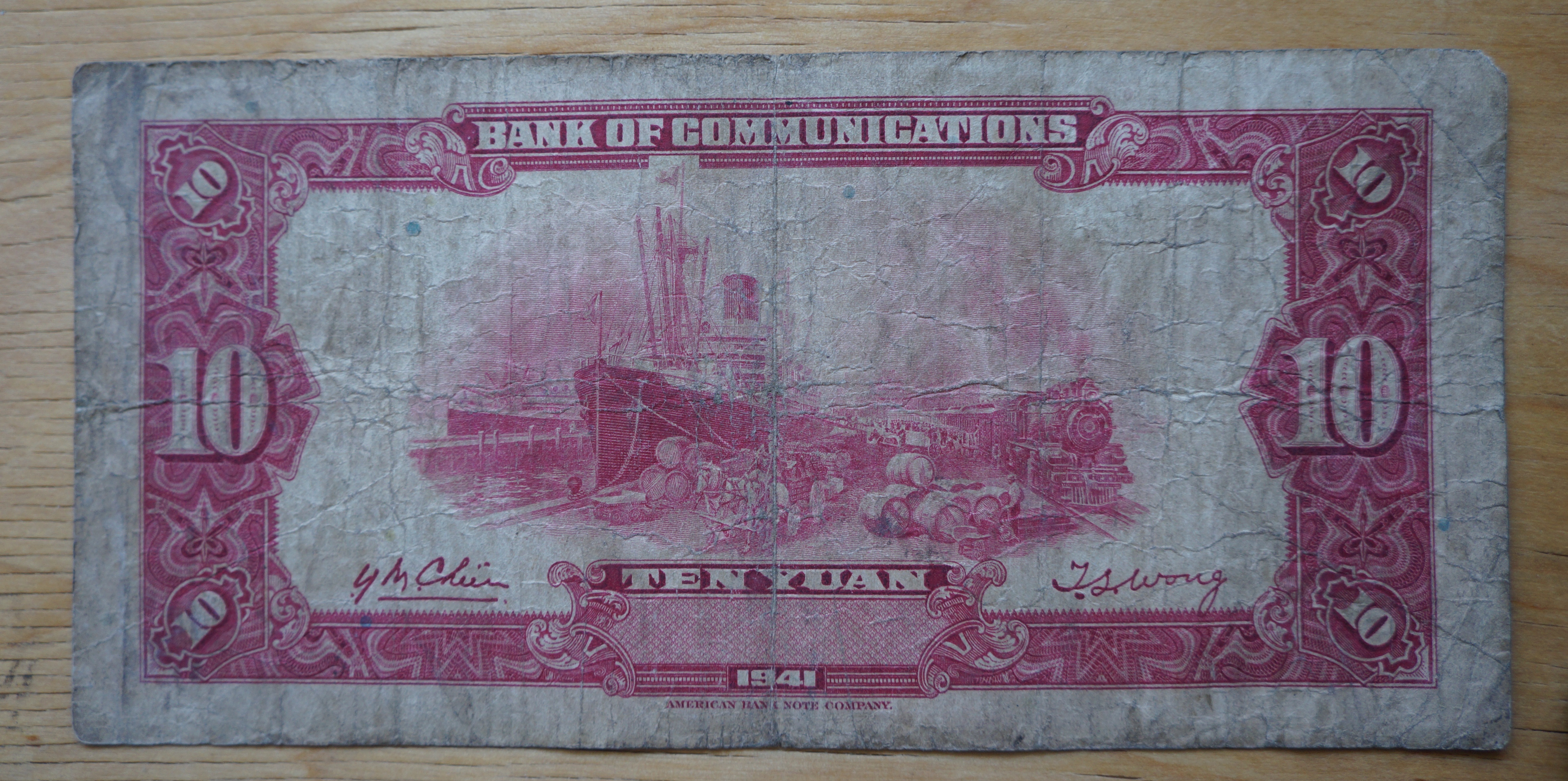
The Chinese money was often produced by foreign bank note printing companies. The quality of paper and ink was frequently of low quality.

Though cheaply printed, the money was usually artistic.
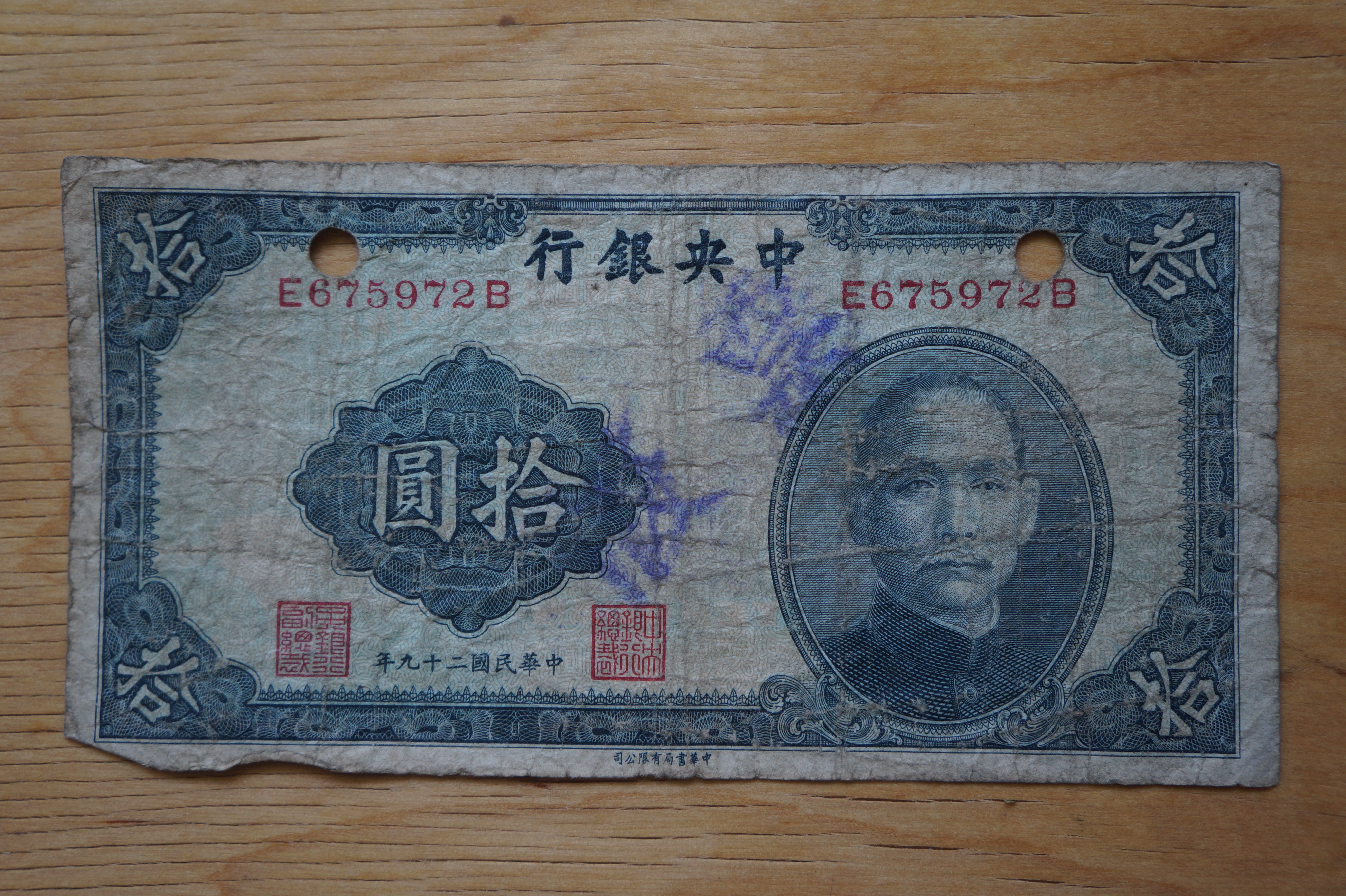
This note was perforated for binder storage.
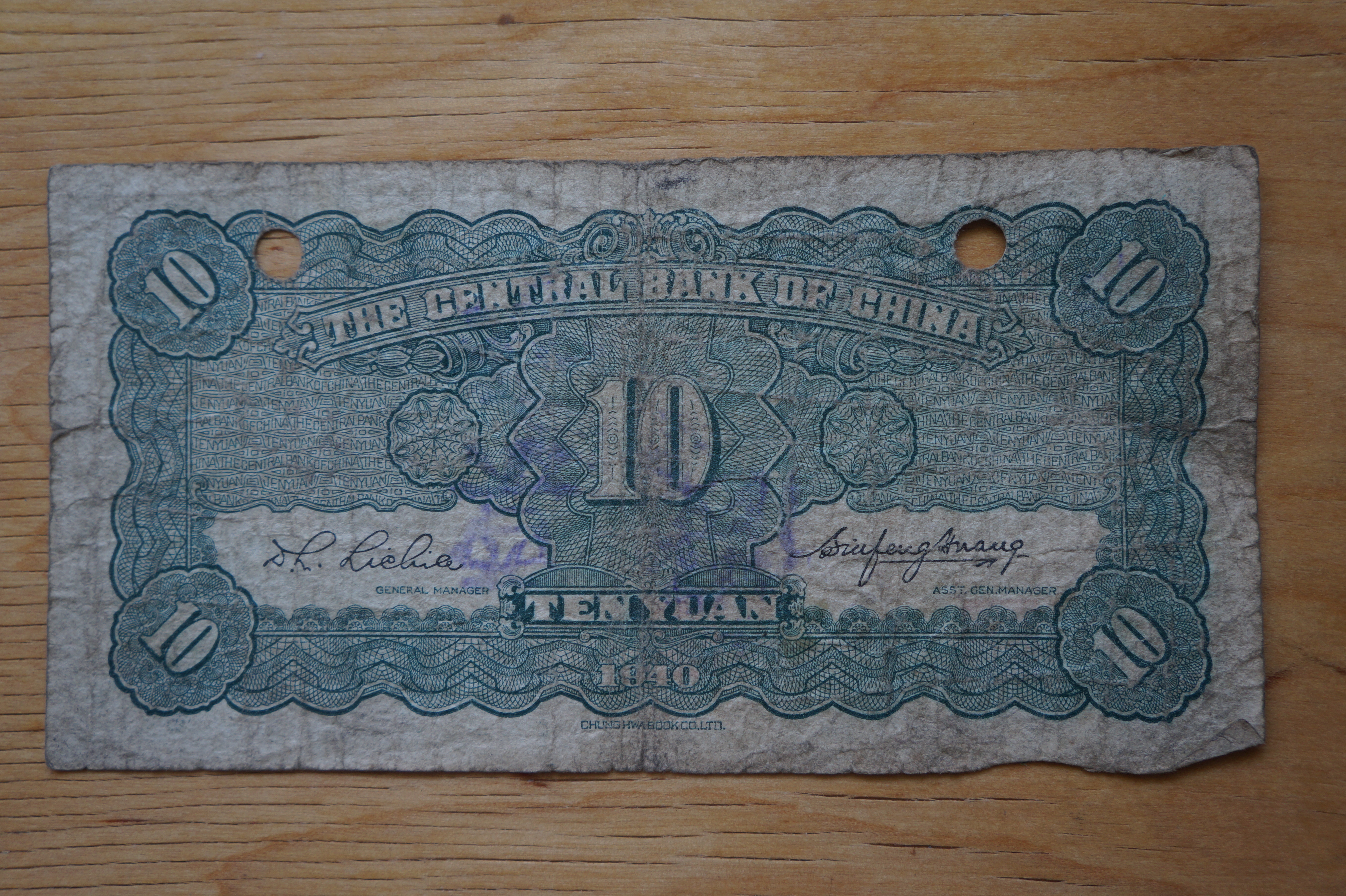
This bill was printed in China by the Zhonghua_Book_Company, who printed bank notes for China from 1931-1949.

Ever larger currency denominations were needed to account for inflation.
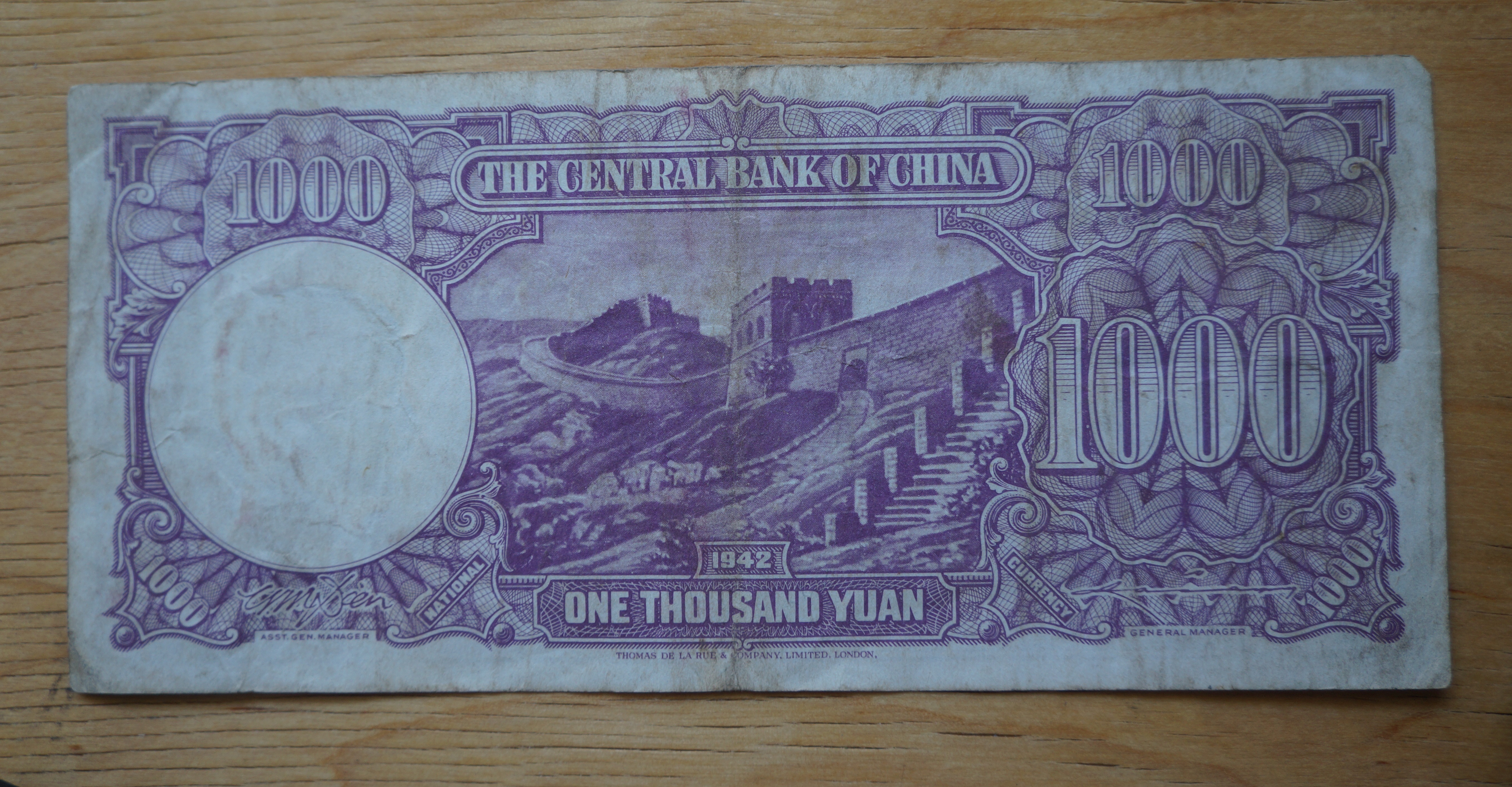
This 1942 bill’s reverse side depicts the Great Wall.

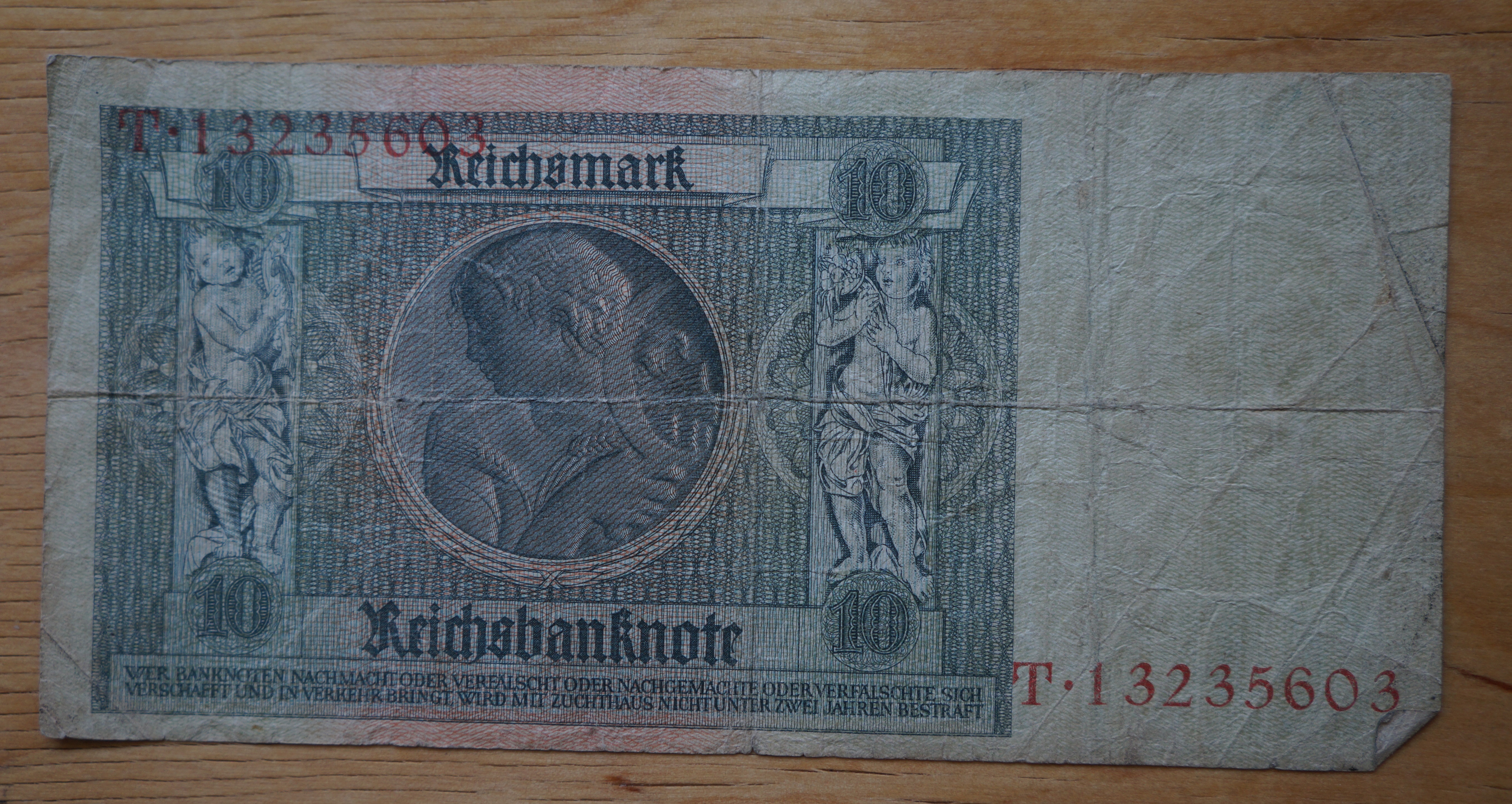
Shanghai was a cosmopolitan port so my dad seems to have gathered other countries’ money as well, here a pre-WWII 10 Reichsmark German bill.
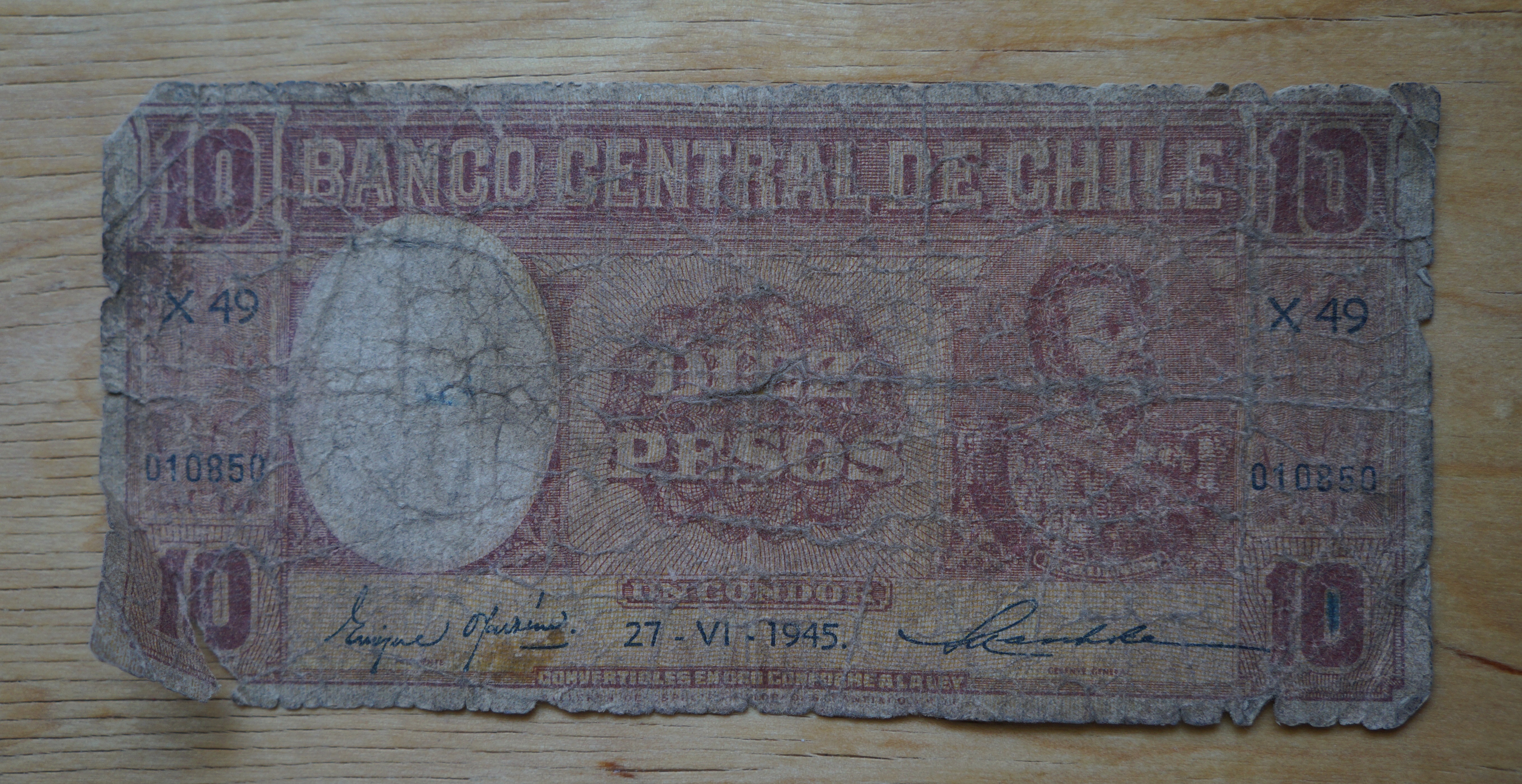
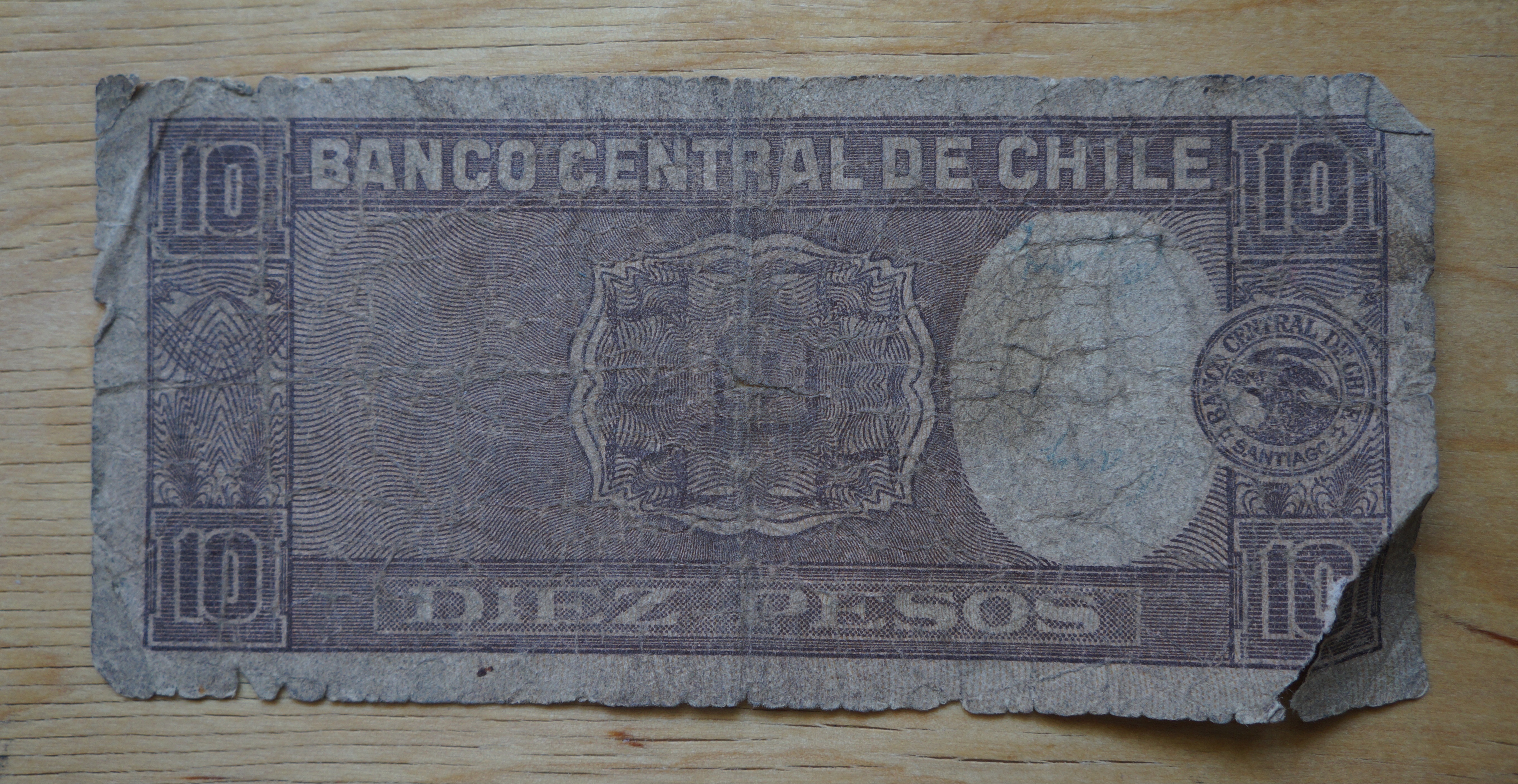
And here a very tatty, well circulated, diez pesos Chilean note.
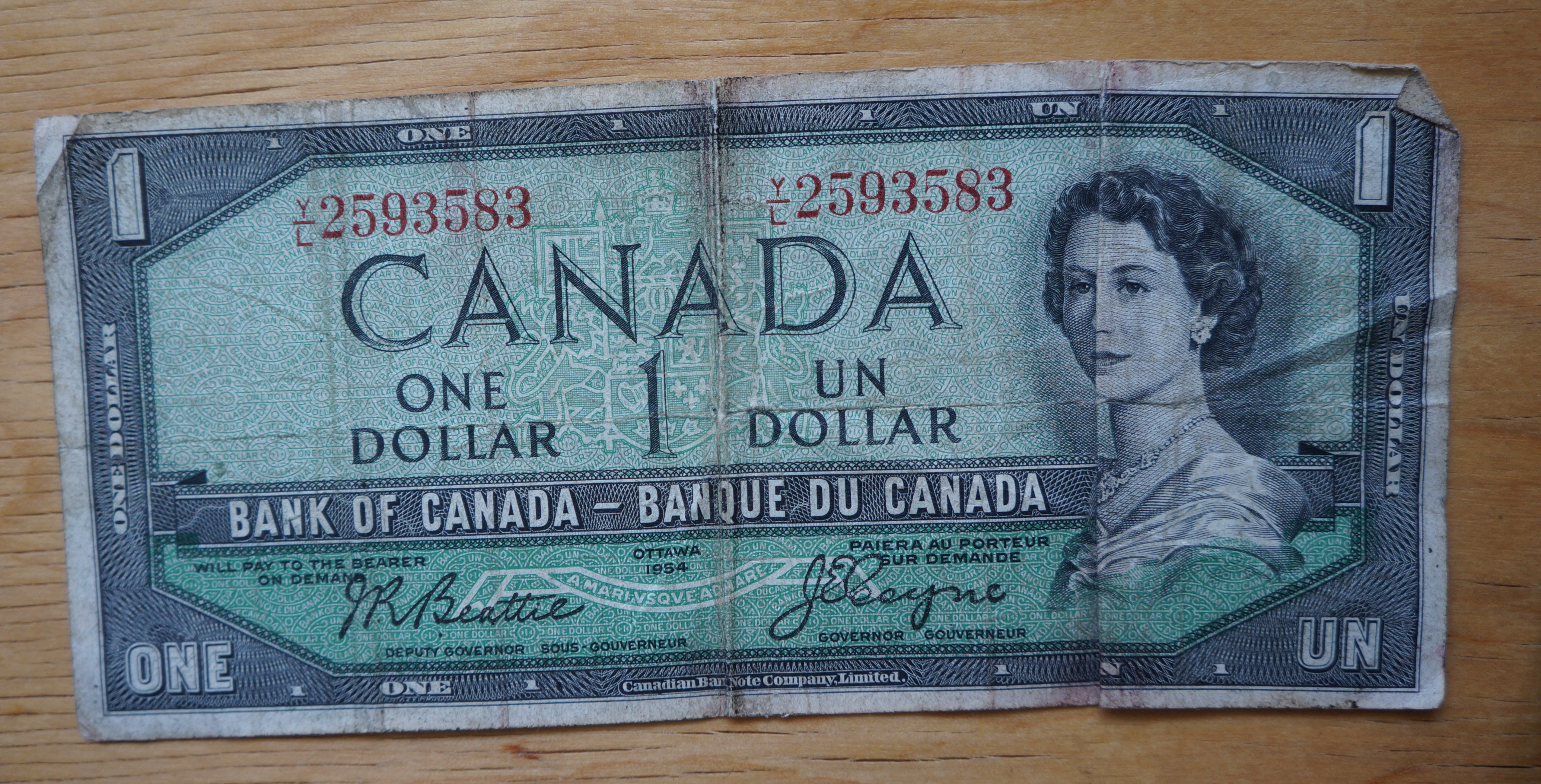
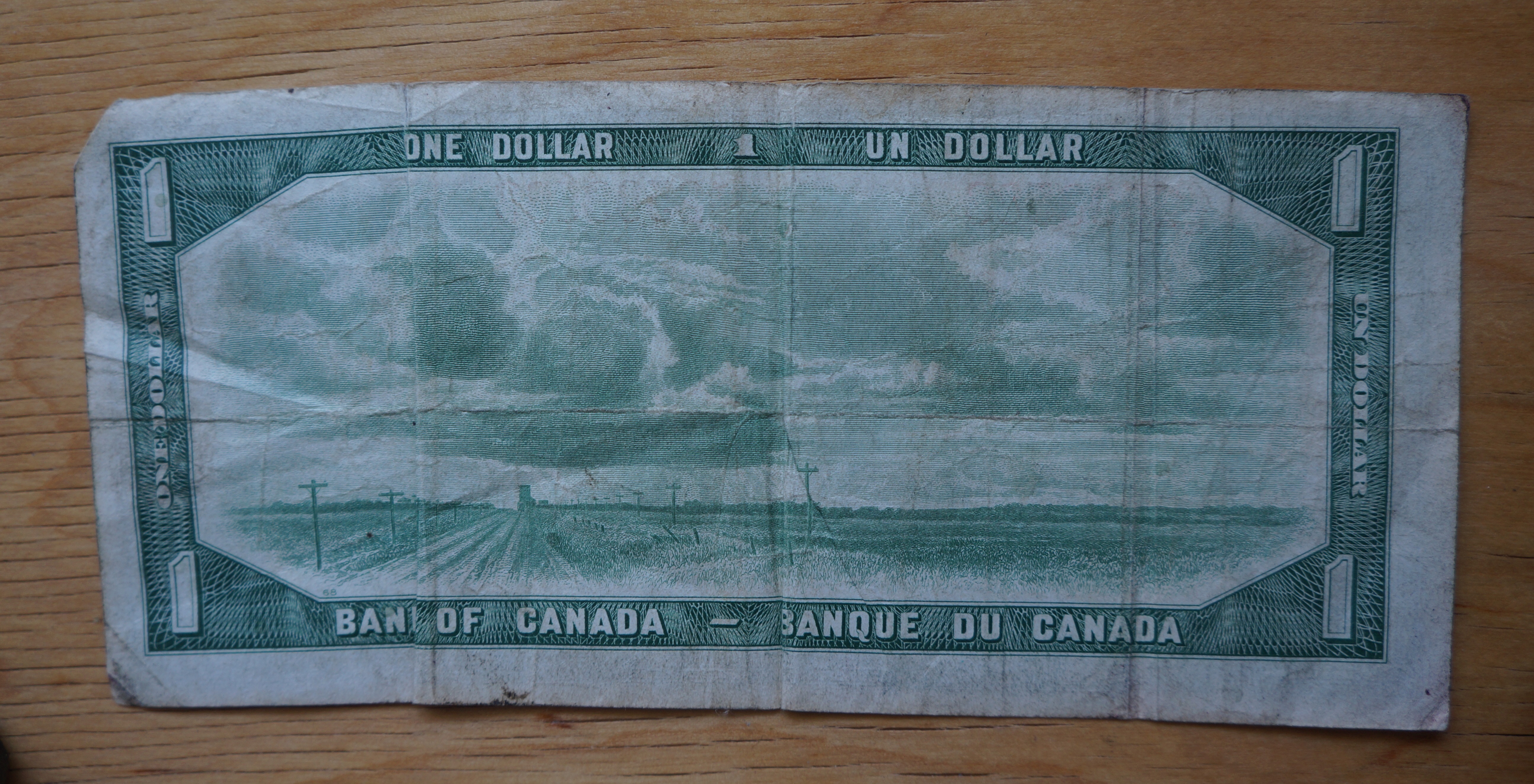
From 1954, a Canadian dollar. Green is a popular color for money.
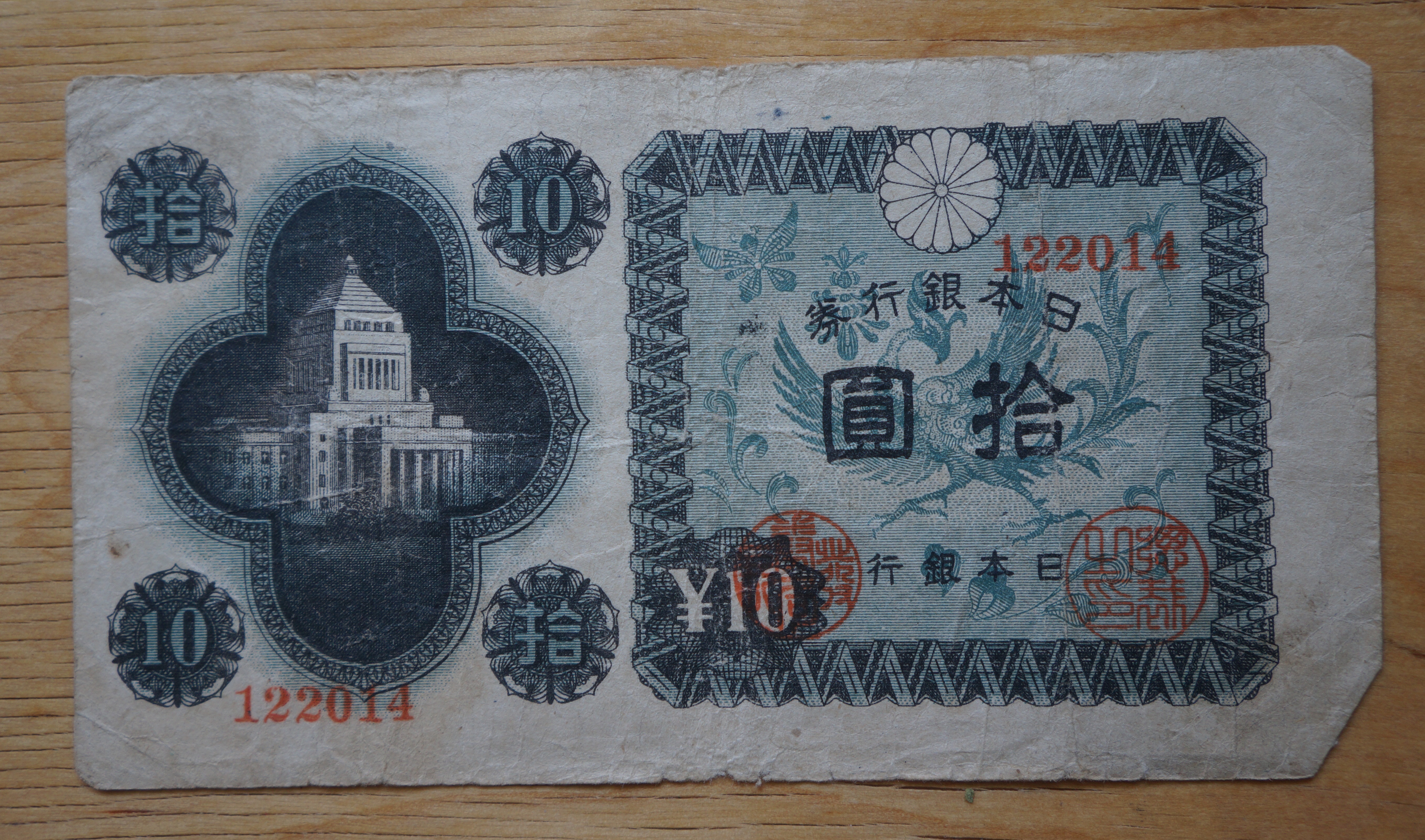
A 10-yen banknote.
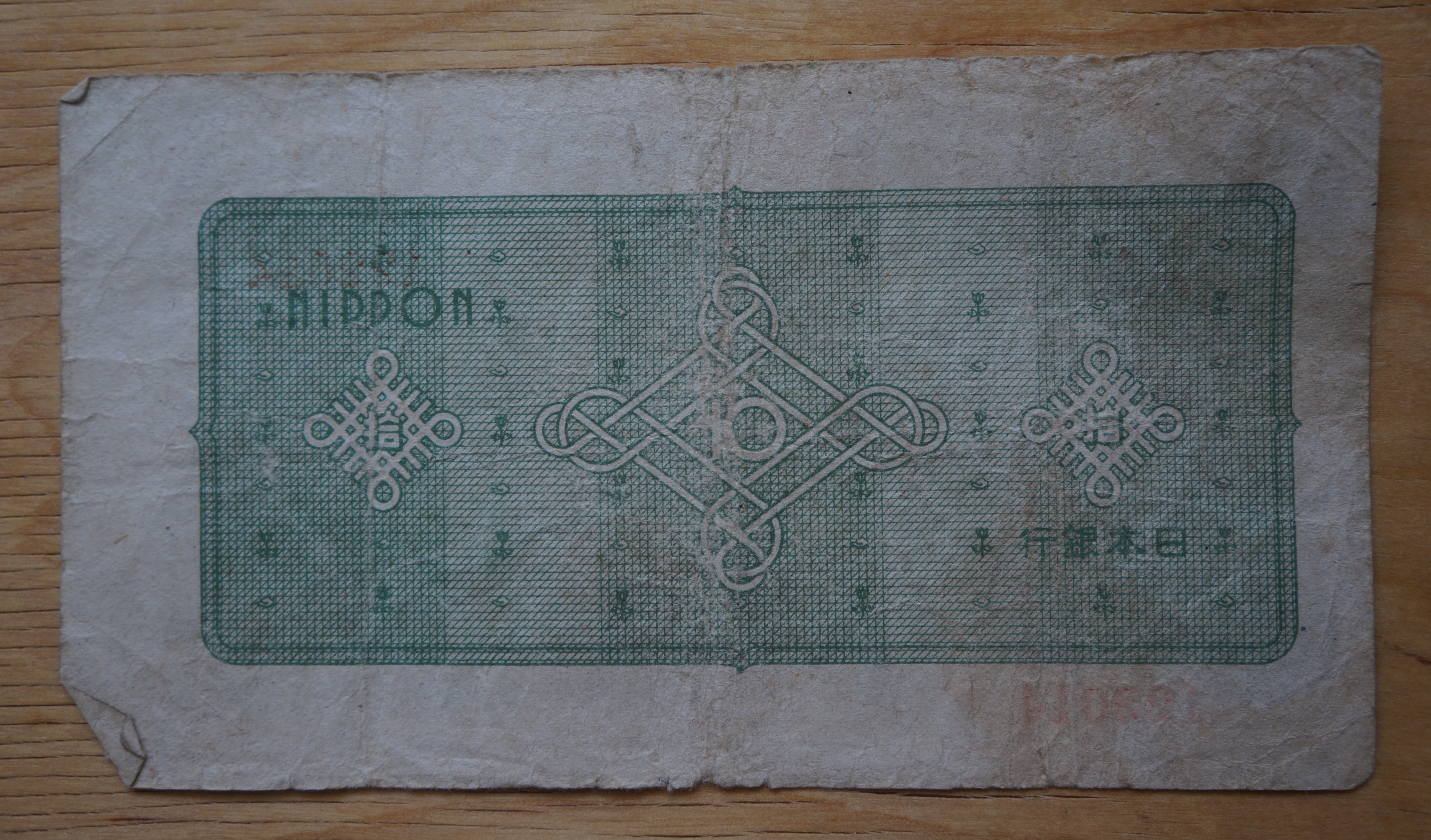
This is Japanese currency but I’m unsure if it is postwar, prewar, or occupation script.

When Japan conquered or annexed a country, like the Philippines or Malaya, it confiscated all the money and issued military payment script in place of it. When Japan began losing the war they needed to print larger denominated currency as their military money steadily lost value. Of course at war’s end it was utterly useless, good only for kindling.
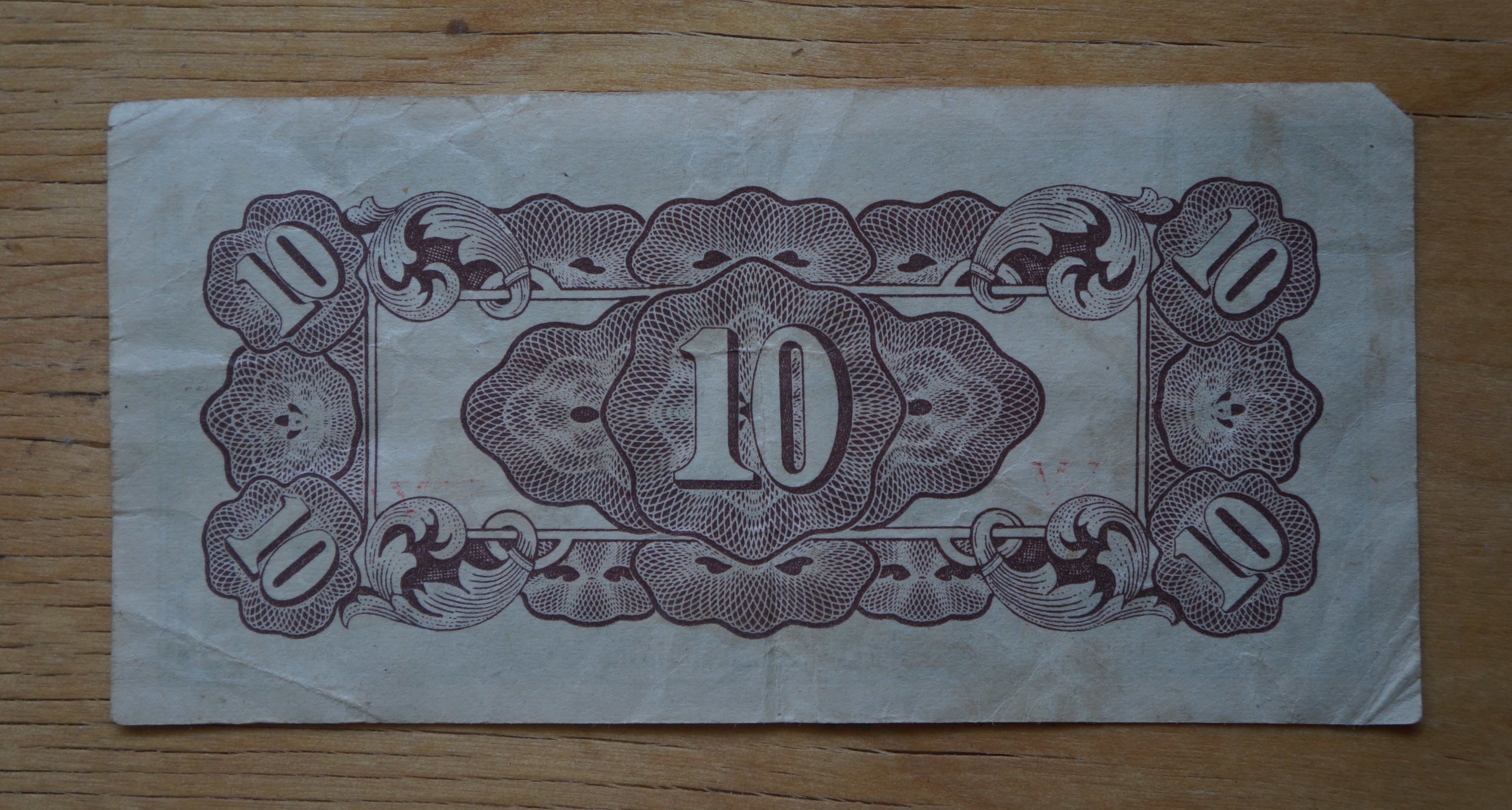
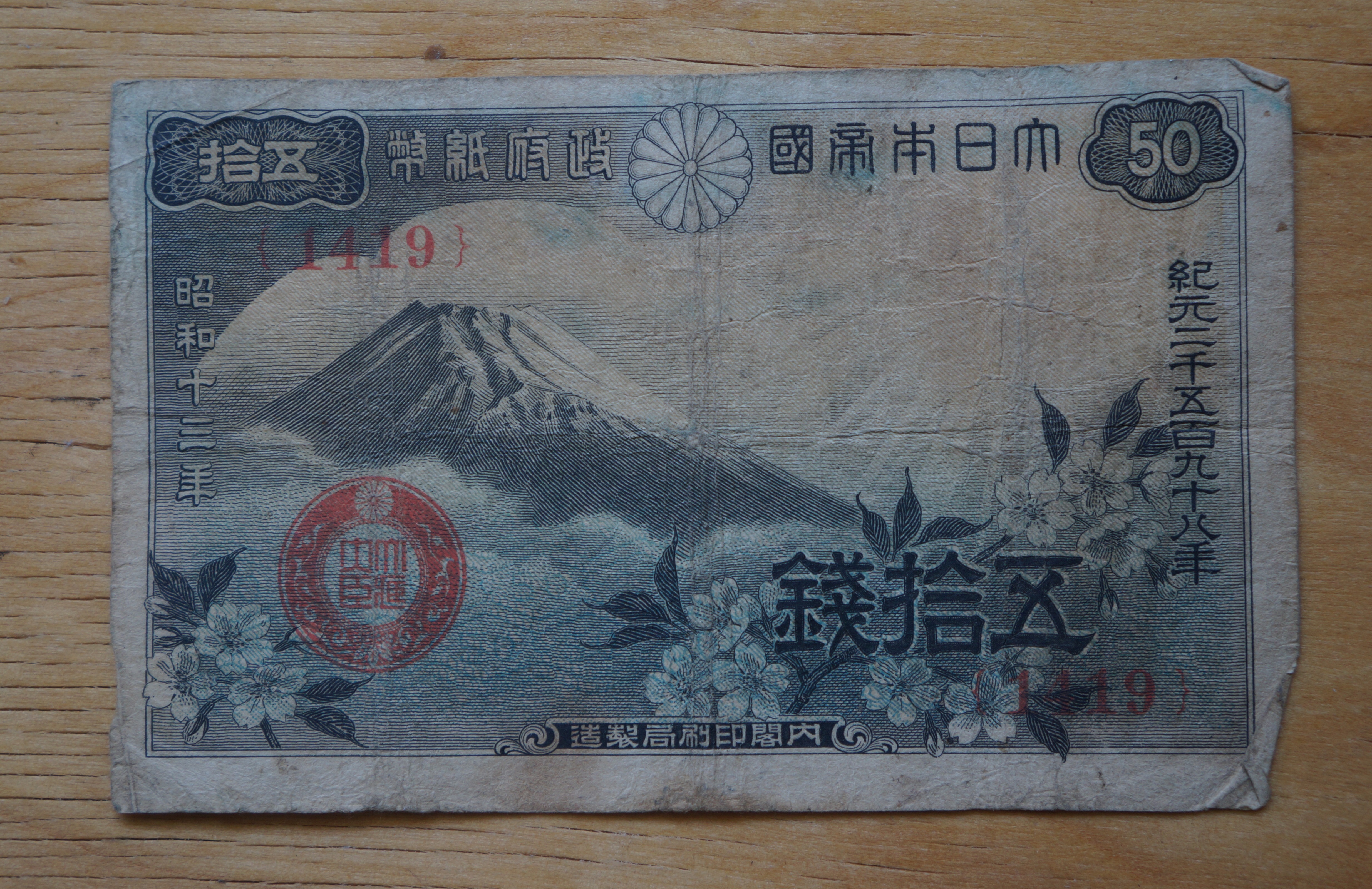
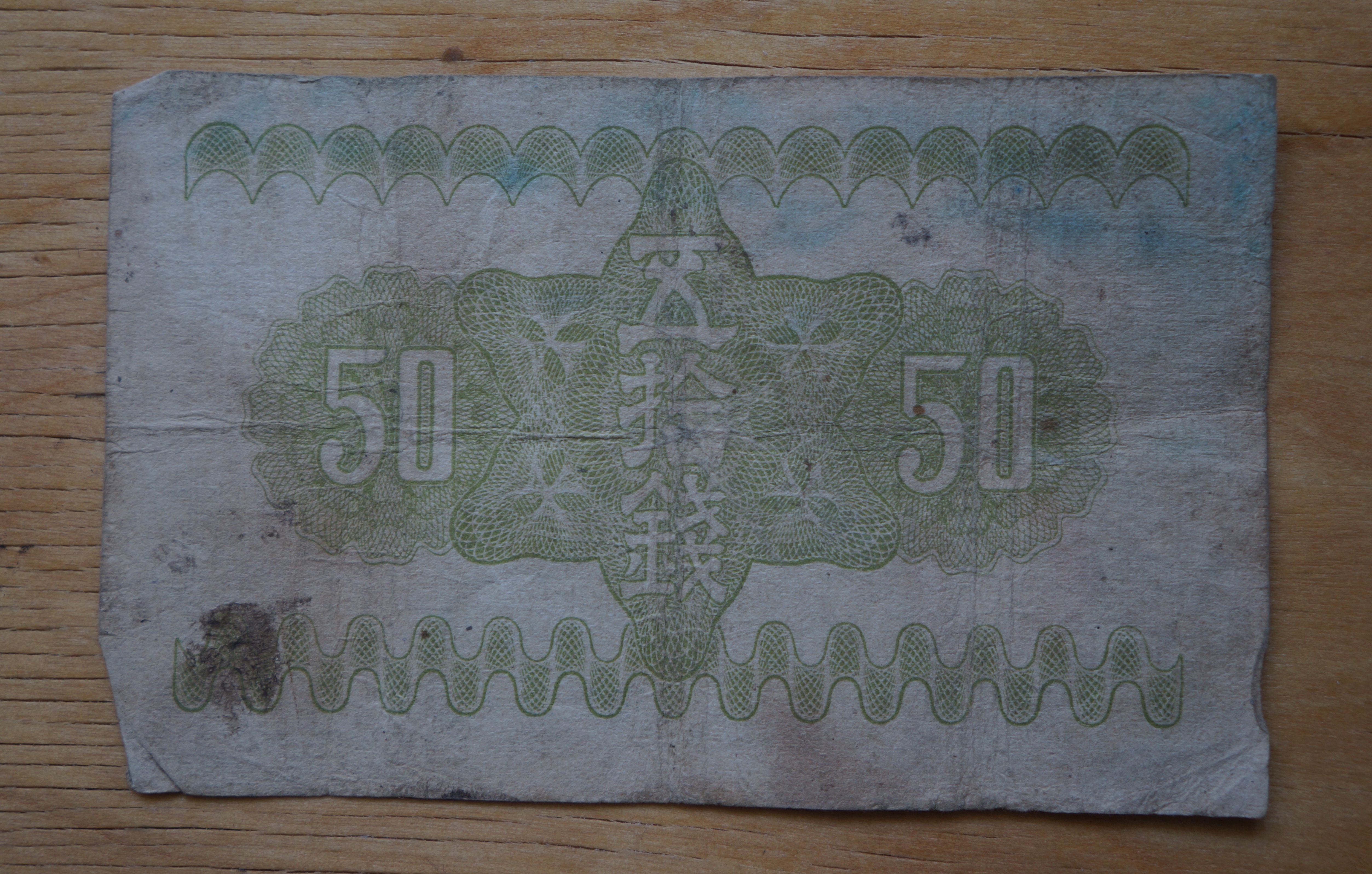
A Japanese bill, probably 50 Yen, but otherwise a mystery.
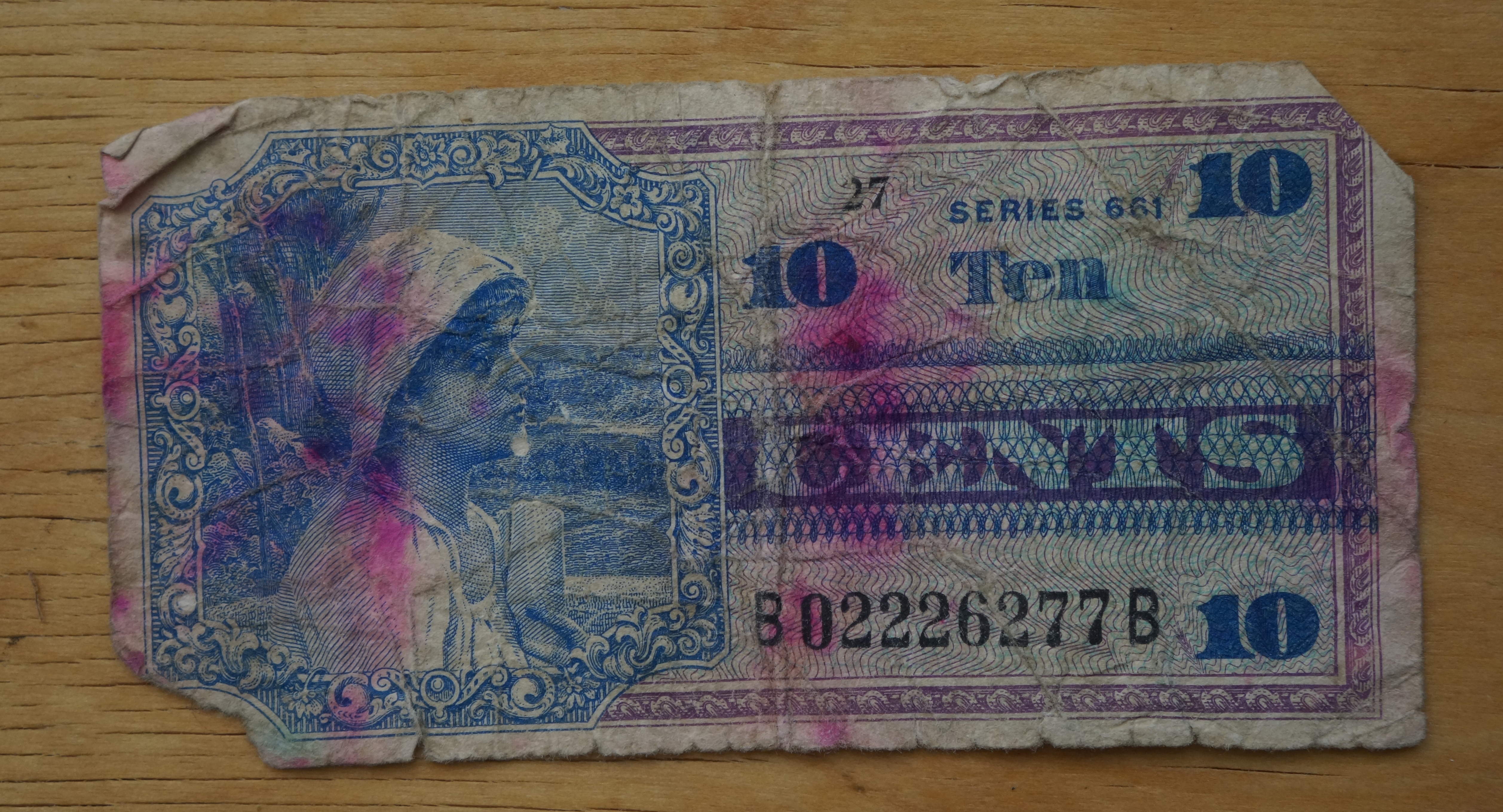
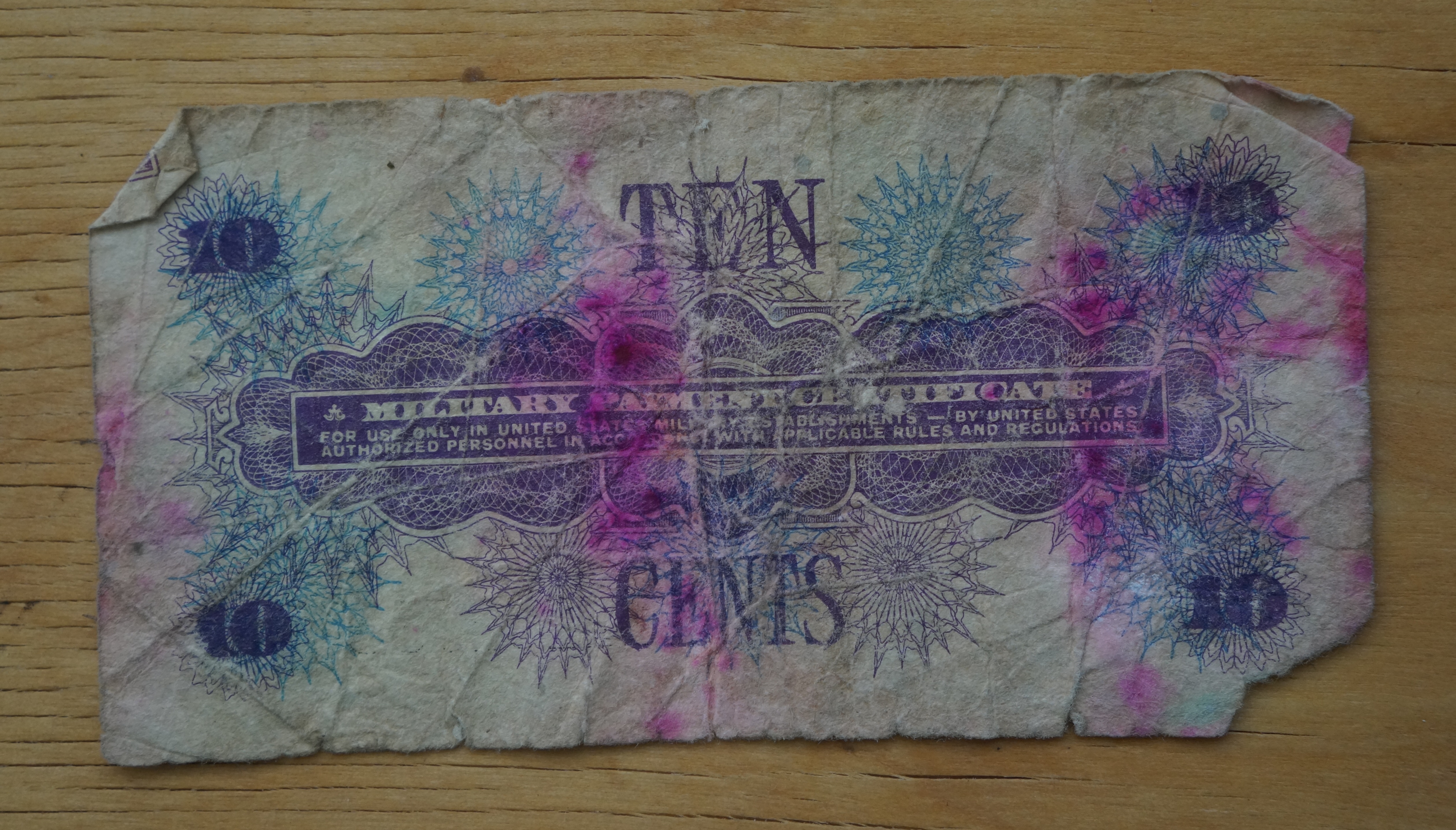
Not much was spent to print up our military money either, with thin cheap paper.
The United States also issued military payment currency and I believe this note is from postwar Philippines.

This one was probably for 50 Japanese Yen but what era it’s from I don’t know. Note the Imperial chrysanthemum at top.
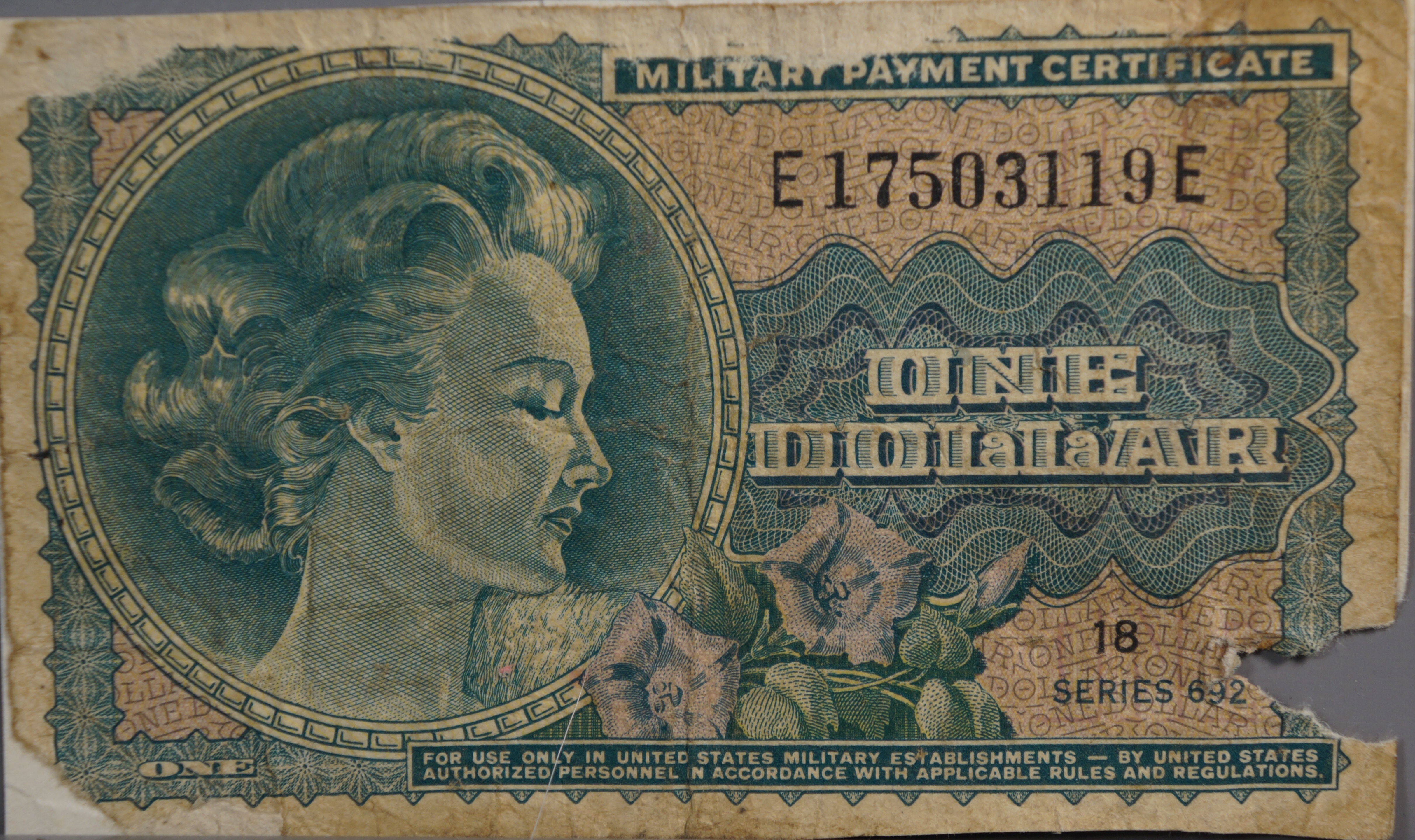
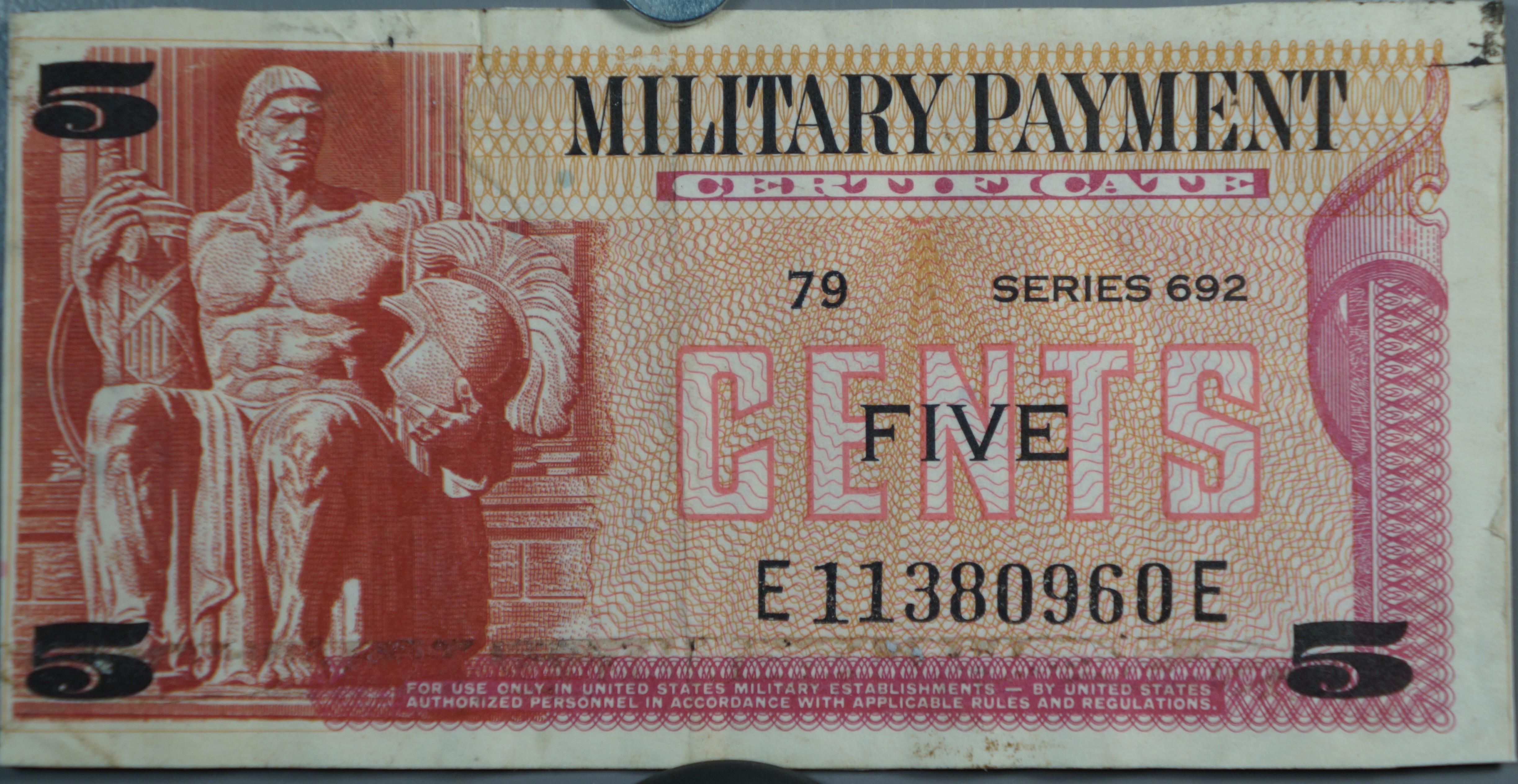
These last two are MPC (Military Payment Certificate) from my Vietnam service in 1970-1971. The military authorities would periodically change the design, then require all the old style currency be exchanged for the new money. This was to combat black marketering but it always failed because the crooks were tipped off well in advance.
Unless noted, all text and images by todgermanica.com.
 todgermanica.com