
Here’s my new used Peavey Rockmaster 6-string electric guitar. I bought it at Denio’s flea market last week. It’s in fine shape and looks good.
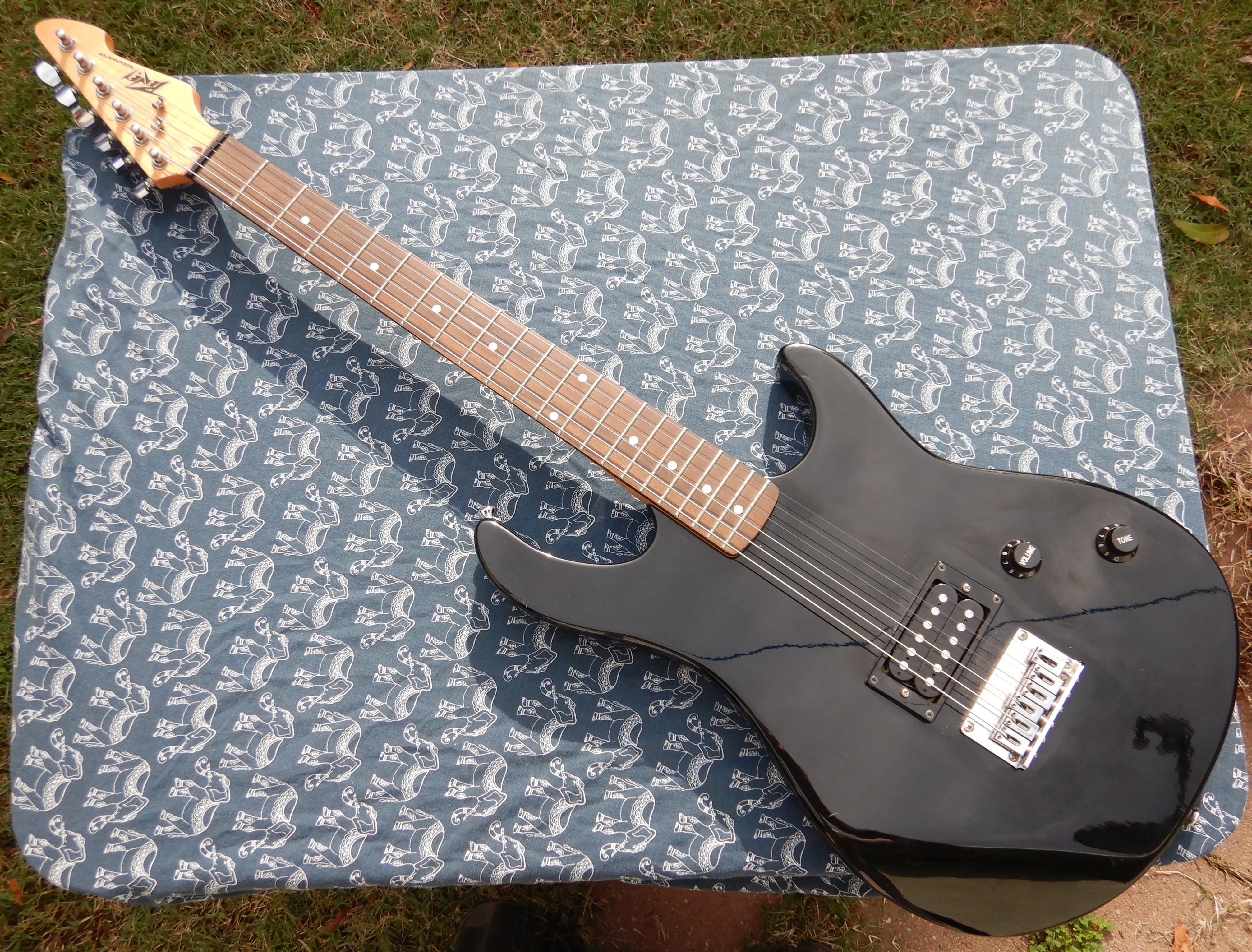
The vendor had a half dozen Instruments laid out, all cheap enough. He was asking $25 but I offered $20 and he said ok.
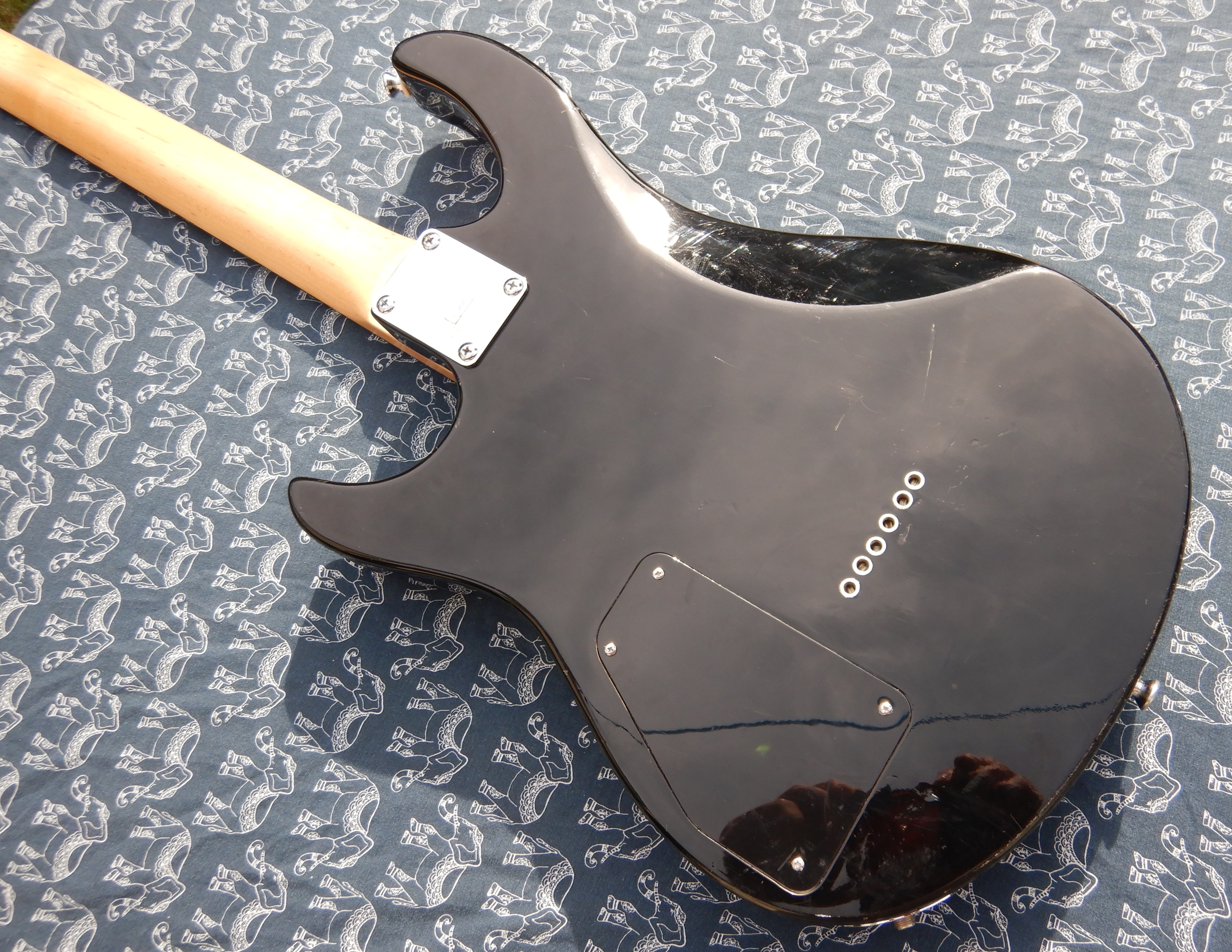
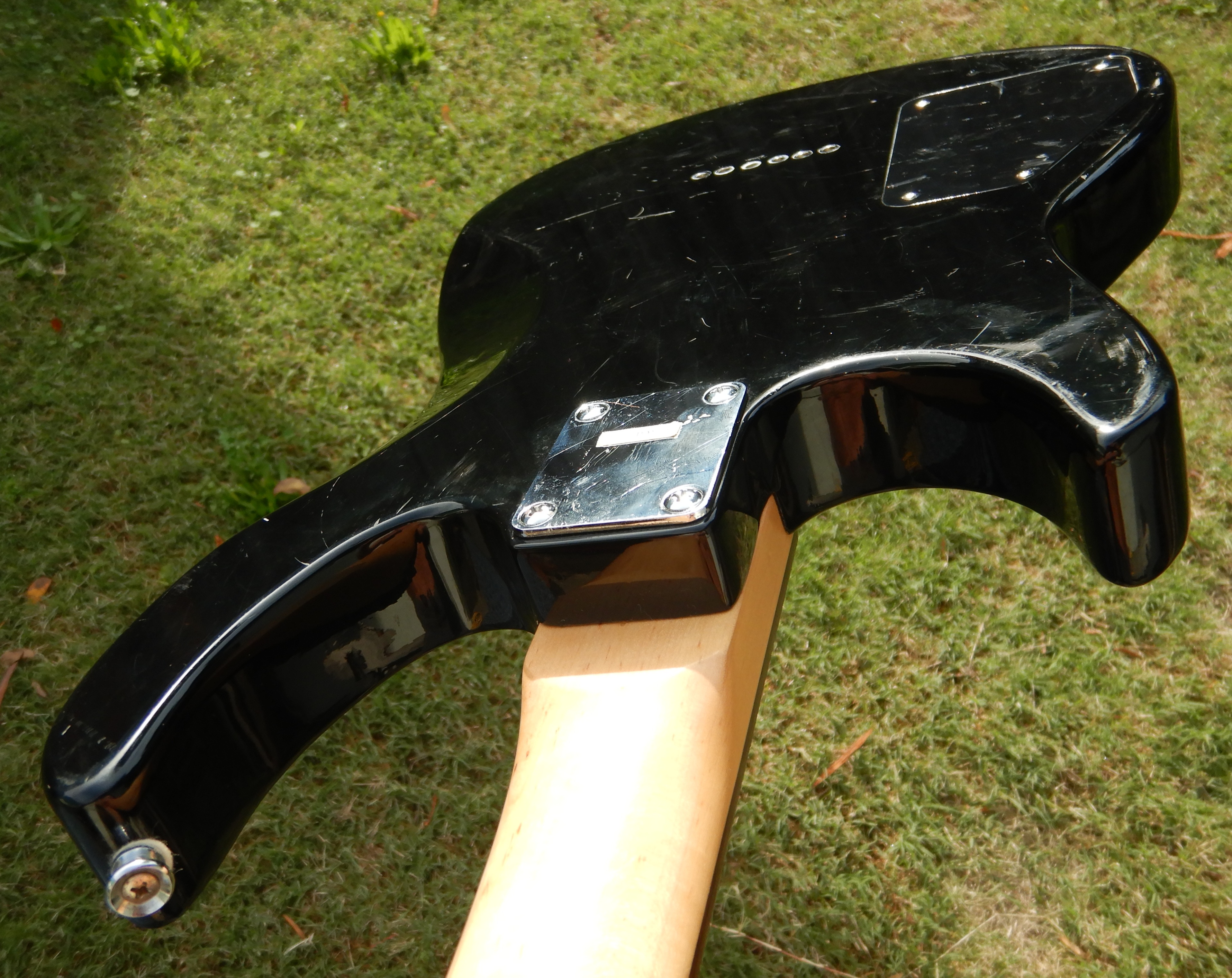
It has some belt buckle scratches on the back and other small blemishes from being banged around but the lack of fret wear and the like new strings mean nobody played it much.
And if they did play it then it would have sounded sour. Because the saddles holding the strings were lined up like tin soldiers indicating the intonation had never been adjusted.
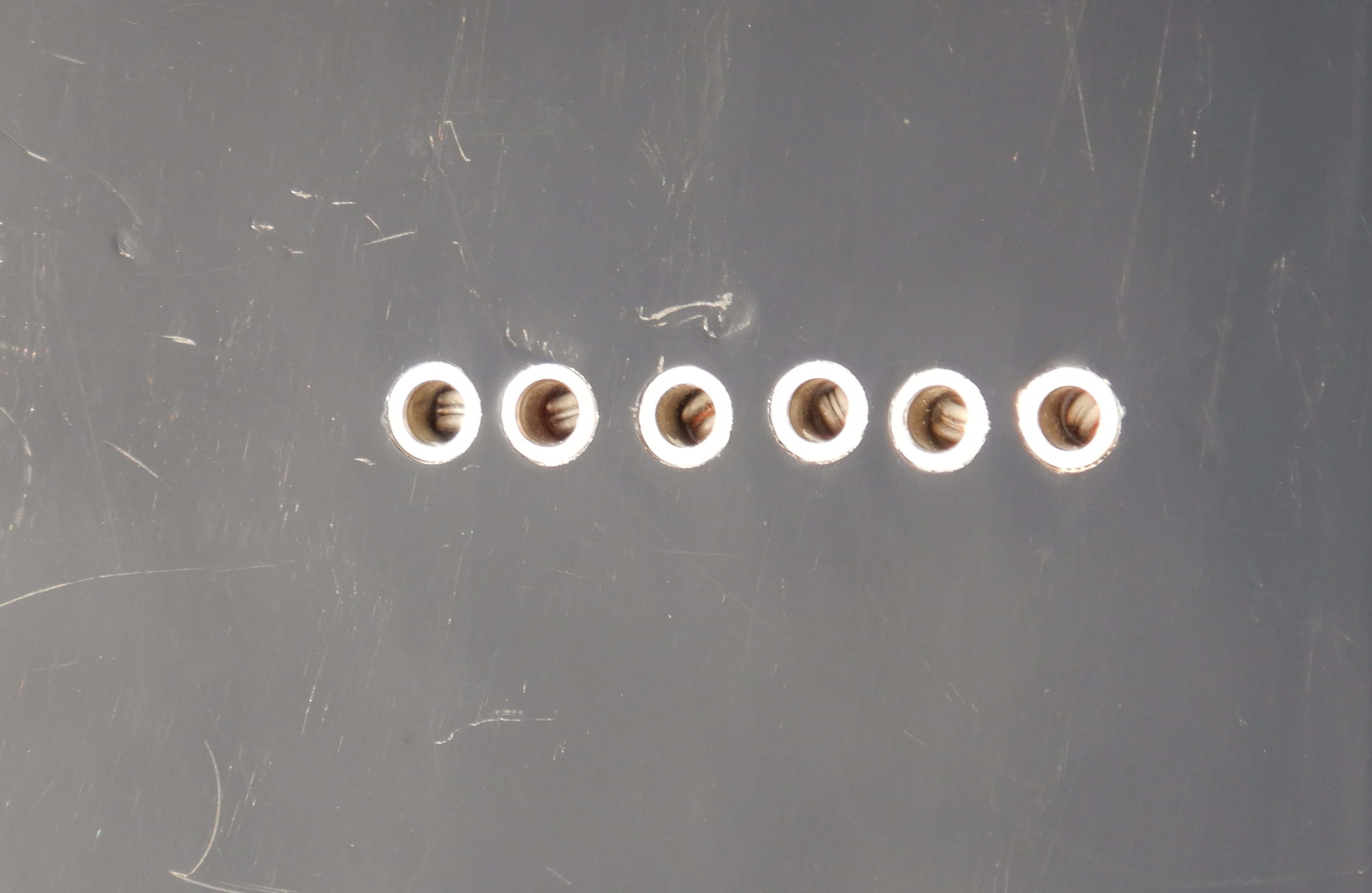
Furthermore, the neck had a slight hump to it instead of the needed slight bow. That means the owner certainty never set it up correctly- or at all.
Not the first time I’ve seen this in buying used axes. People want to make music, buy a guitar, then lose interest and get rid of it because its so hard to play without lessons.
And because it sounds so awful if a proper setup was never done on it.
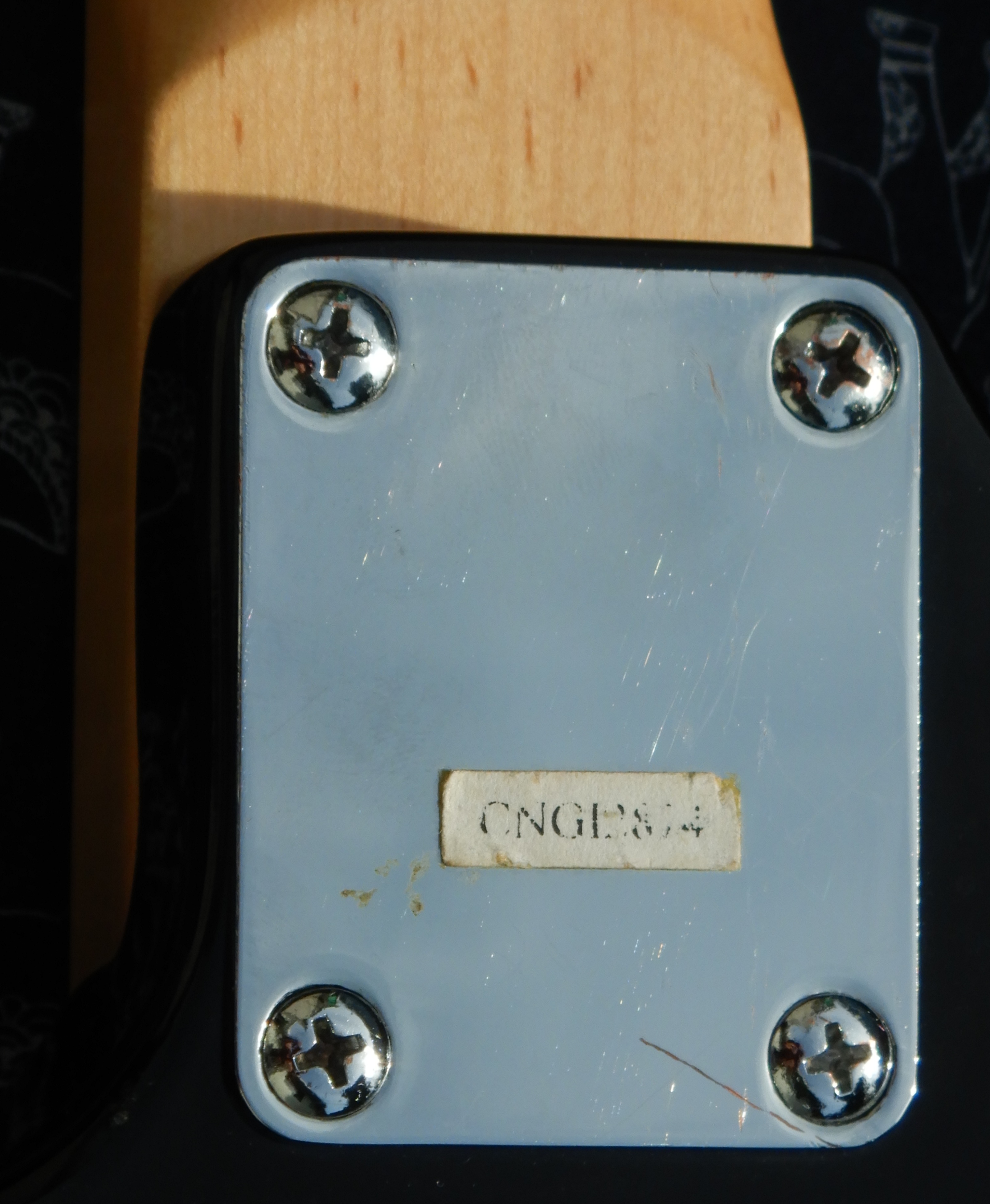
Mississippi based Peavey is better known for their amplifiers than for their guitars or bass guitars. Of course they all are made in China these days.
And almost all the instruments made overseas in Asia are pretty high quality and sound not bad all the way to good.
Because all manufacturers for the several decades utilize CNC (Computer Numerically Controlled) cutting equipment to make them.
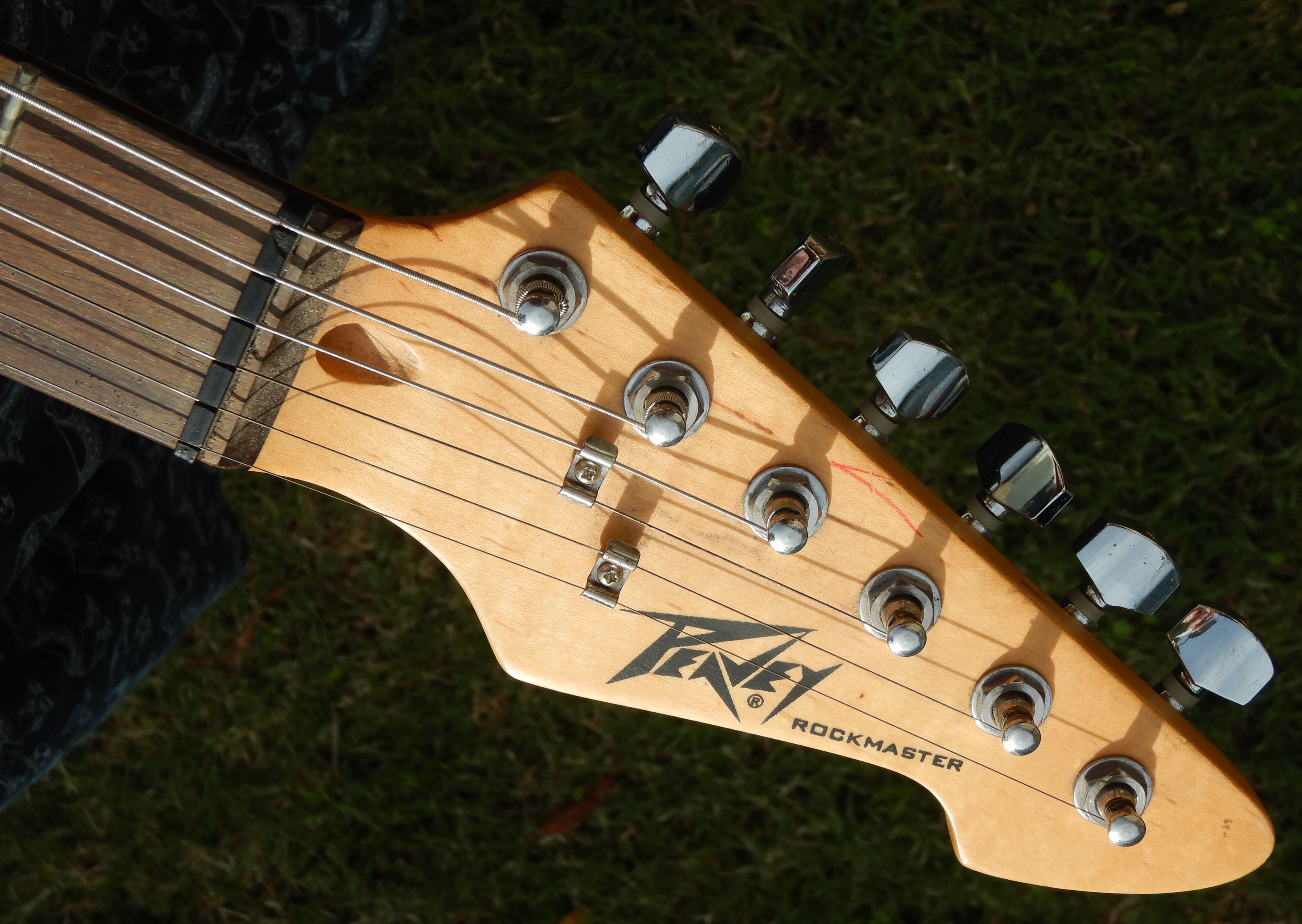
This is a far cry from the olden days of hand cutting the blanks, when most starter or student guitars sounded uniformly poor.
Of course you get what you pay for if you’re lucky and the pickups, wiring, capacitors, bridges and other furnishings are going to be made cheaply enough to sell the thing for probably a hundred dollars.
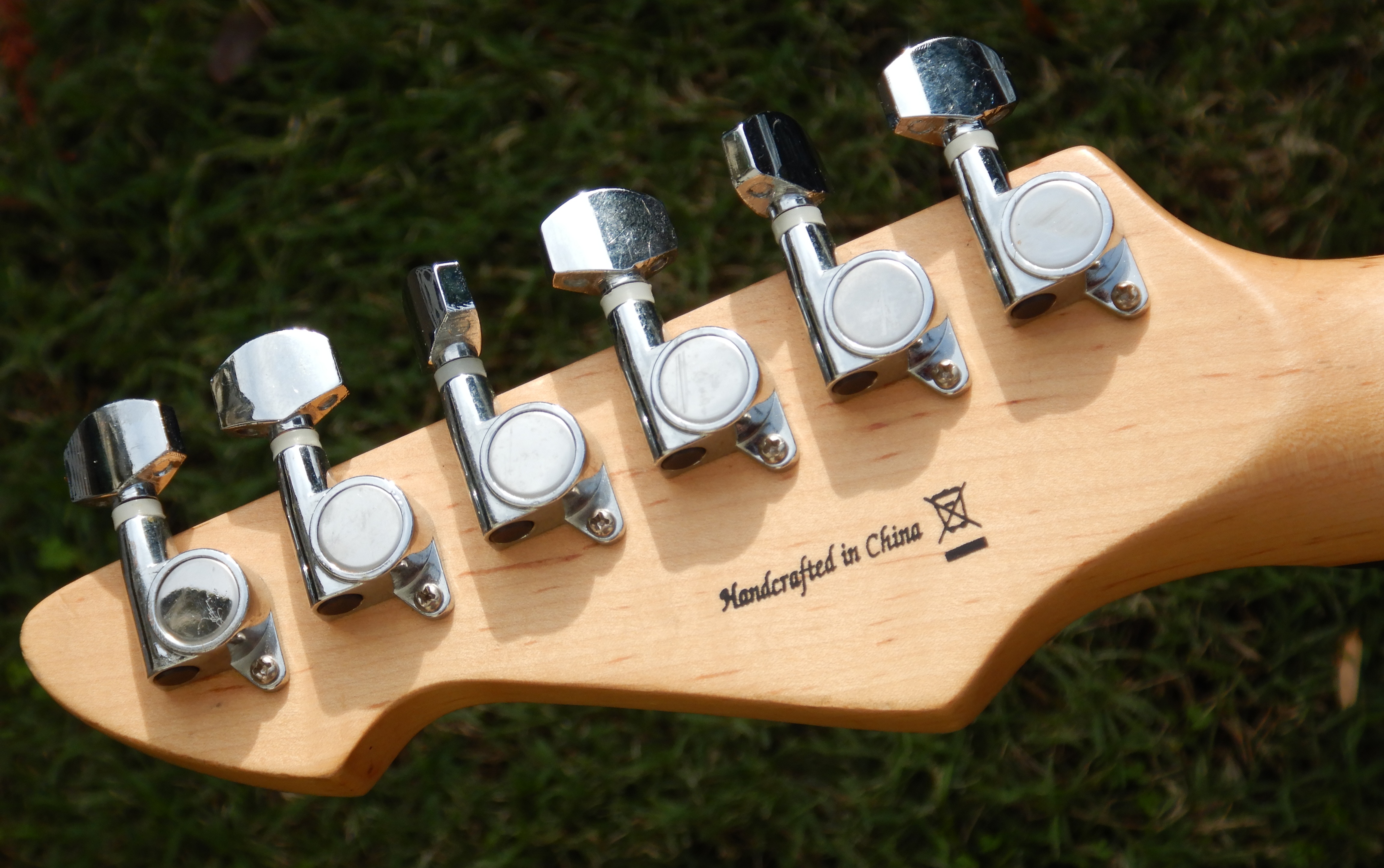
I’m curious as to what kind of wood they used for the body because this is the lightest weight guitar I’ve ever picked up. Which is nice. Pine? Fir?
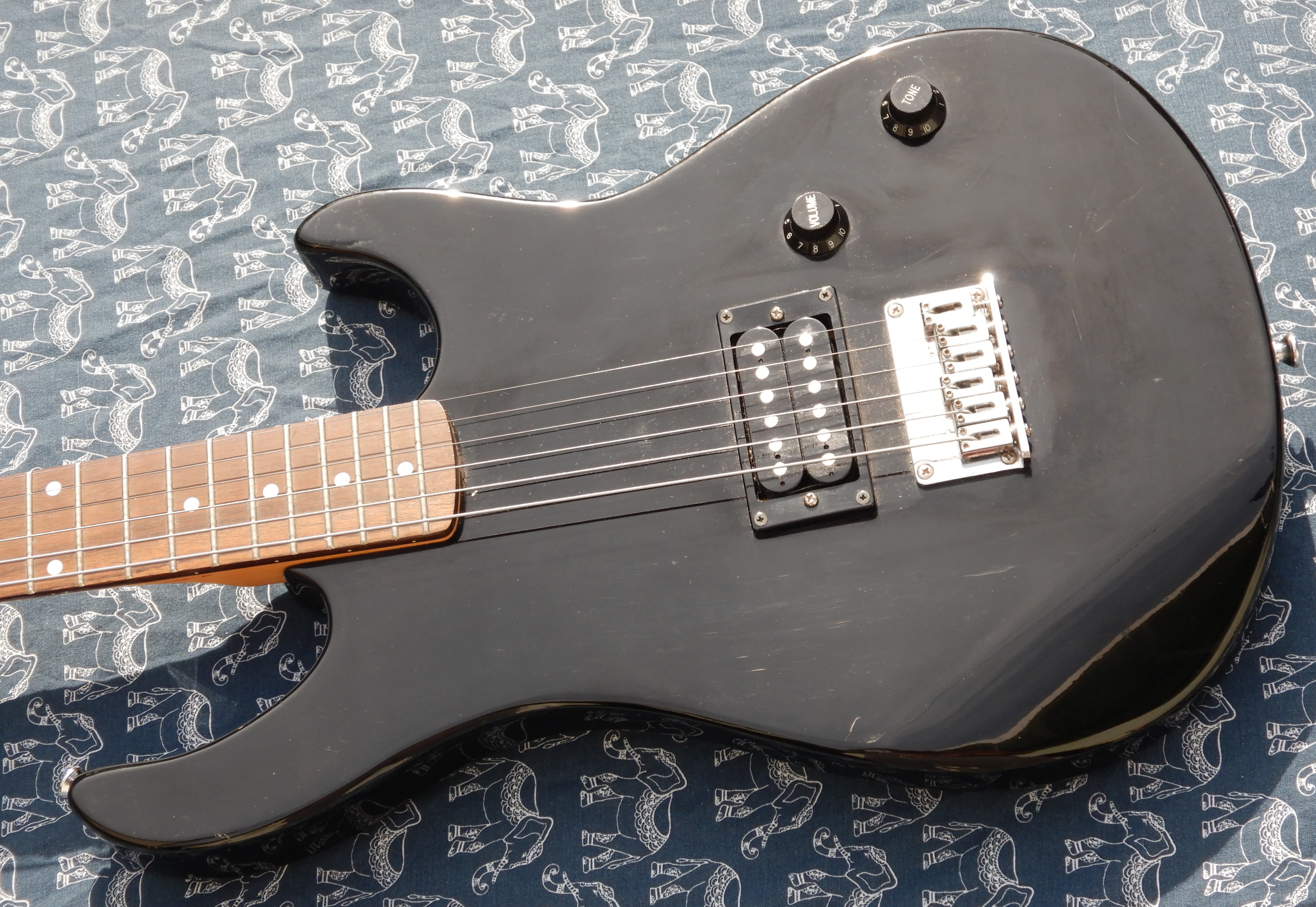
I have always swapped out the strings on any ax I bought but these look so new I didn’t bother to change them.
But I did tighten every screw and nut because they vibrate loose.
My next step was to turn the neck hump into a slight bow using a hex Allen wrench to turn the nut where the headstock joins the neck.
Turning the nut makes the torsion rod buried inside the neck tighter or looser, making the strings bow the neck so the strings are at the correct height for playing.
I loosened the hex nut quite a bit to get it more or less right. I’m not very scientific and don’t measure anything. I just keep adjusting until it feels right.
Next is intonation. This is the process of shortening or lengthening each string to correct length so the notes sound in tune up and down the neck. This is done after neck bow setting.
String length is adjusted by turning a tiny screw at the rear of the saddle that holds the string on top of the bridge. I tuned each string then fretted it at the 12th fret, the octave.
If the note is too sharp the adjuster screw must be tightened to make the string longer: if too flat in pitch the screw must be turned counterclockwise to make the string longer.
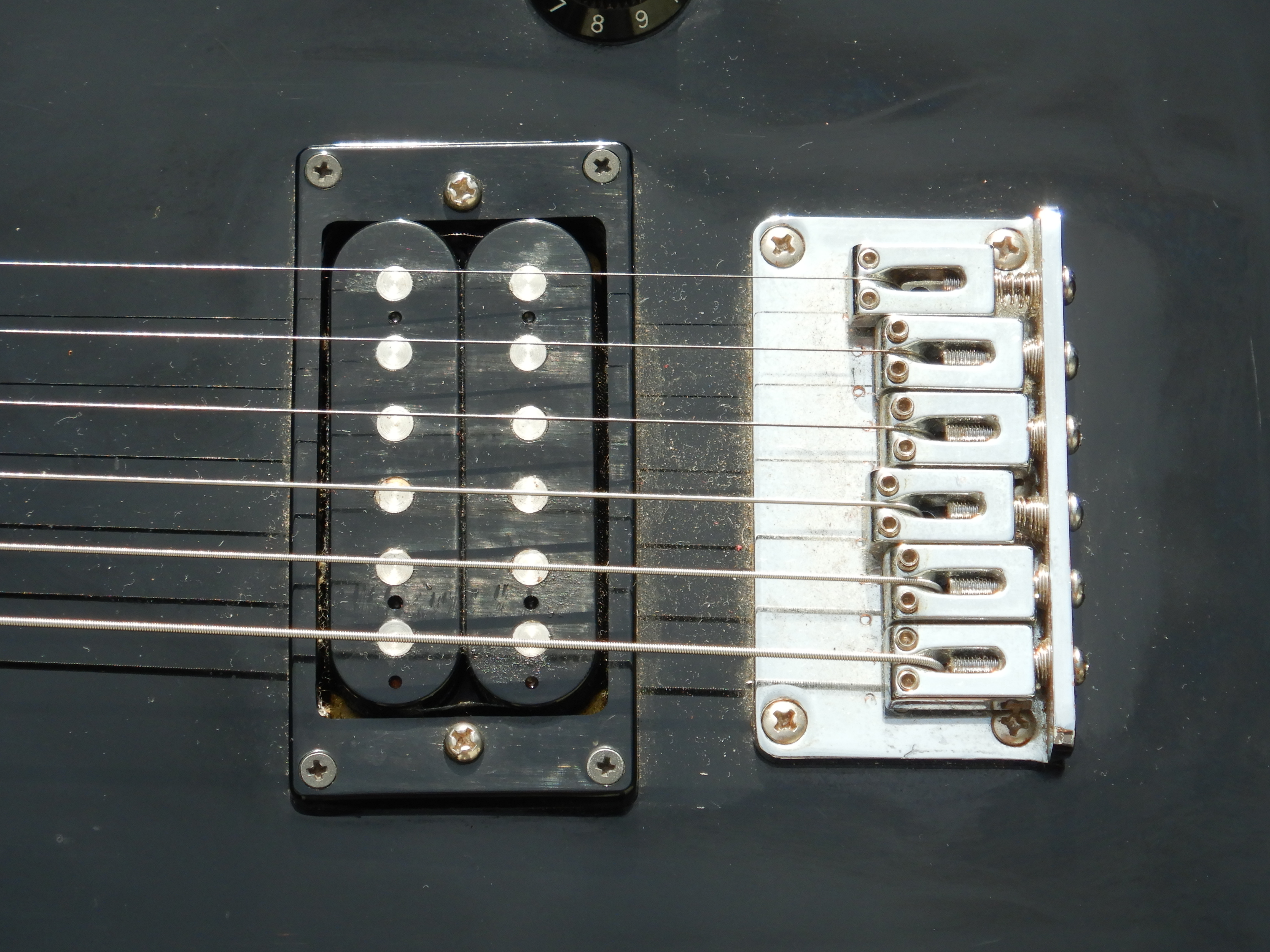
The string is tuned, then fretted again at the 12th fret. You continue this process for each string until they are in tune both played open and at the 12th fret.
It’s not difficult but it is fiddly and time consuming.
The final step in guitar setup is using another set of tiny screws on top of the saddles to adjust string higher or lower according to your preference.
This Peavey starter guitar needed so little work other than setup that it’s basically ready to play with nothing else needed, not even new strings.
I do play bass turnarounds, arpegios and riffs on the EADG strings and it doesn’t sound bad for a $20 guitar.
And it’s valuable training in trying to play tiny, crowded strings with old, arthritic fingers half crippled by peripheral neuropathy. And by old surgeries for trigger finger and carpal tunnel syndrome.
Old age is a shipwreck.
I love the deals I find at the big flea market even though I mostly walk it for the people watching.
Unless noted, all text, images, video and audio by todgermanica.com.

