
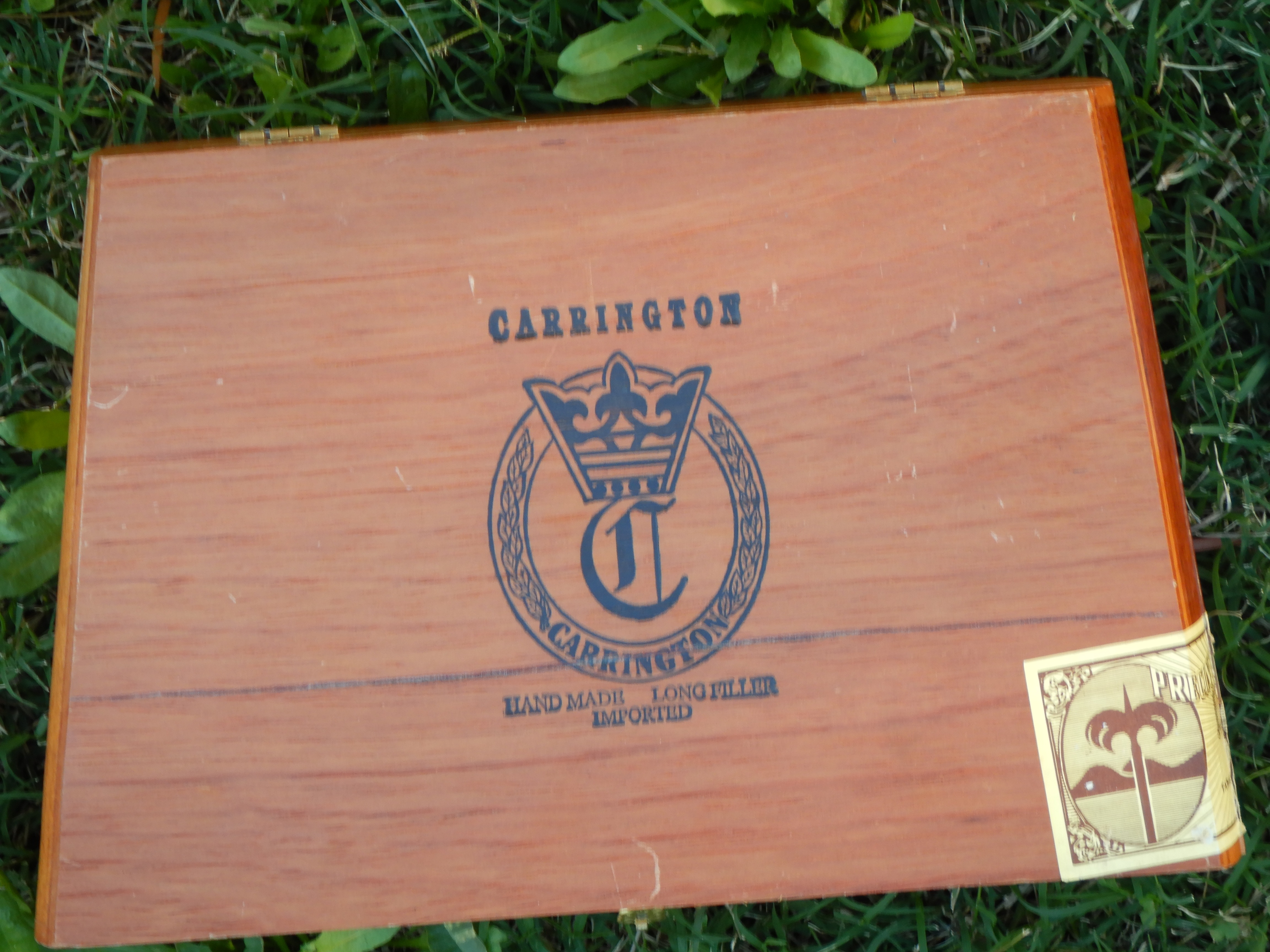
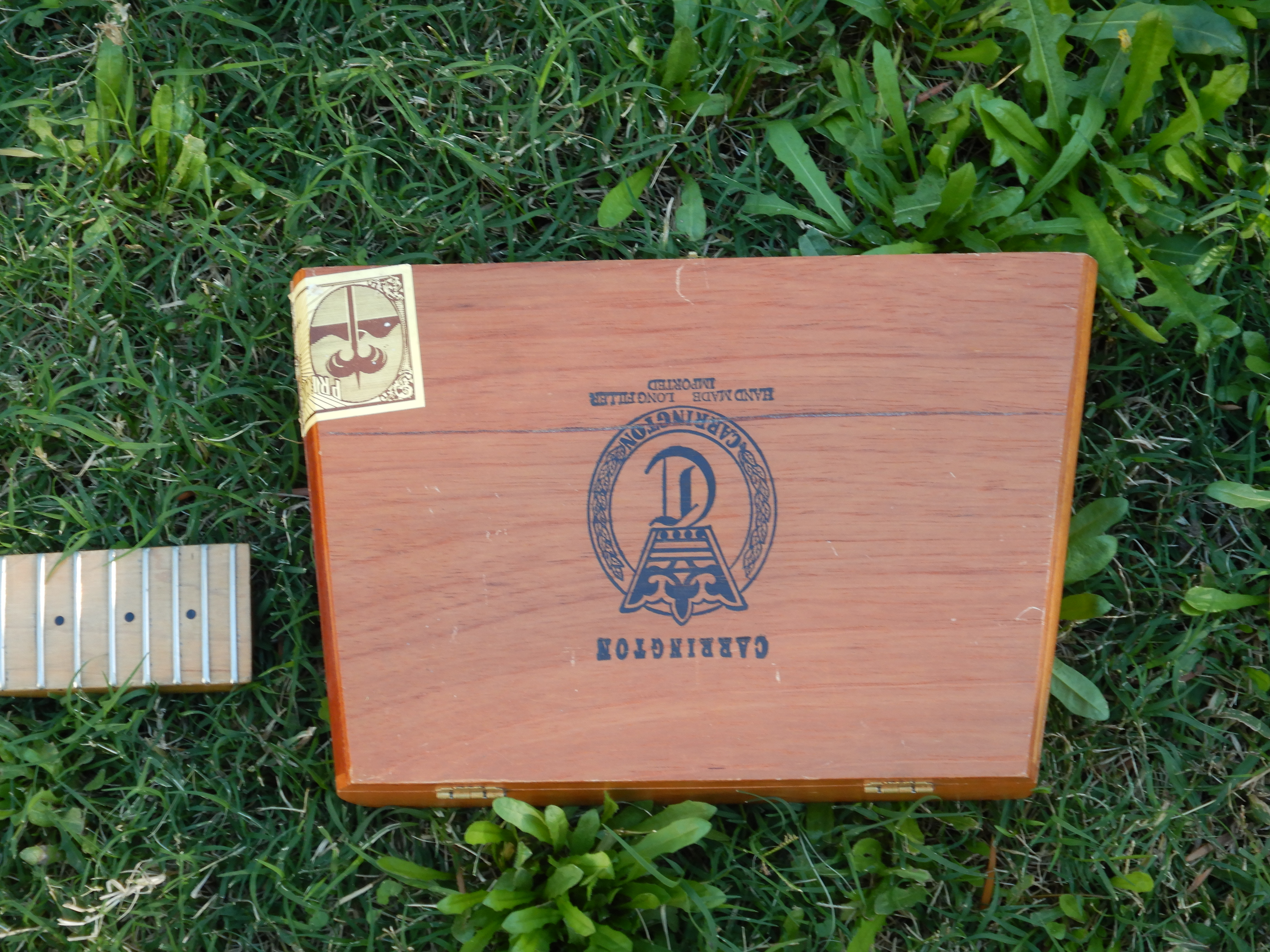
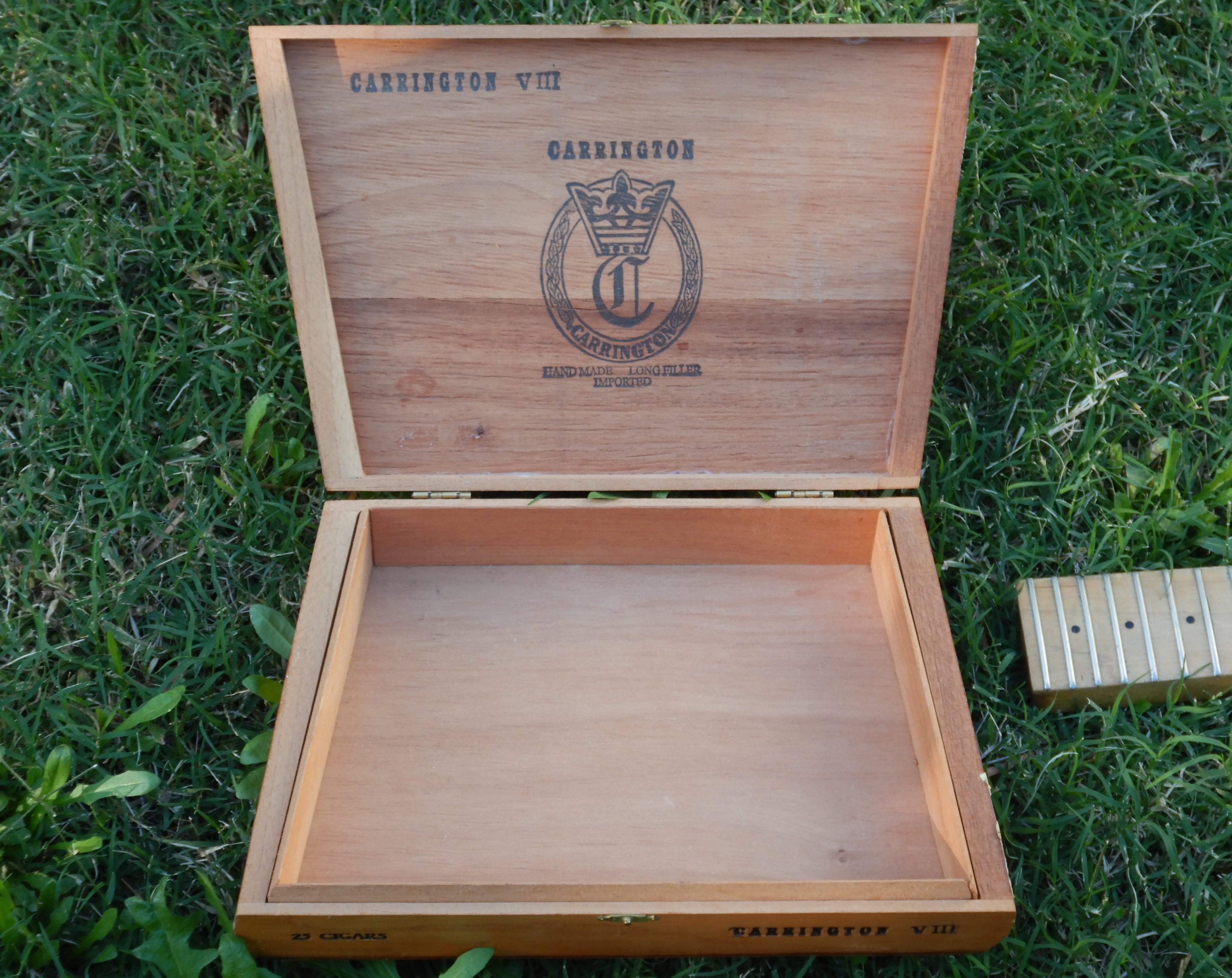
I bought this unusual looking cigar box at a 2nd hand charity shop for $4. It’s from the Dominican Republic and in great shape.
Most cigar box guitars use only 3 strings and are often tuned open and set high for slide playing.
But I build mine with 4 strings and tune them just like a guitar or bass: E, A, D, G, and in the same octave as the guitar.
I call it a Piccolo Bass Cigar Box Guitar because most of what I play on them is bass runs. It’s a 4-string guitar.
CG box guitars normally use a long 1-piece neck which extends beyond the box itself and holds the bridge and string ends.
But instead, I beef up the cigar box by screwing strong planks inside the box, and glueing them too. Because cigar boxes are pretty weak.
Then I cut a slot on the box top and screw down a salvaged guitar neck on the strong wood plank I put inside.
Then I install an output jack, a pickup and wiring, nut, bridge and saddles.
I screw in strap buttons and put a strap on it, string it up, intonate it and set it up for 2 hours. Then I play the fire out of it and tweak it for years.
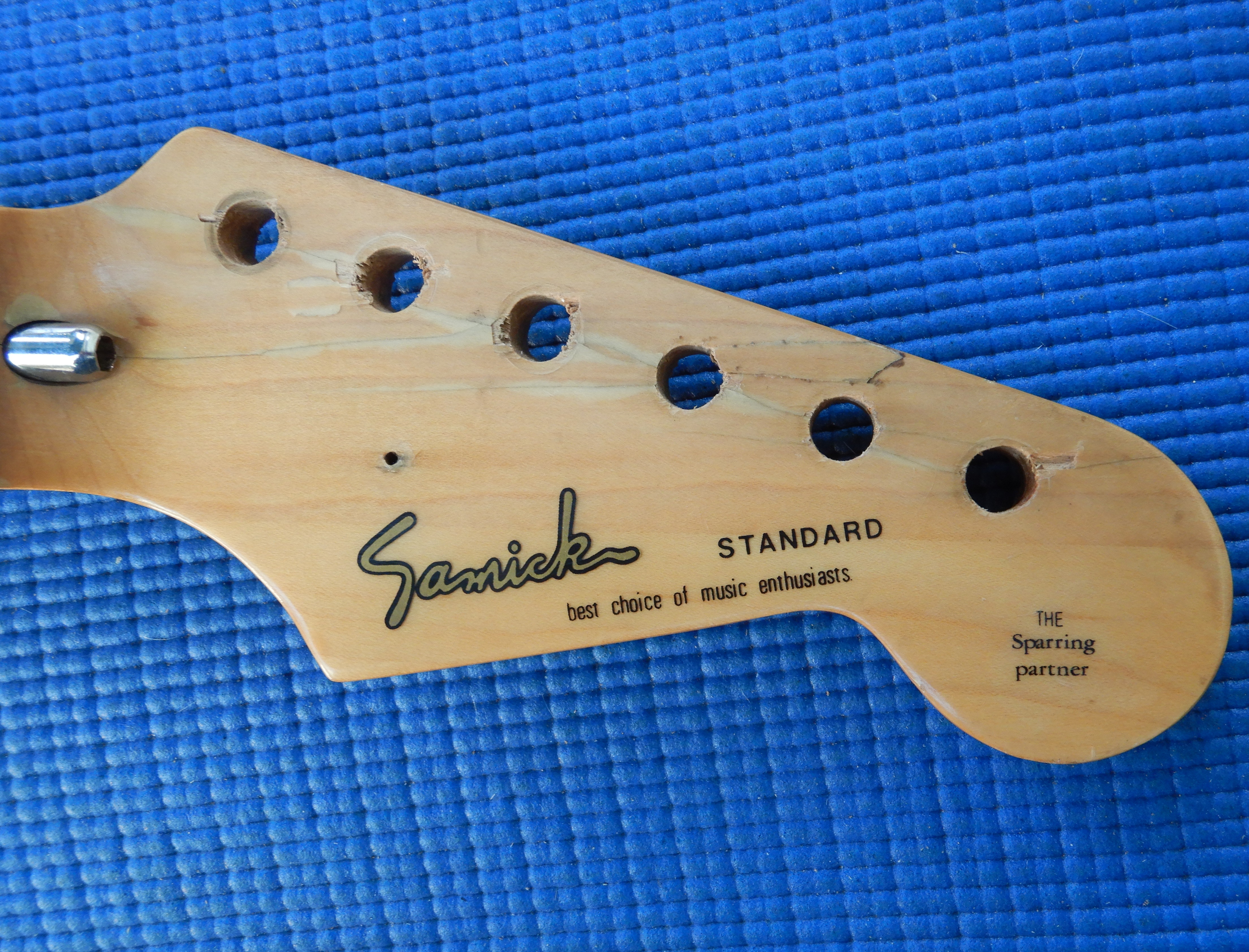
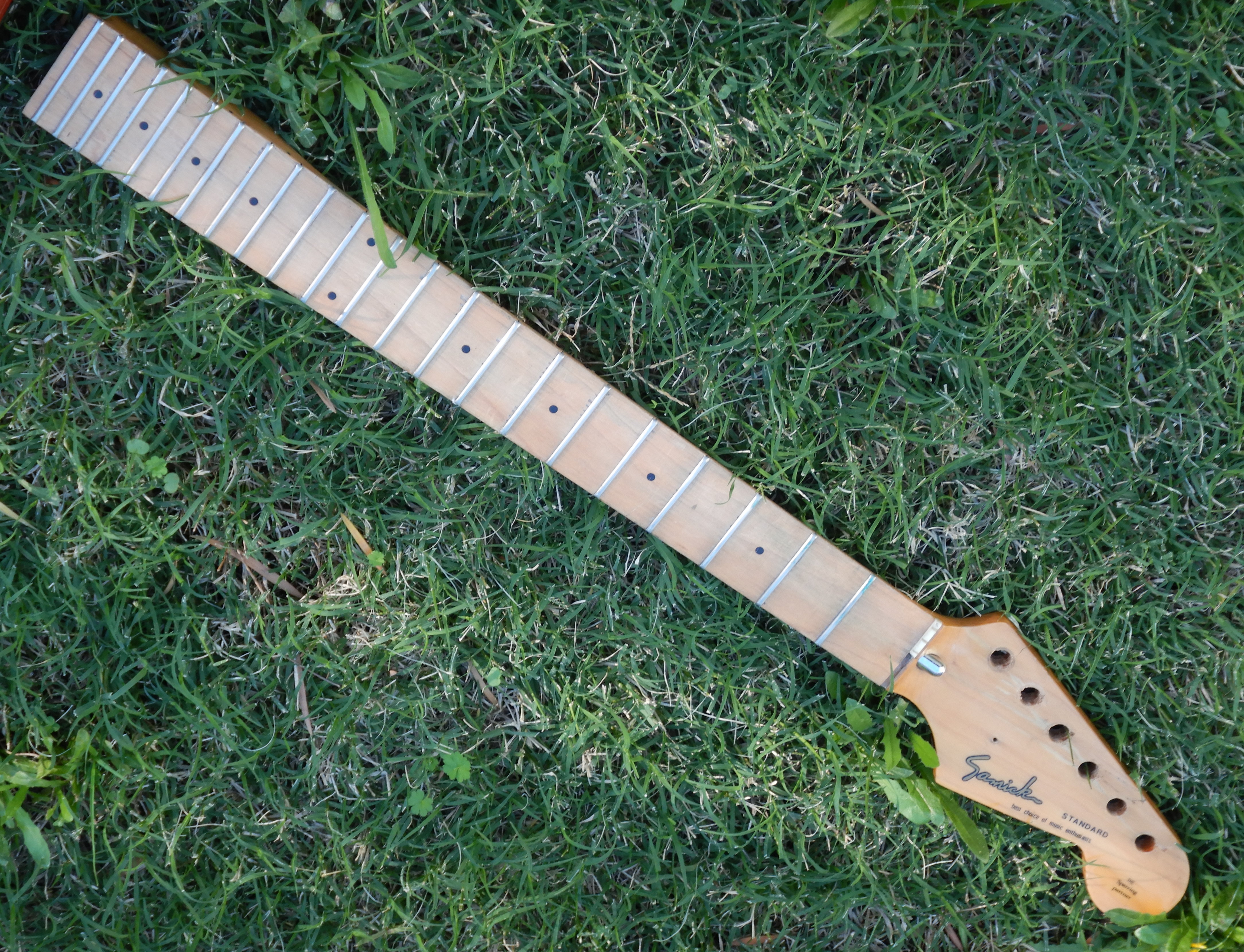
This old and battered but still pretty guitar neck I bought at our local Denio’s flea market for $5. I like the look of a maple fretboard.
I’m hoping the cracks are just superficial. You can tell the guitar this neck was removed from was loved and played, no hangar queen that Samick 6-string ‘Sparring Partner’.
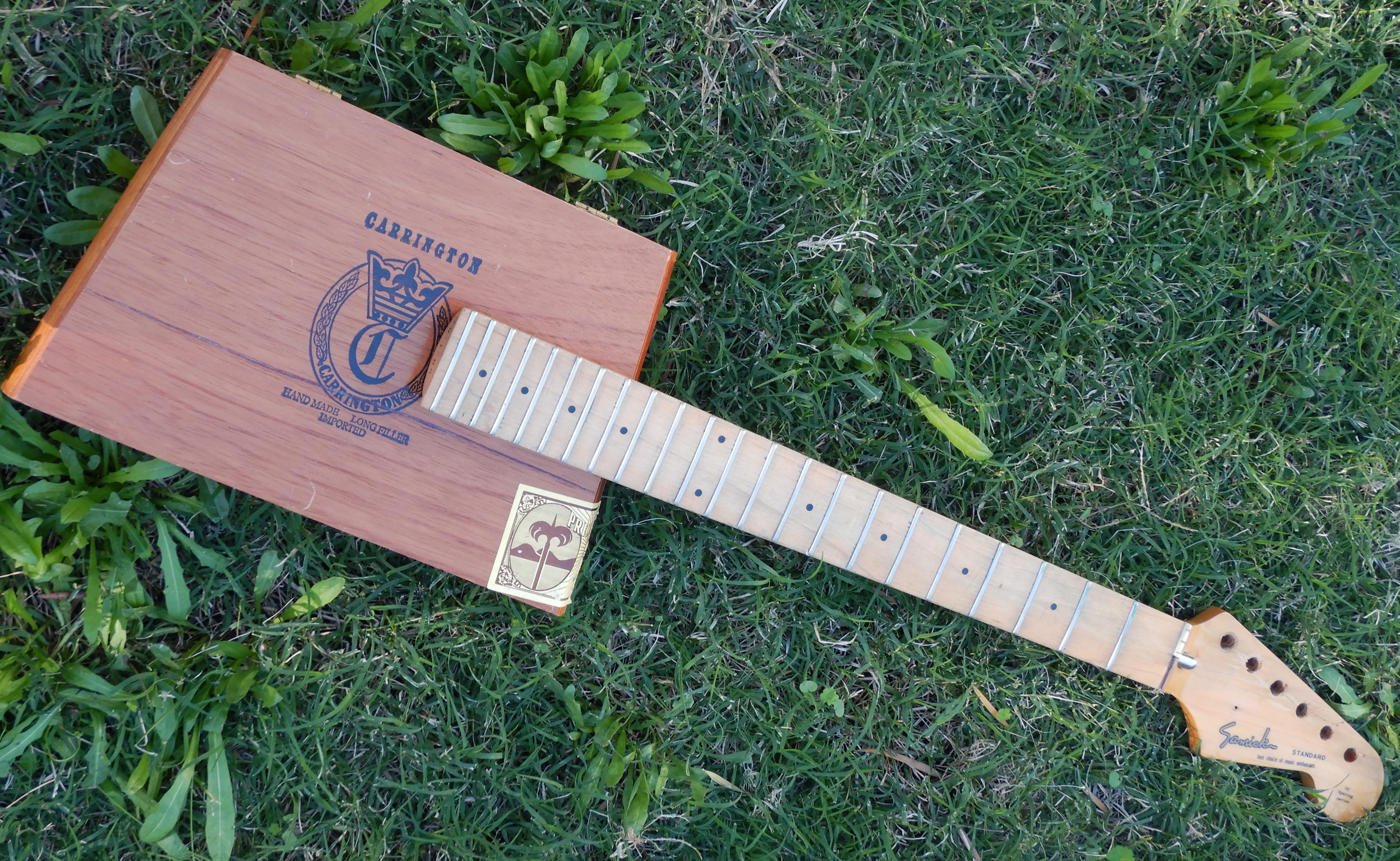
No need for fake ‘relic’ or patina, here, the worn, squared off greenish frets are authentic as hell, too. Maybe it got gigged.
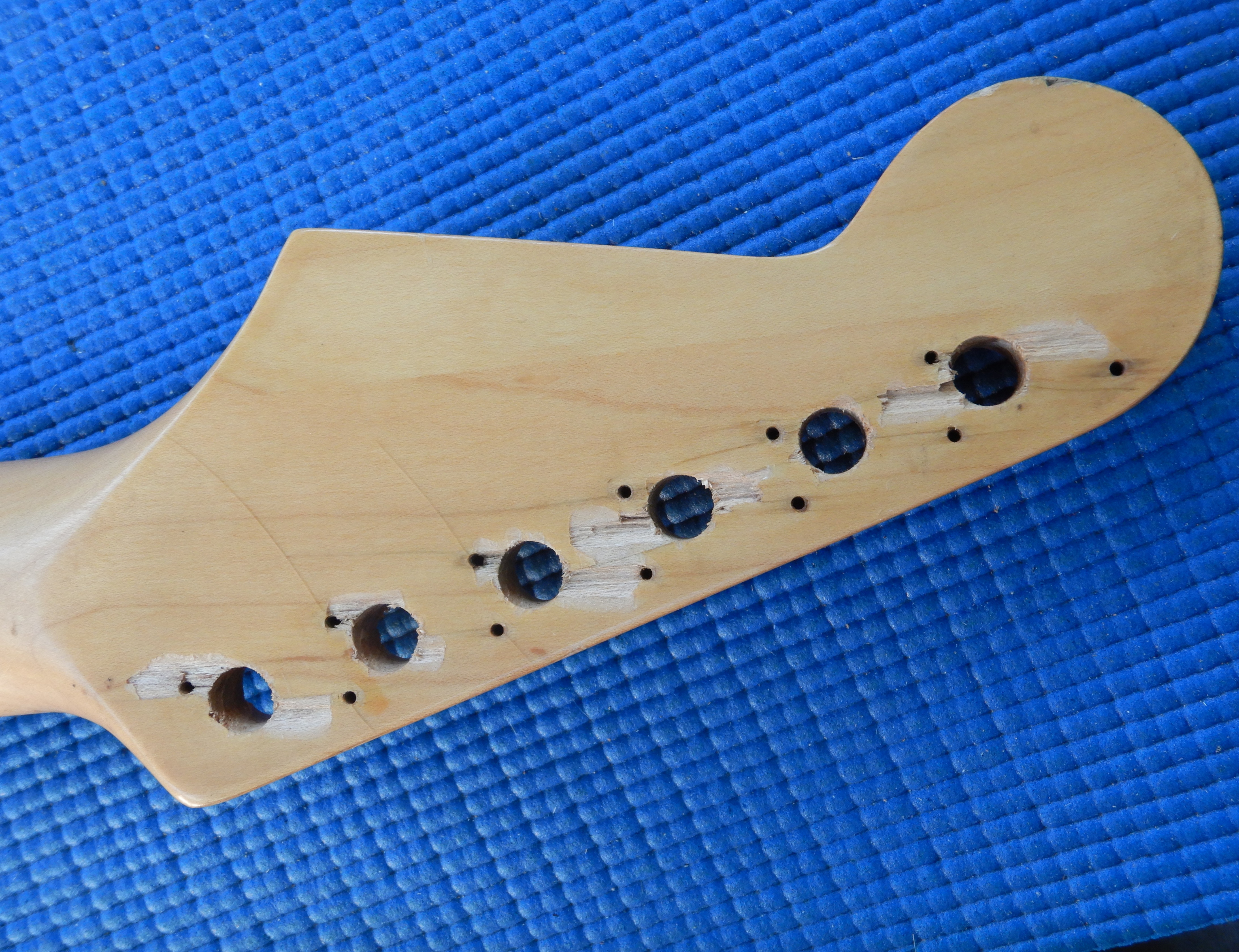
Samick is one of the big Asian Instrument builders and this one might be from 1990 judging by markings.
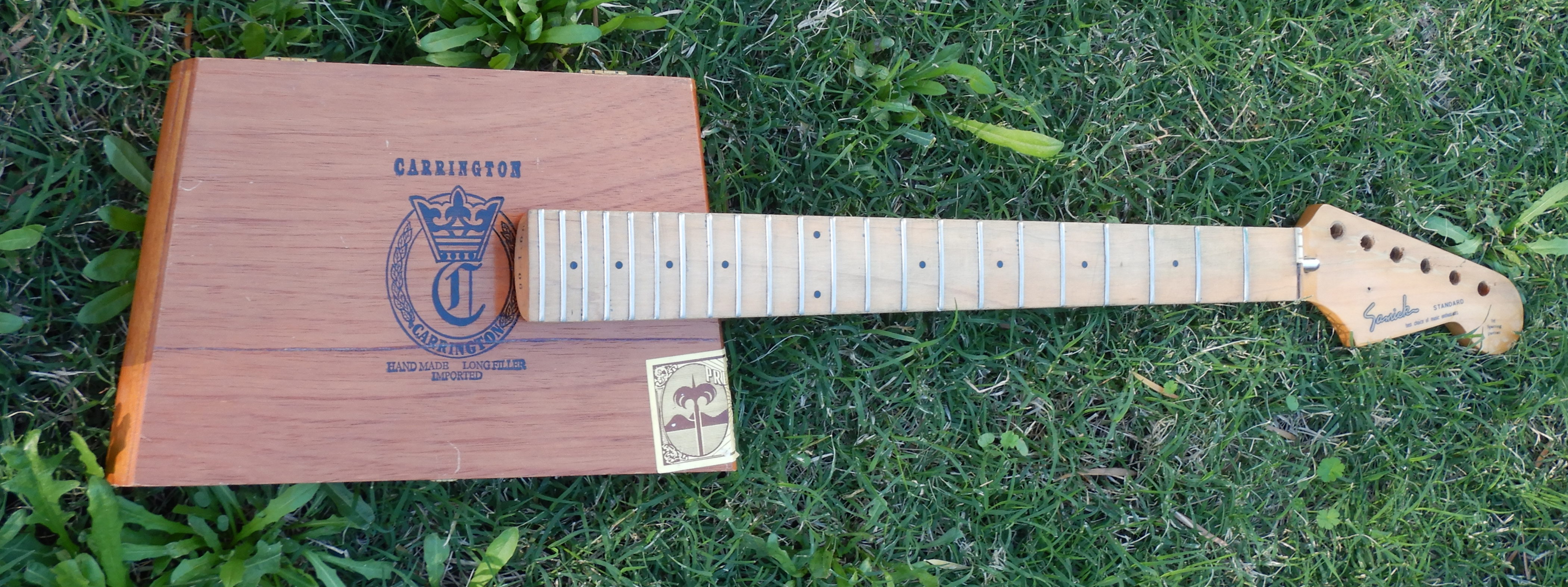
Anyhow, I hope the neck torsion rod and nut still bend the neck. The Allen nut is at least not frozen.
While the broken plastic nut at the bottom of the neck I tapped off. So its nutless until I buy or carve a replacement one.
I won’t need many more parts. I have wood boards from my parts bins and plenty of tools, screws, sandpaper, glue, tape, varnish, oil etc.
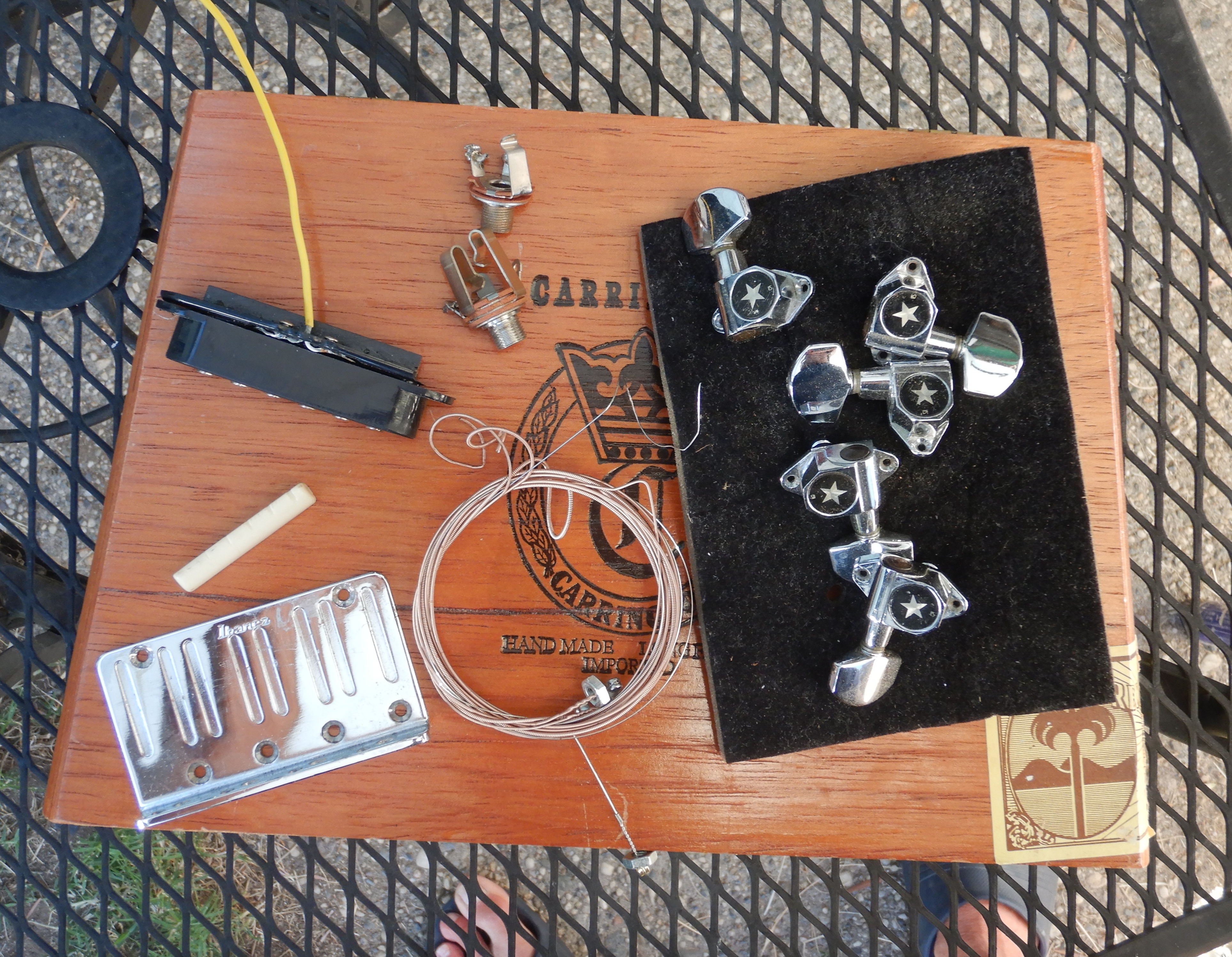
Here I have a plastic nut or saddle type thing I can carve up, a recycled guitar single coil pickup, tuning machine heads, maybe usable output jacks, used strings.
And a bass bridge that’s failed on every ax I’ve put it on. But hope springs eternal. And maybe saddles I can use somewhere in a can in the garage.
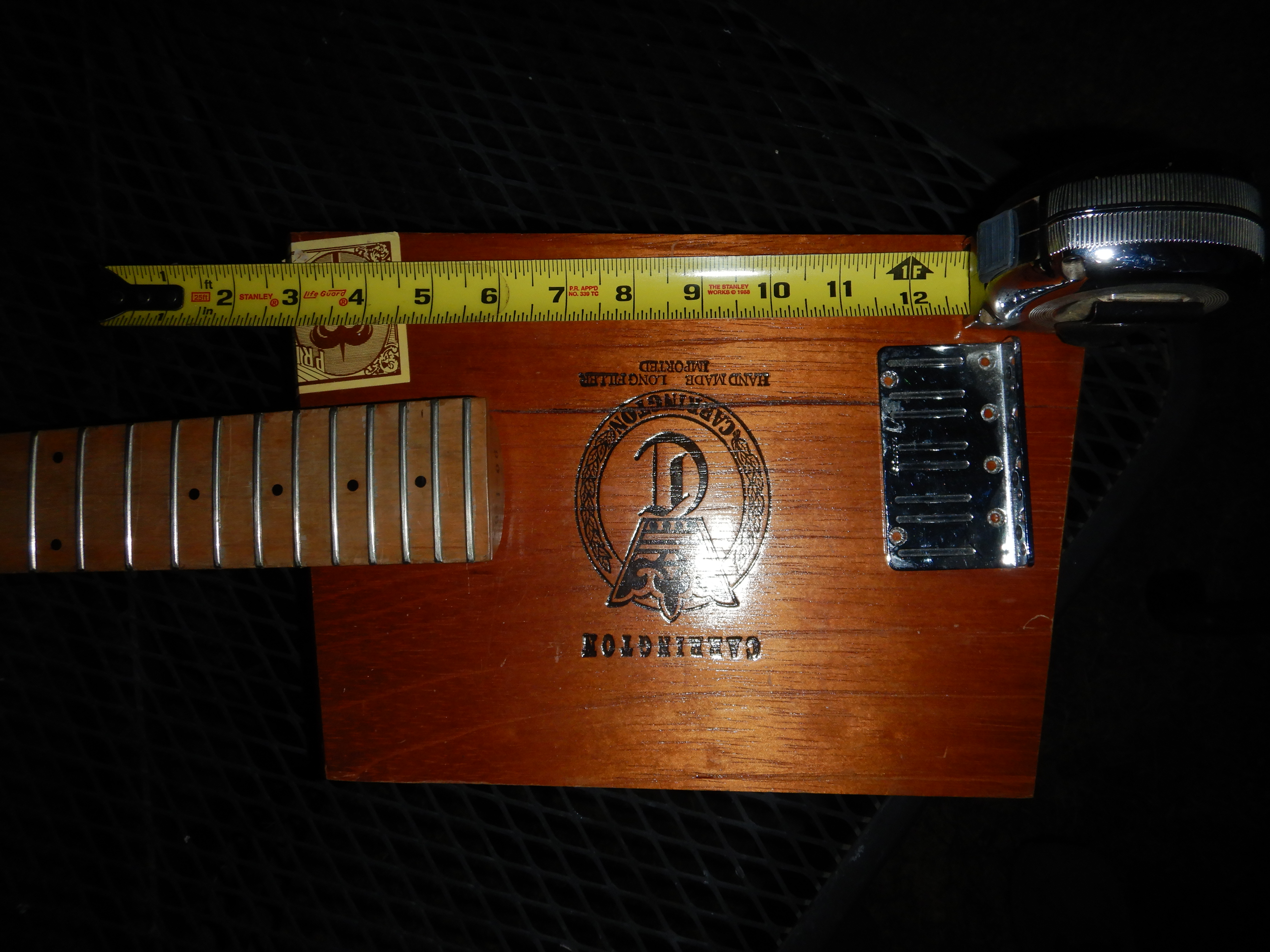
You can figure out about where to screw down a guitar bridge by measuring from nut to 12th fret: on this neck about 12 3/8inch (31.4 cm).
I should have just enough room to attach the bridge if I screw down the neck as extended as I can.
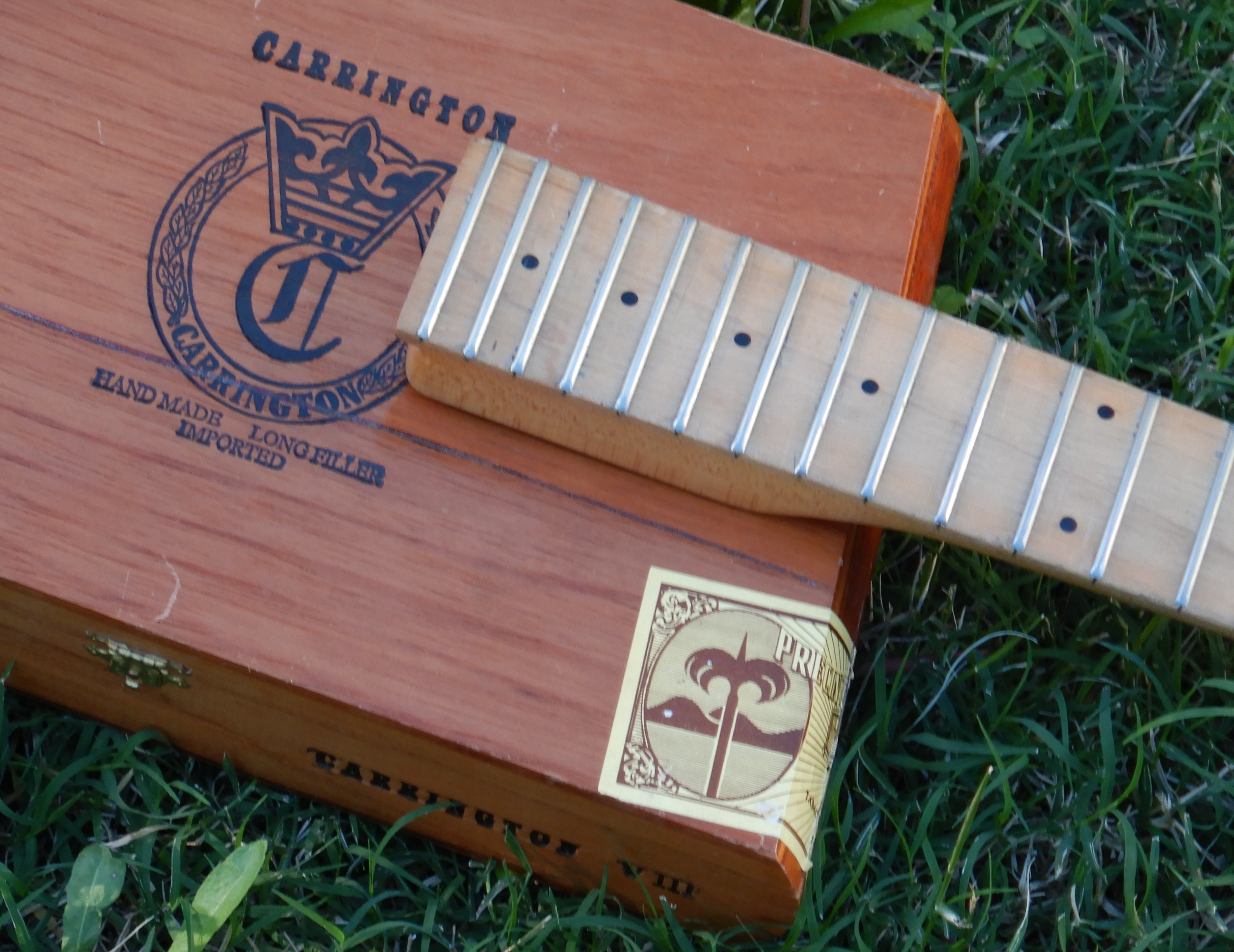
So tomorrow I’ll begin the Samick Carrington VIII project by searching my woodpiles for a sturdy backbone plank, preferably hardwood, to screw the neck to.
With the trapazoidal box shape its no simple 90 degree cuts on that board.
Unless noted, all text, images, video, and audio by todgermanica.com.

