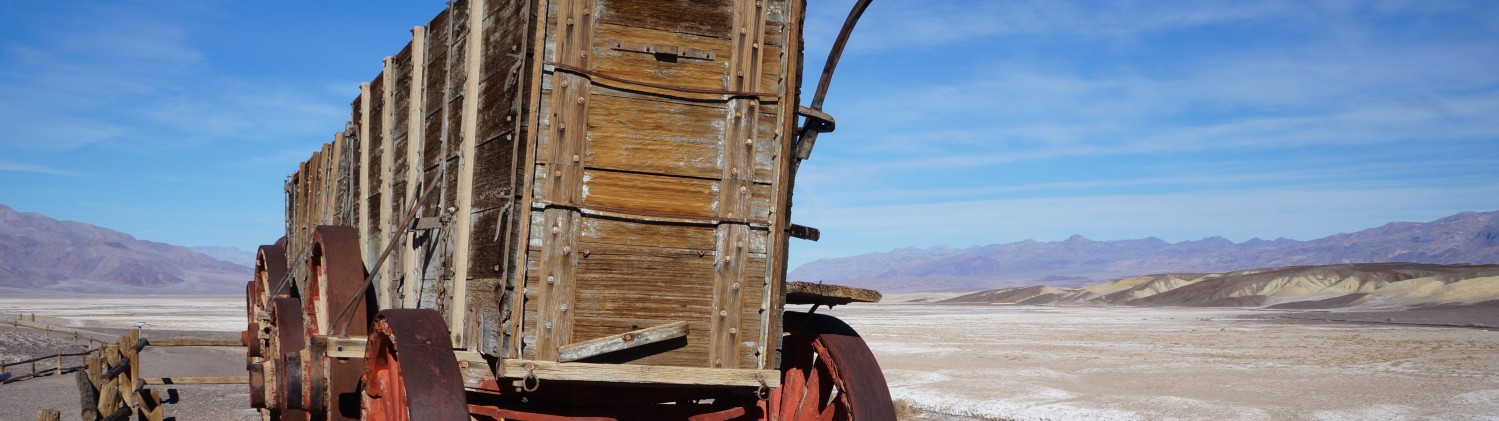
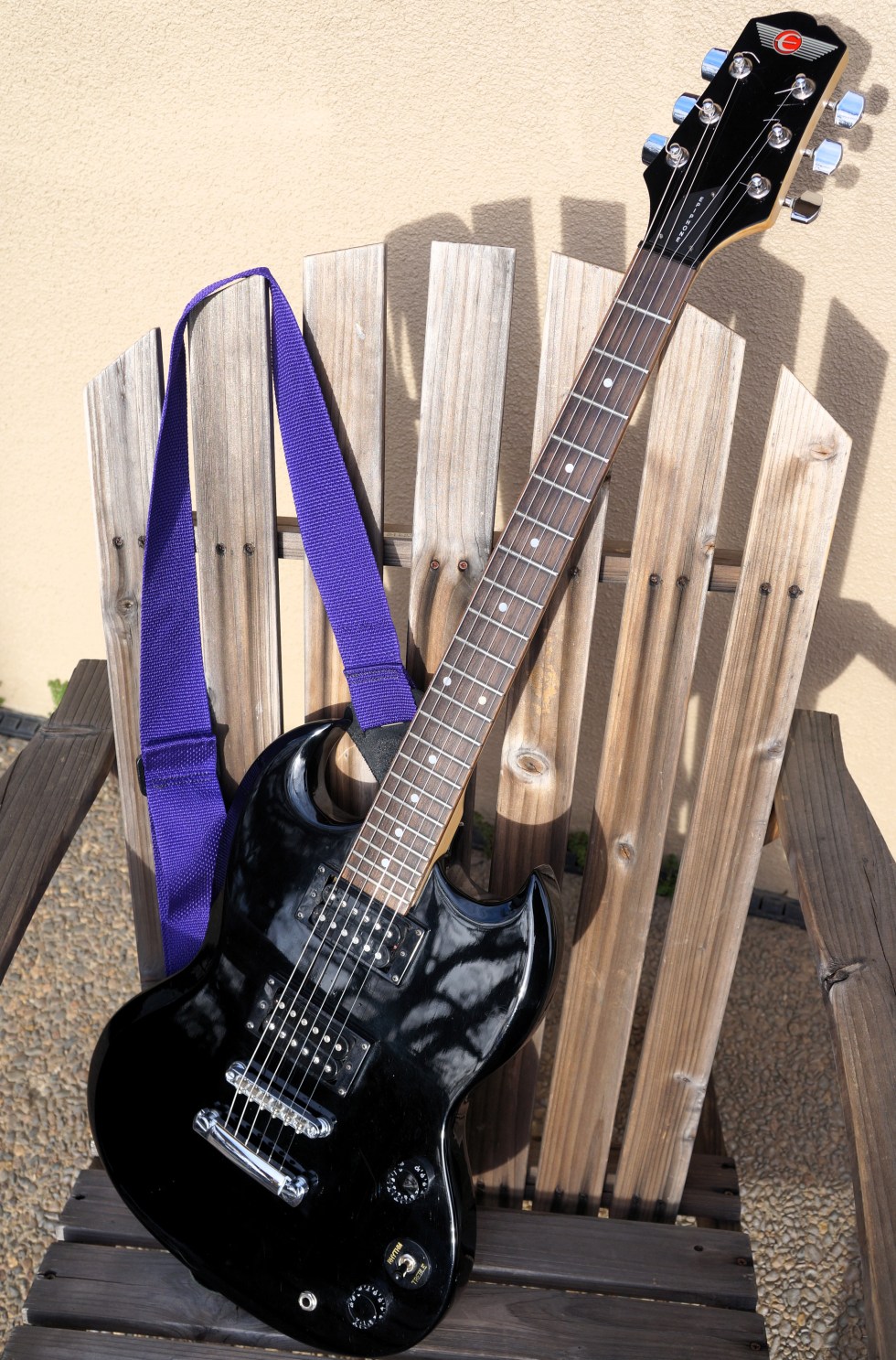
My new 2001-2002 Epiphone SG E-series Bully guitar after clean-up and re-string. How I got it for $35 is in part one.

$5 pawnshop strings installed easily but popped the B and the D string when I tuned it. Sometimes cheap does not work.
One of the dirtiest instruments I’ve ever worked on, it took me about two hours with wet and then dry teeshirt cloth followed by microfiber cloth and instrument polish to clean it.

Only $2 more at $6.99, these installed just as quickly and were successfully tuned. Sometimes quality counts.
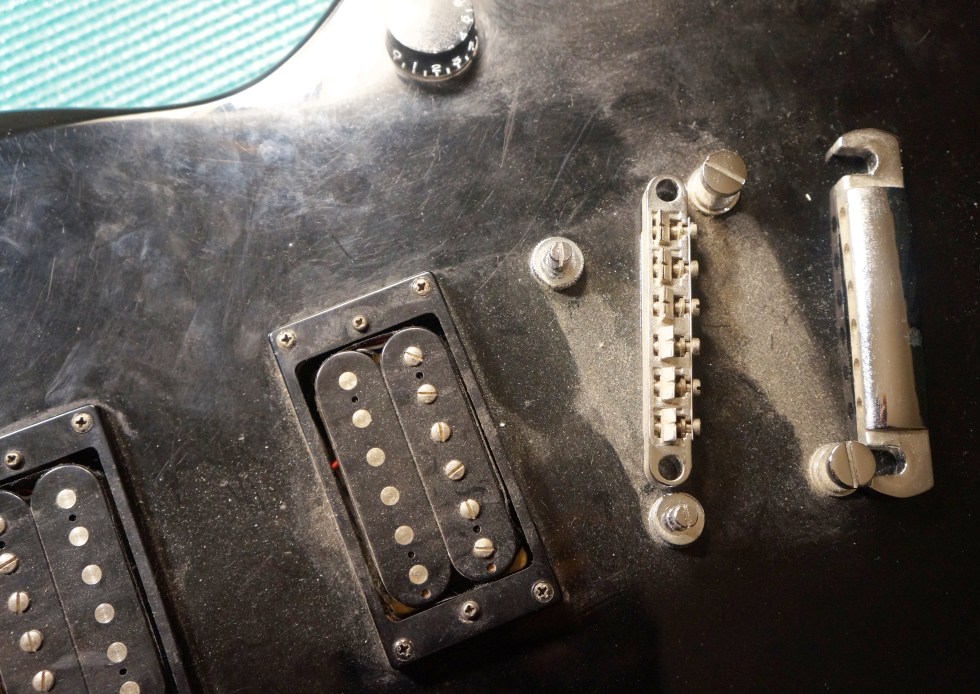
Only the strings (and maybe dirt) hold the bridge on.
From the web: The Epiphone Bully (2001 – 2002) was an SG style electric with a 24.75″ scale length bolt-on maple neck.
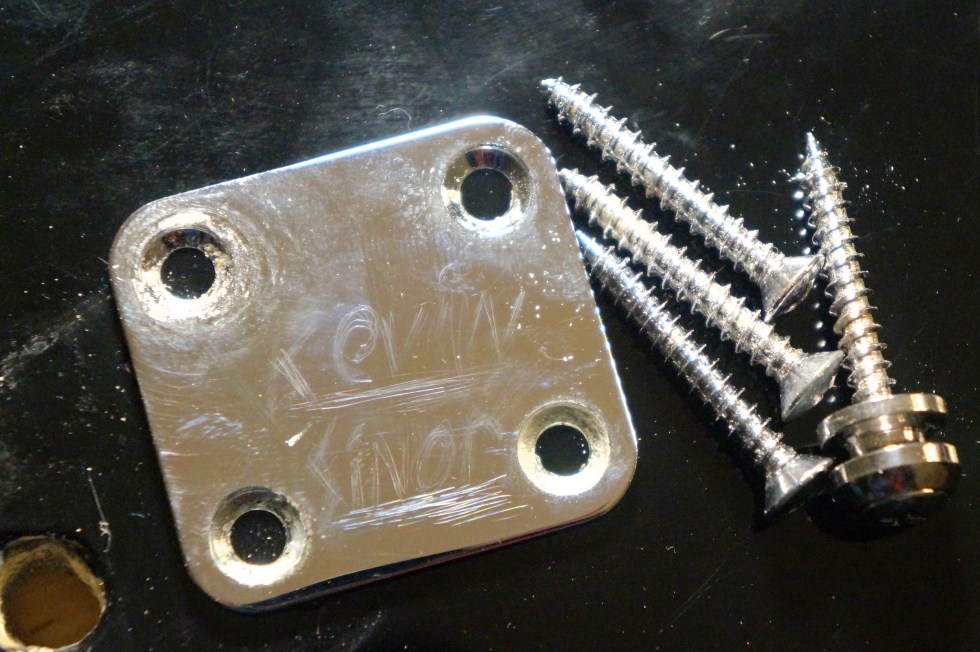
Kevin Sinor, I’ve got your old Bully. Most ‘bolt on’ necks, like this one, don’t use bolts. These are wood screws.
The neck had a slim taper profile and “super-slide” satin finish, rosewood fingerboard and dot inlays topped off with the E-Series Dovewing headstock.

Ground off the chrome layer and a brass layer before I could efface Kevin’s mark.
Pickups were two open coil humbuckers controlled by single volume and tone controls and a 3-way selector switch. Finish options were black, blood stain red or bruise purple.
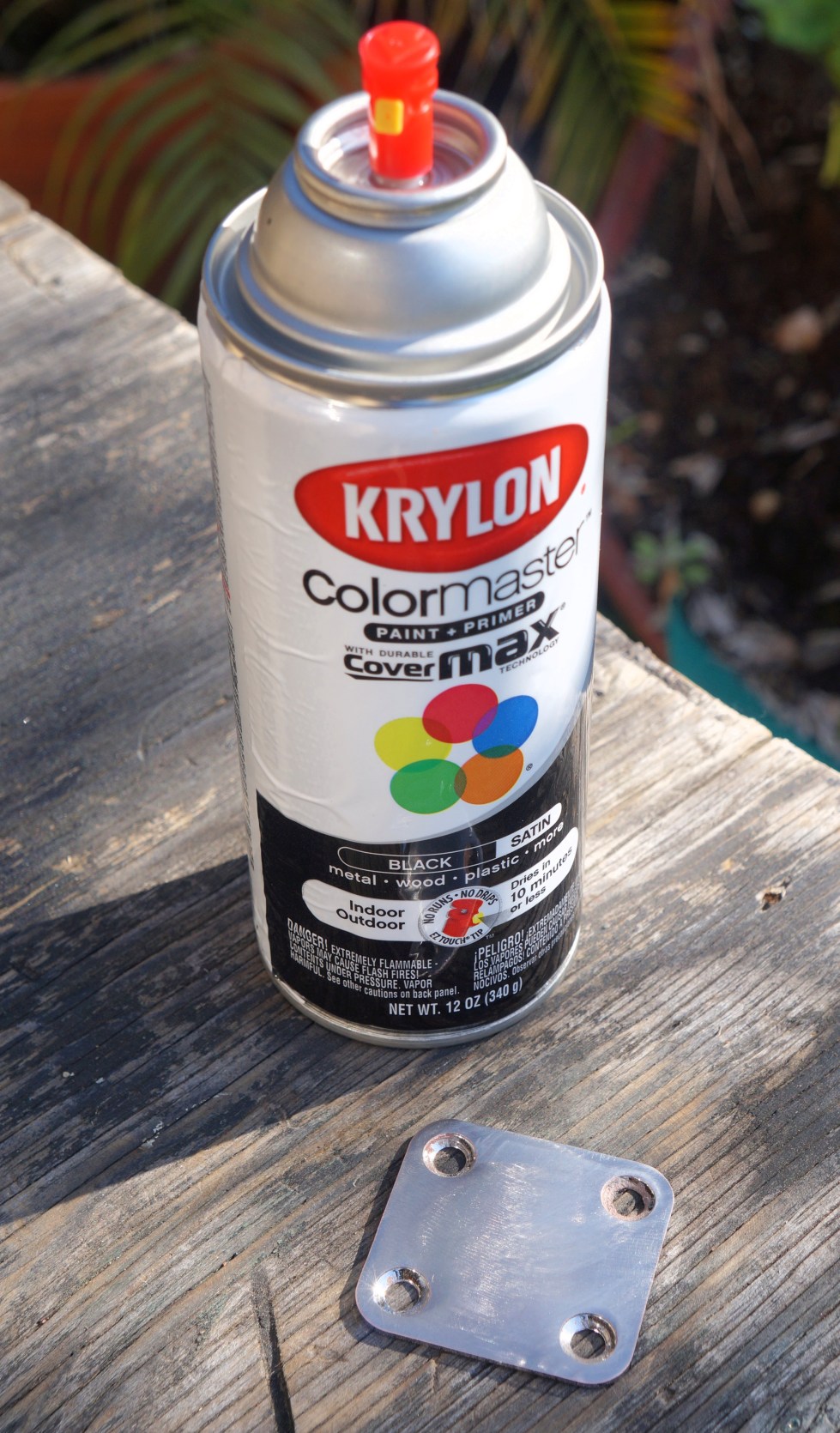
Cheap satin black Krylon paint closely matched the electronics cover plate.
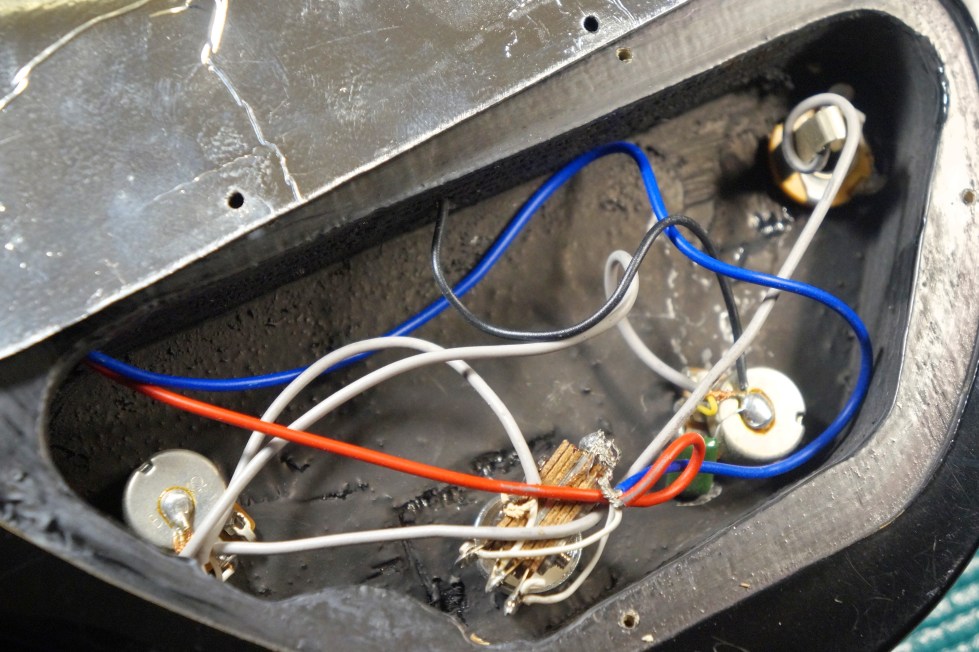
I was happy to see the cavity painted with anti-static paint and the cover plate covered with foil for the same purpose. It is quiet as a result.
I tightened the machine heads with socket wrench and small Phillips head screwdriver. Note embedded dirt and grime.

This pic of the neck pocket shows the 7-layer plywood comprising the body. Light and dark layers alternate.


Beautiful 2-piece maple neck.
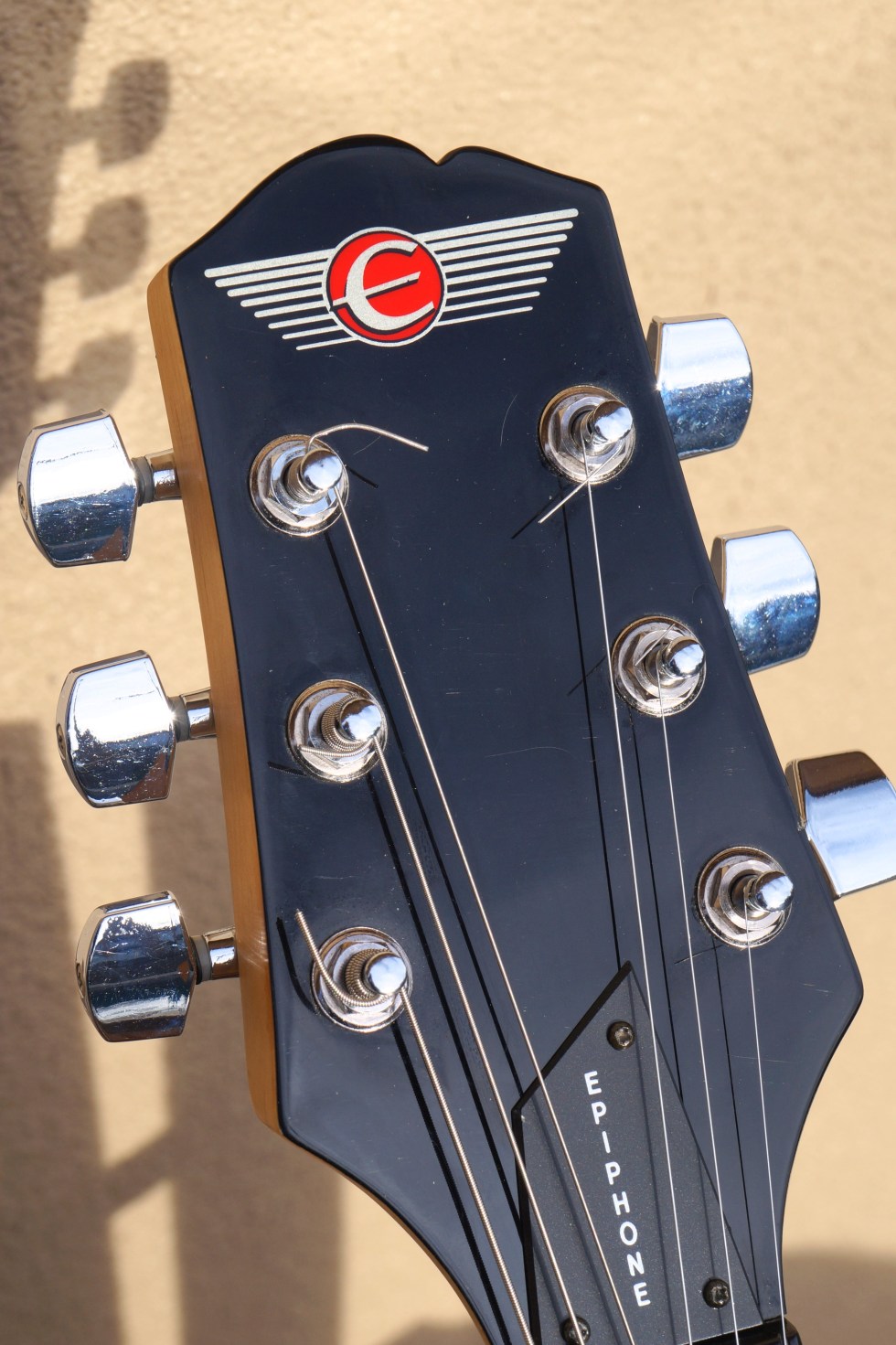
My first guitar re-string. 33 1/3 % harder than a bass.

Close color and luster match between cover plate and neck plate.
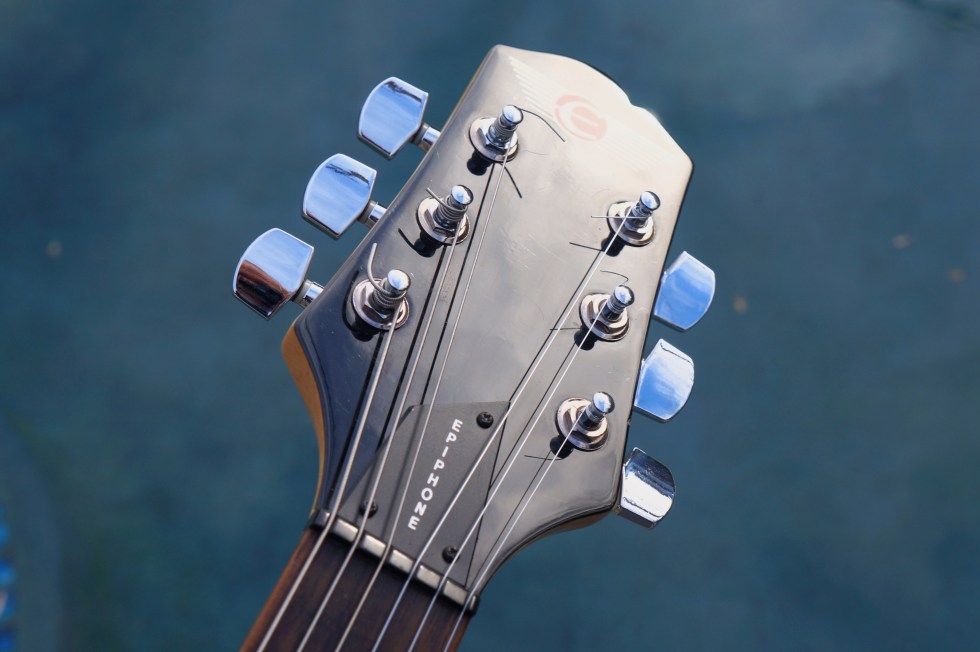
It cleaned up nicely and sounds good.
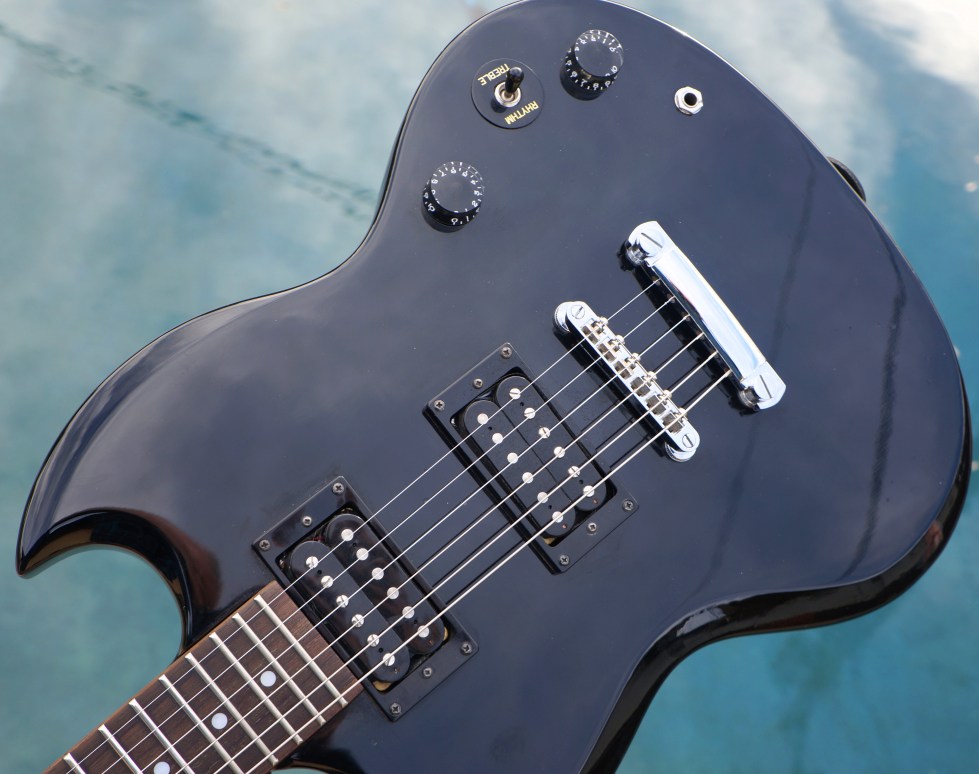
I compared my Silvertone Stratocaster clone to this Bully. The humbuckers tend to give it a warmer tone than my ‘hotrodded’ strat, with it’s ‘vintage’ pickups and massive after-market brass tremolo block.
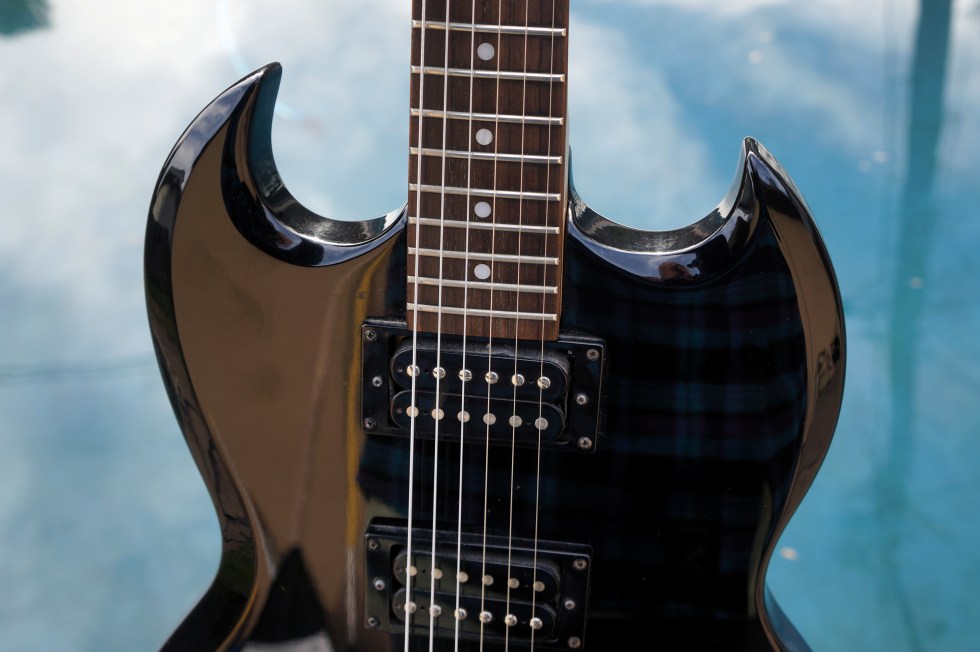
Why they called it Bully.
The plywood beauty of the Bully.
Unless noted, all text and images produced and copyrighted by todgermanica.com. Non-commercial use free with attribution.
 todgermanica.com
Pingback: Bye, Bye to Some Pretty Instruments | todgermanica.com
I love my Bully! I did a project but had an easier starting point than you. I have completely stopped playing my Les Paul Custom! Lol
Bill
Thanks for the comment. It’s amazing how good a manufactured plywood instrument can play and sound. If you told someone my Bully coincidence story they’d think you made it up. Thanks for reading.
Epiphone specifications say that the body is laminated alder/maple? not plywood, is there something I am missing?
Thanks for reading my post from so long ago.
Epiphone is just using fancy language in their specs because ‘laminated alder/maple’ is exactly the same as ‘plywood made of alder/maple’.
Plywood can’t be considered ‘tone wood’ so is thought to be less desirable than solid wood. So the company uses fancy wording to avoid saying ‘plywood’. Same same construction.
Funny, I just started another ‘bully horn’ ax resto-mod, an ancient 1970s Japanese Aria 4-string piccolo bass project I bought at the big local flea market for $30.
I’ll probably end up selling, trading, or donating it when it’s done because, with my elderly arthritis and neuropathy, it’s not ergonomic for me and painful to play. But fun to work on.
It’s ‘laminated wood’ too and I’m considering not painting it, instead using varnish or tung oil to show off the plywood laminations. Saying ‘plywood and proud of it’.
Thanks again for viewing and commenting.
Thank you very much, I appreciate the information, makes complete sense
Hi There
I noticed youd responded only a week or so ago, so i thought maybe youd get this message as well
I have just started a bully (also in black) about a week ago. Its a little more dented and bashed than yours! The qusetion i have is does yours have a serial number anywhere? I cant locate one. It possibly had a sticker on the back of the headstock or somewhere like that! I thought maybe youd located one in a place i hadnt paid to much attention. I have also read (on the internet so that has to be taken into consideration) that they produced these over the 2001 – 2002 period, and in addition they were produced around 1998, these apperantly, due to the price bracket etc had no serial numbers!!!
Steven
I can’t recall seeing a serial number on that bass. Sometimes they just don’t have a serial number. The only consequence of lacking a number, practically speaking, is that you cannot trade or sell it in a pawn shop. Thanks for viewing and commenting.
I really like the idea of the Tung oil on the Ply
Wood in nearly all forms can look really good when you spend time and effort on it, IMO
I think itll look really nice. All my builds if ive had them from scratch end up with just wax or Tung oil or similar as a finish, my preference
I’ve had good luck in the past using tung oil and paste wax, less toxic than most paint and a nice natural look. Rather than hiding the layers of wood, I’m hoping the finish points out their beauty. Thanks for viewing and commenting.